
Otafiire: Hidden Gold Treasure Behind Njeru Land Fight
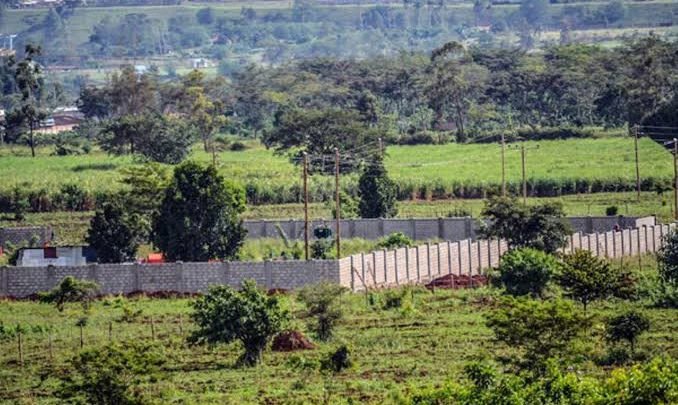

KAMPALA — For years, Ugandans have watched senior government officials battle over the future of the former Njeru Stock Farm, with the dispute largely portrayed as a fight over public land, leases and livestock.
Now, Minister of Water and Environment Maj. Gen. (Rtd.) Kahinda Otafiire says the real story has been hidden all along.
Beneath the rocky hills of the disputed land, he claims, lies the possibility of commercially viable gold deposits, and that prospect, rather than cattle farming alone, explains why the fight over the property has become so fierce.
In a lengthy statement released on Tuesday, Otafiire said the land became the focus of a private mineral exploration project led by mining engineer and entrepreneur Sam K. Njuba Jr., whose company, TAAYASA Minerals Ltd, spent years searching for gold before the venture was abruptly brought to a halt.
“The mining exploration activities that were carried out were very promising until the greed, ignorance and lack of savoir-faire exhibited by Hon. Bright Rwamirama and Co. led to the storming and demolition of his investment,†Otafiire said.
The disclosure marks the first time Otafiire has publicly linked the long running Njeru dispute to gold exploration.
Until now, the disagreement had revolved around who legally owns the former stock farm after years of court battles involving the descendants of the late Ham Mukasa, Njeru Municipal Council and government ministries.
Otafiire had also repeatedly denied reports that he personally owned a gold mine on the property.
Instead, he says, he simply opened his land to an experienced Ugandan mining engineer with an idea.
According to Otafiire, Njuba approached him after studying the area’s distinctive rock formations, believing they could contain valuable minerals. Convinced by the proposal, Otafiire allowed him to begin geological exploration.
Over the following months, Njuba is said to have invested heavily in geological mapping, drilling, sampling and laboratory analysis, all funded from his own resources.
The minister described Njuba not as a politically connected investor, but as a determined entrepreneur who continued financing the exploration even while caring for his son, who was battling cancer before later dying.
“He put his own money into the project while carrying the burden of looking after a sick child,†Otafiire said, arguing that the destruction of the exploration camp left the investor nursing both personal grief and heavy financial losses.
According to Otafiire, no mining licence had been granted because the work had not progressed beyond exploration, the stage where scientists determine whether mineral deposits are commercially viable.
He said their understanding was that if significant gold reserves were eventually confirmed, he would contribute land rights in exchange for equity or royalties while the company sought the licences required under Uganda’s mining laws.
The minister insists the project never reached the mining stage.
Instead, he alleges, it was dismantled after rival interests intervened.
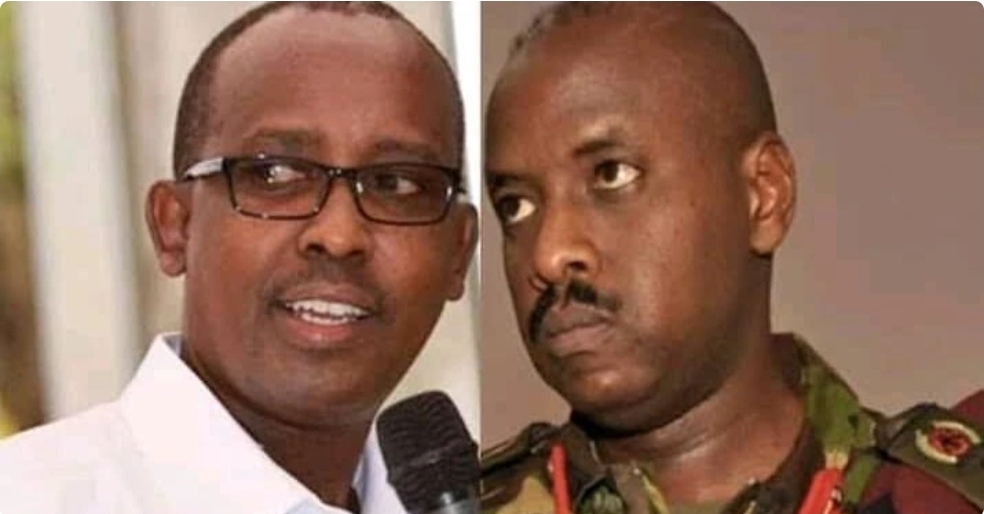
Rwamirama
Without providing evidence, Otafiire accused State Minister for Animal Industry Bright Rwamirama of frustrating the project by overseeing the destruction of the exploration infrastructure.
He also suggested that powerful interests already benefiting from Uganda’s gold trade had little appetite for new competitors.
“Very little is written about the gold cartels in Mubende, Buhweju and Karamoja exploiting artisanal miners. This cartel holds a monopoly and feels any innovating entrepreneur should not progress in the mining sector,†he said.
The minister believes the discovery of commercially viable gold would have transformed the area.
Rather than remaining simply a former government livestock farm, he said, Njeru could have attracted mining investment, created jobs and accelerated industrial development in Buikwe District and the wider Busoga region.
His latest revelations come against the backdrop of an increasingly bitter public exchange with Rwamirama over ownership of the former stock farm.
In recent days, Otafiire has accused the junior minister of ignoring court decisions that terminated the government’s lease after years of unpaid rent and of overlooking Ministry of Lands findings showing that the stock farm occupies only about 190 acres and has no valid lease over the land.
He has also questioned why government is simultaneously seeking to preserve the stock farm while implementing a presidential directive allocating part of the same land to Modern Ventures Ltd for industrial expansion.
To Otafiire, those contradictions point to a deeper struggle over what lies beneath the surface.
“One can only have to think why,†he said. “Is the presence and existence of the stock farm amidst the growing industries in the area still a strategic investment or a Trojan horse to compulsorily acquire land in Njeru and the hidden treasures buried under it for some selfish interest?â€
Rwamirama had not responded publicly to the allegations by Tuesday evening, while the Ministry of Energy and Mineral Development had not commented on whether any exploration licences were issued or on the geological findings cited by Otafiire.
Whether the contested land ultimately proves to contain commercially viable gold remains unknown. But Otafiire’s disclosure has transformed what many saw as a routine land dispute into a far bigger story involving minerals, industry, competing economic interests and a growing political battle at the highest levels of government.


 Government will not gazette Kijanangoma as King of Tooro for now - Attorney General insists
Ultimate Uganda
Government will not gazette Kijanangoma as King of Tooro for now - Attorney General insists
Ultimate Uganda
 King Oyo’s Body to Arrive Thursday
Ultimate Uganda
King Oyo’s Body to Arrive Thursday
Ultimate Uganda
 Besigye, Lukwago expected to meet Gen. Salim Saleh today at Kapeeke
Ultimate Uganda
Besigye, Lukwago expected to meet Gen. Salim Saleh today at Kapeeke
Ultimate Uganda
 Rwabwogo Advised to ‘Eat His Bishop’ As MK Prepares to Enter State H’se: PREZ MUSEVENI ON HIS WAY OUT
Ultimate Uganda
Rwabwogo Advised to ‘Eat His Bishop’ As MK Prepares to Enter State H’se: PREZ MUSEVENI ON HIS WAY OUT
Ultimate Uganda
0 Comments