
Inside Uganda’s health care waste problem: no budget, no data, and no oversight
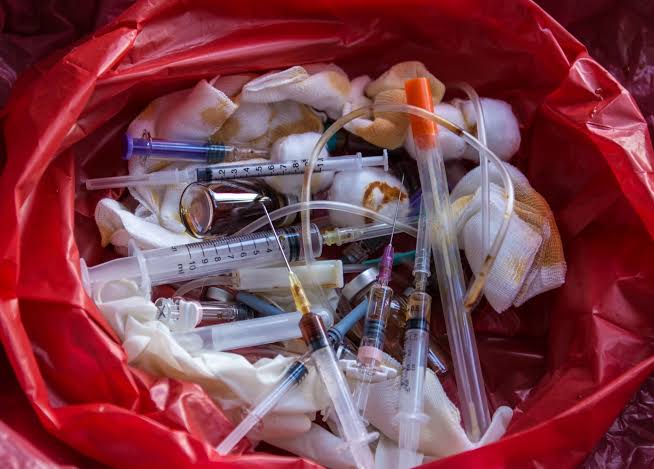

An audit of Uganda’s Health Care Waste Management (HCWM) has revealed widespread failures in handling infectious medical waste, with health facilities struggling to safely dispose of Health Care Waste (HCW) amidst inadequate funding, weak enforcement of regulations, poor segregation and treatment practices, lack of reliable waste data, and limited monitoring.
According to the Value for Money Audit Report on the Effectiveness of the Ministry of Health (MoH) and Public Health Facilities in the Management of Health Care Waste 2025 report, although the Ministry of Health has developed several policies, regulations and guidelines to govern health waste management, critical gaps still exist in the current HCW management regulatory framework.
According to the audit findings, for the financial year 2022/2023 to 2024/2025, the Ministry had no budget for HCWM and work plans, and major activities such as construction of incinerators were purely reliant on the development partners, who have since withdrawn their funding.
However, in response to the funding challenges, the audit indicates that the Ministry has since allocated Shs5b to budget for the gap left by development partners and has guided that health facilities allocate 10 percent of their Primary Health Care (PHC) budget to HCWM.
“Following the withdrawal of the USAID support, the Ministry issued a circular on 13th February 2025 directing all health facilities to integrate HCWM into their budgets beginning in FY 2025/26. This was aimed at improving sustainability and ensuring consistent funding for HCW activities,†the Audit reports states.
According to the report, the average annual PHC funding available for HWM amounts to approximately shs60,000 for HC II facilities, Shs120,000 for HC III facilities, shs600,000 for HC IV facilities, and shs7,500,000 for hospitals which the Auditor General says is unlikely to cause any impact.
Mr Edward Akol the Auditor General, explained that although a new HCWM Strategy (2025/26 to 2029/30) has since been developed, it has not yet been implemented by the time of the audit.
The audit further reveals significant deficiencies in HealthCare Waste (HCW) storage whereby of the 25 heath facilities assessed, 17 (64%) lacked appropriate storage infrastructure. Eight of the 17 facilities (47%) had no dedicated HCW storage area at all, and the remaining nine (53%) had storage areas that had no sheds, and or enclosed.
At Mityana General Hospital, Lira, Mbarara and Gulu regional referral hospitals HealthCare Waste was compacted inside storage rooms that lacked secure locks, while in facilities such as Mbarara, Gulu , Lira , Iganga General hospital, HCW was stored in the open, posing a risk of un-restricted access and potential exposure to infections.
The auditor General revealed that all the 25 sampled and inspected facilities lacked compliant temporary storage areas, and waste is frequently retained for longer than the recommended duration due to inadequate infrastructure and unreliable treatment or disposal arrangements.
“These weaknesses show that current practices do not provide the necessary safeguards for the safe handling, containment, and storage of HealthCare Waste prior to treatment, thereby posing significant health and environmental risks,†Me Akol stated.
Of the 25 facilities assessed, 48 percent had incinerators, however, functionality was inconsistent: 8 facilities (67%) had operational units, though none had emission-control systems or the capacity for complete combustion of sharps and glass waste, the remaining 4 facilities (33%) had non-functional incinerators, resulting in continued reliance on alternative and often unsafe waste treatment methods.
Furthermore, of the 25 health facilities assessed, 52 percent had no incinerators and among these 6 with non-functional and relied on off-site Health care waste treatment through private providers for collection, treatment and disposal, while several without incinerators resorted to open burning HCW within their premises.
“These gaps indicate inadequate investment in compliant HCW treatment infrastructure and expose health workers, patients, and nearby communities to avoidable health and environmental risks,†Mr Akol said.
The report further noted that Health facilities, including those equipped with incinerators, are currently overwhelmed by large volumes of untreated HealthCare Waste given the limitations in capacity of the existing HCW treatment infrastructure increasing exposure to infections and heightening public health risks and environmental risks.
Advertisements
Mr Akol stated that the treatment processes and infrastructure currently available in health facilities are insufficient to ensure the safe and compliant treatment of HealthCare Waste, noting that many facilities continue to rely on inappropriate methods such as open burning and the use of incinerators that lack emission-control systems.
“As a result, infectious waste is not fully decontaminated, and hazardous pollutants continue to be released into the environment. This leaves healthcare workers, patients, and surrounding communities exposed to preventable health and environmental risks,†he said.
Mr Akol also found out that of the 25 health facilities only Gulu, Jinja, and Iganga Regional Referral Hospitals had lined ash pits for the final disposal of incineration residues. Six facilities disposed of HealthCare Waste offsite, while 17 relied on ordinary waste pits, with placentas and pathological waste placed in placenta pits.
Additionally, it was further noted that early in 2025, a placenta pit at Nsangi Health Centre III had collapsed due to a weakened slab, causing a serious occupational accident when a midwife fell into the pit while disposing of a placenta
Mr Akol also highlighted inappropriate waste segregation, noting that there was a mix up of infectious and non-infectious Waste in the same bins, unmatched bin liners, unlabeled waste bags, absence of dedicated temporary storage spaces, absence of temperature and emission meters at incinerators.
The Auditor found out that health facilities didn’t measure or report the volume of waste they generate, no clear indicators to assess treatment efficiency and emissions control, and no standards governing the design of common-user waste pits leading to difficulties planning and monitoring.
Mr Akol also sighted lack of coordination meetings among the Ministry of Health, National Environment Management Authority (NEMA), local government councils, District Health offices and health facilities during the financial year 2022/23 and 2024/25 even when the ministry established national and regional WASH/ HCWM steering committees.
The Government has taken steps to improve HCWM from generation to final disposal through developing regulations, such as the National Guidelines for Water, Sanitation and Hygiene (WASH) in healthcare facilities 2022, the National Environment Waste Management Regulations 2020 and National Health Care Waste Management operational guidelines 2025, among others.
Mr Akol recommended the Ministry of Health to prioritise HCWM by providing sufficient resources at the national and facility levels, engaging with the local governments and relevant regulatory bodies, to strengthen supervision of HealthCare Waste management in both public and private health facilities.
He further urged the Ministry to fast-track dissemination and implementation of the recently developed HCWM Strategy (2025/26–2029/30), operational guidelines, regulations and SOPs to ensure that all health facilities apply harmonised standards for HealthCare Waste quantification, treatment, emissions control and final disposal.
“Disseminate and enforce implementation of the recently developed HCWM guidelines at facility level to ensure effective control of waste at source and strengthen compliance with national HealthCare Waste management requirements,†he said.
Mr Akol also asked the management of health facilities to ensure availability of color coded bins and liners at all waste generation points to prevent waste, enforce strict adherence to prescribed HealthCare Waste collection schedules and container fill limits as well as establishing and enforcing formal contracts with licensed waste handlers.
He also advised management of health facilities to enforce strict adherence to prescribed HealthCare Waste collection schedules and container fill limits in order to prevent occupational injury and infection risks.
According to data from MOH the approximate volume of medical waste handled annually by the different categories of health facilities is as follows; 10million tonnes for National Referral Hospitals, Two million tonnes for Regional Referral Hospitals, 500,000 tonnes for General Hospitals, 100,000 tonnes for Health Centre IVs, and 20,000 tonnes for Health Centre IIIs.
Dr Herbert Nabaasa. Commissioner of Environmental Health said that the Ministry has put in place strategies to improve HCWM noting that under their National Healthcare Waste Management strategy, the ministry is committed to ensure effective collection, transportation, treatment and safe disposal of healthcare waste.
The ministry has undertaken several strategic reforms to this effect, these include; strengthening the legal framework, infrastructure development, human resource, and improving coordination.
According to Dr Nabaasa. Commissioner of Environmental Health at the Ministry of Health, the ministry has established five regional incinerators in Gulu, Lira, Mukono, Fort Portal and Mbarara to improve health care waste management.
Dr Nabaasa explained that these regional incinerators will serve all health facilities in the region, case in point, the incinerator at Mbarara regional referral will serve health facilities in Ankole region districts of Bushenyi, Ntungamo, Ibanda among others.
He explained that regionalisation of incineration is to reduce the emission footprint associated with many incineration points that have previously been in the several health facilities, improve efficiency, and mitigate the problem of indiscriminate healthcare waste disposal by unregulated healthcare waste producers and handlers as well as reducing maintenance costs.
“Our aim is to ensure that we increase efficiency in terms of monitoring, because when you centralise it, it is easier to know the final destination of waste. You can track where waste is being generated up to where it is being destroyed,†Dr Nabaasa said.
He explained that working with licensed companies, they will be able to transport and track waste from different health centers to the regional incinerator for disposal.
“They have arrangements with hospitals to ensure that all the hospitals have their waste collected, transported, cleaned and destroyed. Our task in the ministry is oversight, regulation, standardisation, monitoring and ensuring compliance in all these matters,†he said.
Dr Nabaasa noted that the Ministry has also developed a tracker to capture data that will help in knowing how much waste is generated from each health facility.
“We have made it digital in a sense that it should be easy to find out anybody who picks waste from a facility has to input it into a tool. So when you pick from a facility they fill in the data, and receive it here at the Ministry because it will be displayed on our dashboard,†he said.
Dr Alfred Yayi , Senior Executive Consultant Jinja Regional Referral hospital noted that HCWM challenge was due to the funding gap created by withdrawal of donor support that had previously financed them since health farcicalities relied entirely on donor support.
He explained that at Jinjia, medical waste was previously collected and managed by Green label Services Limited with funding From USAID and funding was terminated, the hospital struggled with waste and started accumulating since there was no allocated budget for it.
“Fortunately, USAID through Green Label had constructed a new incinerator, which we needed operational, so to address the electrical challenges and make it functional we provided the fuel as a hospital management within our operational funds to run it and is currently used to burn waste produced at our facility,†Dr Yayi said.
However, he noted that the issue remains funding noting that the incinerator which runs twice a week for five hours consumes approximately 200 liters of diesel every week making it very expensive.
“There are other private health centers and government health centers that are asking us to help them but because of the high operational costs, we are unable to support other facilities, we only handle the waste we generate from our hospital,†Dr Yayi said.
According to Dr Yayi, the hospital has since created a budget line for healthcare waste management in the coming financial year, setting aside an estimated Shs60 million for fuel and maintenance of the incinerator.
“We had to repurpose our funds because the support we had been relying on was no longer available. Going forward, we have budgeted for waste management because it is something that cannot be ignored," he said.
He also noted that currently with support the Ministry of Health has also partnered with Green label Services Limited to continue supporting government health facilities in waste management.
“When USAID funding was stopped, the Green Label could not support us because they had no funding but recently, the Ministry of Health has contracted them support our region, think with the funding from government and lately, we are engaging them to support us especially on the technical aspects when the machines don't work well,†Dr Yayi said.
Responding to waste segregation challenges, Dr Yayi also acknowledged challenges highlighted in the audit regarding the mixing of infectious and non-infectious waste, however he noted that the challenges emerge during transportation from wards to waste holding areas.
He explained that health workers generally separate waste correctly at source using colour-coded bins for infectious, non-infectious and pharmaceutical waste, while sharps are disposed of in safety boxes.
“We discovered that sometimes the waste handlers tend to mix this instead of transporting them separately for their own convenience, sometimes they mix them. So we have noted that and our Infection Prevention and Control Committee is sensitizing them to ensure that the waste is not mixed,†Dr Yayi noted.
The audit found that many health facilities do not measure the amount of waste they generate, making planning difficult.
Dr Yayi said the hospital has recently begun paying closer attention to waste volumes because it now bears the cost of treatment.
“When Green Label was handling this for us, I think there was not much focus on how much we were generating because there was a third party handling it for us. But now that we are the ones handling it, we have had to establish how much we are generating, how much we need to burn it, how many days we need to run the incinerator,†he said.
He urged health facilities across the country to stop relying entirely on partners but also begin to budget for HCWM.
"Time is up for us to plan for waste management. We need to build capacity for segregation, transportation and disposal of waste, and we need to budget for it because depending on partners is no longer sustainable," he said.
At Mbarara regional referral hospital, waste management remains a challenge largely because the facility generates large volumes of waste while relying on a small incinerator.
Mr Halson Kagure, the communication and Public relations officer of the hospital, however, stated that the hospital is constructing a big regional incinerator expected to serve all health facilities in the region.
“This is a facility handles the catchment area of the whole western region and it does generate a lot of medical waste, so without that incinerator the situation could have been alarming,†Mr Kagure said.
He added; “Besides, now we are putting up a mega incinerator which is going to be used or which is going to be accessed by all health facilities in this region.â€
Responding to issues of poor waste segregation raised by the Auditor General, Mr Kagure noted the hospital has strengthened waste segregation through its continuous quality improvement program.
“Under this project, we ensure that there is proper waste management by putting in place different bin liners. When you come to the facility you will find they are black or non- hazardous, yellow for the medical waste that is hazardous and red for those medical wastes which are very hazardous and harmful,†Mr Kagure said.
He maintained that the hospital has made significant progress in sanitation and waste management compared to previous years.
Dr Charles Kabugo is the Executive Director of Kiruddu National Referral Hospital said that HCWM challenges are usually at lower level health facilities, noting that national hospitals like Kiruddu have well guided waste management processes.
“At Kiruddu we have no challenges, we have a company that picks waste twice/three times a week and the disposal mechanism is spelt out by the Ministry of Health and we pay them off the system. For us we have never had any issues, it’s the small health centers that real dump waste is swamps and other places.
The National Environment Management Authority (NEMA) spokesperson, MS Naomi Namara Karekaho said that while the Authority develops regulations to guide waste management, the implementation largely rests with governments and facility managements.
“The environmental regulatory framework is fairly new, while some of the hospitals existed long before NEMA came into force. In addition, many health facilities are under local governments, which are the frontline managers of waste," Ms Karekaho said.
She explained that NEMA's role is primarily regulatory, ensuring that standards and guidelines are in place to protect the environment from harmful waste disposal practices.
"NEMA provides the regulations that are supposed to guide them on how to manage waste so that it does not harm the environment, which we have done, but we are not the frontline managers of how waste is managed in different jurisdictions," she said.


 Museveni steps into Mulago land dispute
Ultimate Uganda
Museveni steps into Mulago land dispute
Ultimate Uganda
 HIV Alarm in Kampala: 211 New Infections Weekly Linked to Massage Parlours, Spas & Lodges
Ultimate Uganda
HIV Alarm in Kampala: 211 New Infections Weekly Linked to Massage Parlours, Spas & Lodges
Ultimate Uganda
 Uganda: ‘Delayed land acquisition stalling road works’
Ultimate Uganda
Uganda: ‘Delayed land acquisition stalling road works’
Ultimate Uganda
 Fearless Former Minister Criticizes M7 For Always Betraying Sr Colleagues While Claiming to Be Fighting Corruption, Urges Barugahara & Nameere to Watch their Back
Ultimate Uganda
Fearless Former Minister Criticizes M7 For Always Betraying Sr Colleagues While Claiming to Be Fighting Corruption, Urges Barugahara & Nameere to Watch their Back
Ultimate Uganda
0 Comments