
NUP's Machete Vows to Keep Fighting for Political Change Despite Amnesty
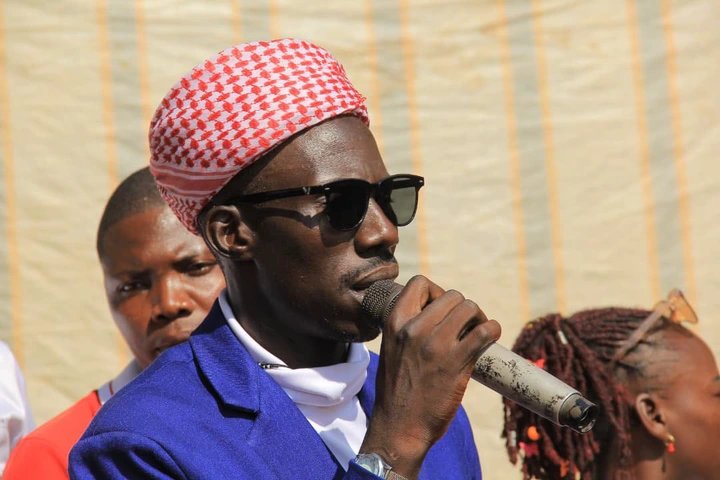

NUP's Machete Vows to Keep Fighting for Political Change Despite Amnesty
National Unity Platform supporter, Yasiin Sekitoleko, popularly known as Machete, says the pain and suffering he endured during six years in prison have made him stronger and more determined to fight for political change in Uganda.
Sekitoleko, who was among political prisoners recently released after being granted amnesty said he would continue advocating for what he believes is right until there is a change in leadership or until death.
He made the remarks at his ancestral home in Banga Village, Kamengo Sub-county, Mpigi District, where a special Duwa was held to celebrate his release and thank Allah for protecting him throughout his six years in prison.
Sekitoleko was arrested in 2020 over political-related charges and spent six years in prison before his release and return to his family.
Discover more
religion
Africans & Diaspora
Crime & Justice
His return to Banga Village was met with ululations, cheers and emotional scenes as residents, relatives and friends gathered to welcome him home.
Some residents touched and closely examined Sekitoleko, appearing eager to confirm that he was indeed the same person who had left the village six years earlier.
After confirming that he was physically well, his family and supporters held a Duwa to thank Allah for protecting him and enabling him to return home alive.
During the prayers, Sheikh Umar Magezi, one of the Muslim clerics who led the Duwa, condemned what he described as abuses committed by individuals who hide behind religion.
He said Islam does not permit violence or acts that could be associated with criminality.
“But even the Government has not helped us as Muslims. We believe that in Uganda, if you are a Muslim and a Muganda, you should start where you belong. We have seen many prisons filled with Muslims. You find people like Yasiin, Rajabu and Umar. You begin to ask yourself, what is happening to Muslims in Uganda? Many Muslims in prison are accused of terrorism, treason, murder and other serious crimes,” Sheikh Umar said.
He added that Islam is a religion of peace and does not promote killing, torture or other forms of violence.
“We want to say that Islam is not a religion of violence. Islam is a religion of peace. It does not allow killing, torture or other acts of violence. Those who commit such acts and then use Islam to justify them are trying to drag our religion into wrongdoing. That is why we condemn such acts,” he said.
Sheikh Umar also questioned the Government’s handling of people who, according to him, may spend years in prison without committing offences.
“Government, as Muslims, we demand answers. If you can imprison someone who has no offence for six years and later release him after finding that he committed no crime, then we ask you to look into the people who have been imprisoned, including our sheikhs. We know the power you have,” Sheikh Umar said.
He further criticised what he described as the selective use of government power, arguing that some people who allegedly abuse others are not dealt with in the same way as political prisoners.
Kiyaga praises Sekitoleko
Former Mawokota North MP Hillary Kiyaga Innocent congratulated Sekitoleko for enduring six years in prison while remaining firm in his political beliefs.
“Machete, thank you for not giving up and for remaining loyal to your party, NUP. We have seen other prisoners cooperate with the authorities because they wanted to leave prison, but your life was hanging in the balance and you remained strong, saying you were fighting for the truth,” Kiyaga said.
He thanked NUP president Robert Kyagulanyi Ssentamu and the party for standing with Sekitoleko.
Kiyaga, however, blamed Ugandans for what he described as the country’s continued political challenges.
“There is no reason Museveni cannot be removed from power. We have everything in our country, but the problem is Ugandans who have failed to realise that Uganda has been rotten for a long time. You, Ugandans, are the reason many young people are rotting in prison,” he said.
Kiyaga alleged that some people are arrested simply for speaking out, while those responsible for ordering the arrests allegedly use small amounts of money to facilitate the operations.
Sekitoleko recounts alleged torture
Sekitoleko also gave a detailed account of his arrest and the conditions he says he endured while in detention.
He recalled how security operatives allegedly raided his home at night.
“Before I even saw the brutality that Museveni’s men use, the men came at night and surrounded the house as if they were looking for a rebel. It was around 1am, and I thought it was about 3am when things became serious. I looked for where I could escape and run,” Sekitoleko said.
He said the security officers surrounded his home and ordered him to open the door.
“One of them brought out a powerful torch and said, ‘Open the door.’ I asked him, ‘Who are you? Why should I open my door?’ He responded, ‘Give me your hand.’ The soldiers then fired bullets until they removed me from the house and took me away,” he said.
Sekitoleko alleged that he was subjected to severe torture after his arrest and spent about three months in what he described as a basement-like detention facility.
“I spent three months in a place like a basement. My hands were tied and I could not even go outside. They would put me in a corridor where soldiers passed, and everyone who passed would beat me. After some time, I could no longer feel anything,” he said.
He said his condition deteriorated to the extent that he feared he would die before he was eventually transferred to prison.
Sekitoleko also described the conditions he allegedly experienced while in prison, including beatings whenever he complained.
“Life in prison was very difficult. You would be beaten whenever you tried to complain. There is something I can never forget. On the day they took me to a cell inside the prison, they removed all my clothes and left me naked. They put salt in the room and poured water in the room. I spent seven days in that room until the skin on my body started peeling off,” he said.
Sekitoleko said the alleged torture left him with severe physical and emotional pain. He added that at one point he feared he might never be able to have children again.
He also recalled an incident in which he feared he could lose his private parts because of the conditions he endured.
“There came a time when I went outside and saw sunlight. I removed my trousers and exposed my private parts to the sun so that they could dry because they were almost rotten,” he said.
Despite the suffering, Sekitoleko said his experiences have strengthened his determination to continue fighting for what he believes is right.
“I know very well that those who remain firm are the ones who win. The pain we experience today can become happiness tomorrow. Therefore, everything they did to me cannot stop me from fighting for what I believe in. Instead, it has made me stronger,” he said.
Sekitoleko has now returned home after six years behind bars.
Although he says he is enjoying his freedom, he insists that his commitment to fighting for political change remains firmly rooted in his heart.


 The women who have been in King Oyo’s life
Ultimate Uganda
The women who have been in King Oyo’s life
Ultimate Uganda
 Ex Kagame Guard Commander Tom Byabagamba Dies in Rwandan Prison After 12 Years
Ultimate Uganda
Ex Kagame Guard Commander Tom Byabagamba Dies in Rwandan Prison After 12 Years
Ultimate Uganda
 Government begins salary payments for public sector workers – Reform Committee
Ultimate Uganda
Government begins salary payments for public sector workers – Reform Committee
Ultimate Uganda
 Temangalo land: NSSF, Nzenyi reach agreement
Ultimate Uganda
Temangalo land: NSSF, Nzenyi reach agreement
Ultimate Uganda
0 Comments