
Ssegona challenges DPP’s role in Katungi extradition proceedings
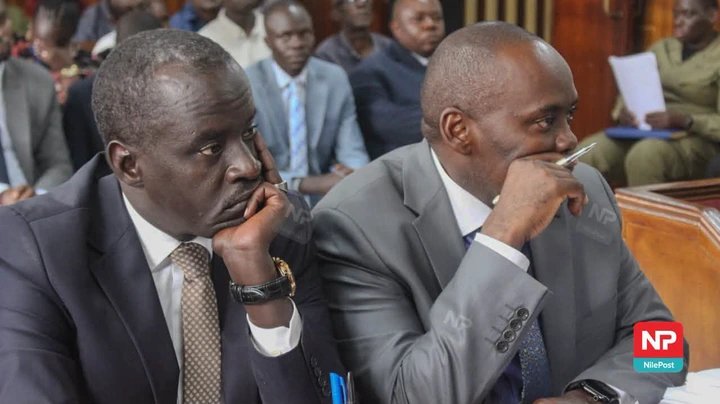

Lawyers representing former UPDF officer Michael Katungi Mpeirwe have challenged the DPP’s involvement in his extradition case, arguing that extradition is not a criminal proceeding and therefore falls outside the office’s constitutional mandate.
Lawyers representing former UPDF officer Michael Katungi Mpeirwe have challenged the authority of the Director of Public Prosecutions to conduct extradition proceedings against their client, arguing that extradition is not a criminal proceeding.
Led by veteran lawyer Medard Ssegona, the defence told Buganda Road Chief Magistrate Ritah Kadasa that the DPP has no legal standing in the case because Katungi has not been charged with any criminal offence in Uganda.
Ssegona argued that extradition proceedings are a special category of proceedings, commonly referred to in law as sui generis, and should not be treated like ordinary criminal prosecutions.
“The DPP has no locus in extradition proceedings because they are not criminal proceedings within the meaning of the Constitution. They are sui generis proceedings,” Ssegona submitted.
The lawyer relied on decisions from Kenya and the Philippines to support his argument that extradition has a distinct legal character and is separate from ordinary criminal investigations and prosecutions.
He told court that proceedings can only be considered criminal if there is an offence and a corresponding criminal charge.
“For it to be of a criminal nature, there must be a criminal offence and a charge. There is none before you,” he said.
Ssegona said Katungi has no criminal charge pending against him in Uganda and questioned the basis on which the DPP had become involved in proceedings seeking his surrender to the United States.
He also challenged the manner in which the case was brought before the Ugandan courts, arguing that there was no evidence that Ugandan authorities had investigated Katungi or established a criminal case against him.
The lawyer pointed to the Uganda Police Force’s Criminal Investigations Directorate, arguing that if the proceedings were criminal in nature, there should be an investigation file showing that Katungi had been investigated and that the DPP had sanctioned charges against him.
According to Ssegona, the affidavit presented before court did not demonstrate that police had investigated Katungi or that the DPP had sanctioned any criminal investigation against him in Uganda.
He said the State was instead relying on documents received through the Attorney General’s office.
Ssegona questioned the legal basis of treating the proceedings as a case between Uganda and Katungi when, according to the defence, neither police nor the DPP had initiated criminal proceedings against him.
“When the DPP has never sanctioned any investigation against him in Uganda, when the Uganda Police have no charges against him whatsoever, the proceedings are fundamentally defective,” he submitted.
The defence also challenged the use of a criminal case number in the proceedings, arguing that extradition proceedings should not automatically be classified as criminal simply because the person sought faces criminal allegations in another country.
Ssegona cited the Kenyan case of Samuel Kimuchu Gichuru and another v Attorney General and three others, arising from Constitutional Petitions 320 and 321 of 2011, which he said treated extradition proceedings as sui generis rather than criminal proceedings.
He also referred to Philippine decisions concerning extradition requests by the United States, arguing that extradition proceedings have peculiar characteristics and may involve investigative or inquisitorial processes rather than ordinary criminal prosecution.
The defence said the distinction was important because extradition proceedings can ultimately result in a person losing their liberty even though they have not been convicted or charged with an offence in the country where they are being held.
Ssegona further questioned the extent of the DPP’s constitutional mandate, arguing that the office cannot assume prosecutorial powers in proceedings that are not criminal in nature.
He asked court to strike out what he described as a fundamentally defective process, arguing that the alleged irregularities could not be cured through amendments.
“No amount of amendment can cure it. Strike it out,” Ssegona said.
The submissions form part of a broader challenge by Katungi’s lawyers against his proposed extradition to the United States, where he is wanted to face criminal allegations.
Katungi has challenged the extradition process in Uganda, with his lawyers raising several constitutional and procedural questions concerning the legality of the proceedings.
The latest challenge was made before Chief Magistrate Kadasa, who is handling the extradition proceedings as well as an application seeking to stay them pending determination of a constitutional challenge.
The court has previously ruled that the mere filing of a stay application does not automatically suspend proceedings and directed that the extradition matter continue as the substantive stay application awaits hearing.
The substantive application for stay is scheduled for August 31, 2026.


 Government will not gazette Kijanangoma as King of Tooro for now - Attorney General insists
Ultimate Uganda
Government will not gazette Kijanangoma as King of Tooro for now - Attorney General insists
Ultimate Uganda
 King Oyo’s Body to Arrive Thursday
Ultimate Uganda
King Oyo’s Body to Arrive Thursday
Ultimate Uganda
 Besigye, Lukwago expected to meet Gen. Salim Saleh today at Kapeeke
Ultimate Uganda
Besigye, Lukwago expected to meet Gen. Salim Saleh today at Kapeeke
Ultimate Uganda
 Rwabwogo Advised to ‘Eat His Bishop’ As MK Prepares to Enter State H’se: PREZ MUSEVENI ON HIS WAY OUT
Ultimate Uganda
Rwabwogo Advised to ‘Eat His Bishop’ As MK Prepares to Enter State H’se: PREZ MUSEVENI ON HIS WAY OUT
Ultimate Uganda
0 Comments