
The Kabanda Gamble: Why Is Petroleum Authority Changing Course on the Eve of First Oil?


Rubondo, right, could turn out like the Biblical Moses who led Israelites through the wilderness before 'Joshua' Kabanda stepped in Uganda is preparing to enter the production phase of its petroleum journey, but the reported choice of Fred Kabanda to lead the regulator raises questions about institutional continuity, regulatory philosophy and the kind of leadership the country needs as First Oil approaches.
Uganda is approaching the most consequential transition in the history of its petroleum industry, and it is doing so at a moment when the institution charged with regulating that industry could itself be entering a new era.
For almost two decades, Uganda's oil story has been dominated by exploration, licensing, negotiations, environmental concerns, court challenges and the long wait for infrastructure to catch up with discoveries beneath the Albertine Graben.
That is changing.
The Tilenga and Kingfisher developments are well into construction, the East African Crude Oil Pipeline (EACOP) is nearing completion, and the network of wells, roads, processing facilities and other infrastructure required to move Uganda's crude to the international market is taking shape.
According to the Uganda Investment Authority's latest update, Tilenga was 74% complete by the end of June, Kingfisher 79% and EACOP 90% overall. EACOP is designed to transport crude about 1,443 kilometres from Kabaale in Hoima to the port of Tanga in Tanzania.
Uganda's petroleum project is therefore no longer principally about preparing for production. It is becoming a producing industry.
That transition makes the reported succession at the Petroleum Authority of Uganda (PAU) particularly important.
Fred Kabanda, a petroleum professional who has spent recent years at the African Development Bank, is reported to have been selected to succeed Ernest Rubondo as Executive Director of PAU.
Other names associated with the succession discussions have included senior petroleum professionals from within the authority and government, among them Ali Ssekatawa, Peninah Aheebwa, Clovice Bright Irumba, Abdul Bazaara Byakagaba and Energy Ministry Permanent Secretary Irene Bateebe.
The debate should not be reduced to whether Kabanda is qualified. He plainly has substantial petroleum experience, and it would be inaccurate to portray him as an outsider to Uganda's oil industry. His career spans government, academia and petroleum work, while his subsequent role at the African Development Bank has exposed him to extractives and resource governance across Africa.
The more interesting question is why, at this particular point in Uganda's petroleum journey, the country would change the person at the top of its regulator and what kind of experience it believes the next phase requires.
Kabanda's story is particularly interesting because he was once almost PAU's first Executive Director. When Uganda established the authority in 2016, Kabanda was among the two candidates shortlisted for the position.
Ernest Rubondo was eventually appointed and went on to lead PAU through the period in which Uganda moved from exploration and appraisal into field development, infrastructure construction and preparation for commercial production.
The circumstances have now changed considerably. In 2016, Uganda was still building the institutional architecture required to regulate a petroleum industry that existed largely on paper.
Today, PAU's challenge is to regulate commercial production, when decisions on petroleum expenditure, field performance, reservoir management, crude measurement, safety, environmental compliance and national content will have direct consequences for government revenues and the country's economic interests.
That is why the backgrounds of the people considered for the position matter. The case for institutional continuity is strongest when looking at senior officials who have remained inside PAU throughout Uganda's transition into development.
Ssekatawa's responsibilities in legal and corporate affairs have placed him close to the regulatory and contractual questions surrounding petroleum development, while Aheebwa's work in economic and national-content monitoring touches directly on one of the central promises of Uganda's oil industry: that the sector should generate economic opportunities beyond the extraction of crude itself.
PAU has reported substantial Ugandan participation in the sector, with thousands of Ugandans employed in oil and gas activities and local companies receiving contracts linked to the wider petroleum developments. Such achievements illustrate the institutional knowledge that accumulates slowly.
Officials who have lived through procurement disputes, contractor negotiations, national-content challenges, cost reviews and political controversies possess a working understanding of the industry that cannot simply be recreated by reading files after taking office.
That does not automatically mean an internal candidate should succeed Rubondo. Institutions can become too comfortable with their own habits, and a new leader can sometimes see weaknesses that people who have worked in an organisation for years have stopped noticing. The value of an external appointment is precisely that it can bring a fresh perspective.
Kabanda's years outside PAU could therefore be an advantage.
His career at the African Development Bank has exposed him to extractives and natural-resource questions across the continent, as well as the increasingly complicated relationship between hydrocarbons, development finance and the global energy transition. That experience could prove useful because Uganda's petroleum industry no longer operates in isolation from the wider international debate.
The capital required to develop the fields is international, the companies are international, the insurers and banks are international, and environmental and climate standards are increasingly shaped beyond Kampala.
Uganda's EACOP experience demonstrated this dramatically when environmental organisations mounted a sustained campaign against the pipeline, putting pressure on financial institutions, insurers and investors associated with the project.
The African Development Bank itself has not financed EACOP, although it has supported initiatives aimed at helping Ugandan and Tanzanian businesses benefit from the project.
Kabanda has therefore operated in a world where the economic case for African petroleum development increasingly has to be considered alongside climate risk, energy transition and sustainable development.
The question for PAU is how that experience would translate into regulation. Would Kabanda largely continue the petroleum-development strategy established under Rubondo, with its emphasis on bringing Uganda's resources into production while enforcing the country's laws and national-content requirements?
Would he place greater emphasis on the long-term risks associated with petroleum dependence and the changing global energy market?
Or would he attempt to combine the two approaches, arguing that Uganda can exploit its resources while preparing for a future in which hydrocarbons are no longer the dominant source of investment and energy?
There is nothing inherently problematic about any of these positions. But the distinction matters because PAU's next Executive Director will take charge at a point when Uganda's petroleum debate is moving beyond whether the country should produce oil to the more consequential question of how that production should be managed.
Other oil-producing countries offer useful lessons.
Norway's success did not arise simply because it discovered oil. It built institutions around the resource, emphasising clear divisions between commercial interests, regulation and political decision-making. Companies operate commercially, but within a framework in which the state retains strong control over petroleum resources and insists on predictable regulation.
Norway is obviously not Uganda, but the broader lesson is relevant: petroleum wealth becomes valuable over decades only when institutions are stronger than the temporary political and commercial pressures surrounding individual projects.
Ghana offers a more directly African example. Commercial production from the Jubilee field began in 2010, transforming the country's petroleum debate. Questions that had previously been theoretical became financial realities, forcing Ghana to strengthen institutional arrangements around upstream regulation and petroleum revenue management while confronting the difficulties that accompany an emerging producer.
Uganda will face a similar institutional test.
The arrival of First Oil will not reduce the importance of PAU. It will increase it. Before production, delays and regulatory weaknesses can be absorbed into the development schedule. Once crude begins flowing, weaknesses in cost control, field management, production measurement or regulatory enforcement can translate directly into lost revenue.
This makes Rubondo's legacy important as well.
Whatever the arguments over his tenure, it is difficult to separate PAU's institutional development from his leadership. He took charge when the authority itself was being created and remained at the helm while Uganda moved towards development and production.
The ultimate test of that institution-building, however, is whether PAU can function effectively after he leaves.
If senior officials who have spent years acquiring petroleum expertise are ready to lead the authority, bypassing them raises legitimate questions about career development and institutional confidence. Uganda has invested heavily in developing a domestic petroleum workforce, and it would be counterproductive if talented officials concluded that there was no realistic path to the top of the institutions they had helped build.
But internal promotion should not become entitlement. Experience inside PAU is valuable, but it cannot substitute for leadership ability. A regulator also needs the capacity to examine itself critically, and an experienced professional returning from outside can sometimes provide precisely that perspective.
The strongest outcome would therefore not be a choice between Kabanda's international experience and the institutional memory of those who remained at PAU. Uganda needs both.
If Kabanda's appointment is confirmed, his challenge will be to demonstrate that his years outside the authority have prepared him to lead a regulator entering a fundamentally different phase. He will need to preserve the technical knowledge PAU has accumulated, strengthen its institutional independence and ensure that the authority can challenge operators when necessary without creating an unpredictable environment for legitimate investment.
That balance will matter enormously.
PAU will sit between the Ugandan state and some of the most powerful commercial interests ever to operate in the country. It will have to scrutinise companies with vastly greater financial resources, enforce regulations that can affect billion-dollar investments and ensure that the country's interests are protected without turning regulation into arbitrary interference.
The regulator must therefore be neither the industry's cheerleader nor its permanent adversary. It must be the referee, with enough technical understanding to make difficult calls and enough independence to make them without fear or favour.
That is ultimately why the Kabanda succession deserves attention beyond the personalities involved.
Uganda has spent nearly two decades getting its petroleum industry from discovery to production. The physical infrastructure is now approaching completion, and the country is moving towards the moment when its oil resources begin generating actual revenue.
The next challenge is ensuring that the institutions managing those resources are ready.
Kabanda is not an unqualified outsider. He is a petroleum professional whose career has taken him through Uganda's government, academia and international development finance, and who was once among the final candidates to lead PAU itself. His return could bring valuable international perspective and a fresh assessment of an authority that has spent a decade building its systems.
But the people who have carried PAU through the development phase also possess knowledge Uganda cannot afford to lose.
The best appointment, therefore, would be one that combines both forms of experience rather than treating them as competing assets.
The real verdict on Kabanda will not come with his appointment. It will come with his decisions: how he handles operators, how he protects the regulator's independence, how he develops the people already inside PAU, how he approaches EACOP and environmental concerns, and how effectively he ensures that Uganda captures lasting value from its petroleum resources.
First Oil will mark the beginning of that test, not its conclusion.
Uganda has spent two decades getting its oil industry to the starting line. It must now make sure that the institution holding the whistle is ready for the race.


 Starlink goes live in Uganda; price comparisons against MTN, Airtel
Ultimate Uganda
Starlink goes live in Uganda; price comparisons against MTN, Airtel
Ultimate Uganda
 NSSF sets September 24 for Annual Members Meeting as savers await interest rate declaration
Ultimate Uganda
NSSF sets September 24 for Annual Members Meeting as savers await interest rate declaration
Ultimate Uganda
 Boda boda riders launch e-commerce, digital loans platform
Ultimate Uganda
Boda boda riders launch e-commerce, digital loans platform
Ultimate Uganda
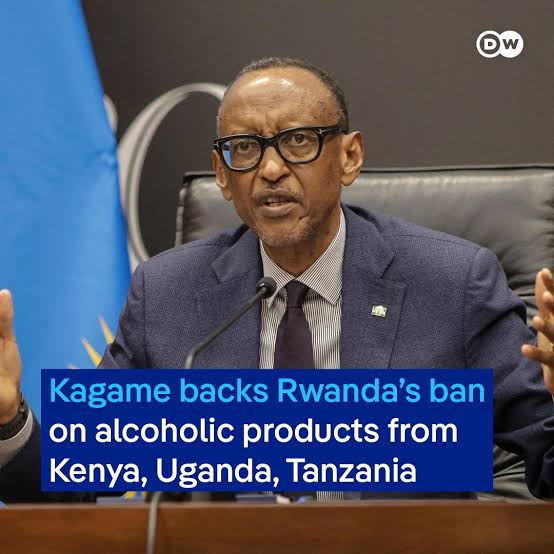 Rwanda: We Cannot Sit and Watch As Illicit Alcohol Kills People - Kagame
Ultimate Uganda
Rwanda: We Cannot Sit and Watch As Illicit Alcohol Kills People - Kagame
Ultimate Uganda
0 Comments