
Lake Bunyonyi: Residents Risk Their Lives as Canoes Remain the Only Transport Link

Lake Bunyonyi: Residents Risk Their Lives as Canoes Remain the Only Transport Link
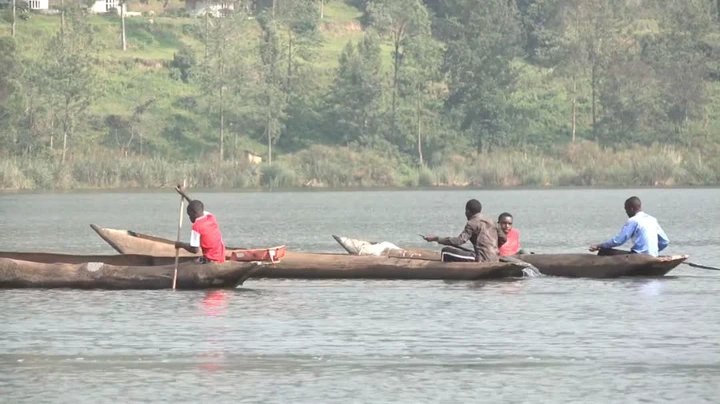
For thousands of people living on and around the 29 islands of Lake Bunyonyi, the lake is more than a source of livelihood and scenic beauty. It is also the main transport link connecting communities to schools, health facilities, gardens and markets.
But the waterway that serves as an essential lifeline is increasingly becoming a source of danger, with residents reporting persistent drowning incidents involving canoe users.
Across the lake, canoes serve as taxis, ambulances and school transport. Some journeys take up to an hour, exposing passengers to changing weather conditions and the risk of accidents.
Nearly 30 people are reportedly drowning in Lake Bunyonyi each year. In June and July 2026 alone, nine people reportedly lost their lives after strong winds overturned their canoes, with several of the victims being schoolchildren.
‘The canoe filled with water and capsized’
Rebecca Ndamwesiga, 20, a resident of Kyevu Village in Butanda Sub-county, Kabale District, is among the survivors of a recent incident.
She recalls July 26, 2026, as one of the most frightening days of her life.
Ndamwesiga said she had gone to fetch water when she met Johnson Tumukunde, the headteacher of Musamba Primary School, who asked her to transport him by canoe to church.
The two began crossing the lake, but Ndamwesiga said a strong wind suddenly struck while they were in the middle of the water.
She said the weather conditions made it difficult to see clearly before the canoe filled with water and overturned.
“When we were travelling on the lake, strong winds hit and I could not see very well. Our canoe filled with water and capsized. We ended up scattered in different directions of the lake,” Ndamwesiga said.
She said she spent nearly three hours in the water, struggling to stay afloat and shouting for help before residents eventually rescued her.
Ndamwesiga was taken to a nearby health centre for treatment. She said the incident left her traumatised and fearful of travelling on the lake.
She is now calling for greater government intervention, including the provision of life jackets and improved safety measures for communities that depend on the lake.
“The government should help us with equipment like life jackets. I believe that if I had a life jacket, I would not have drowned,” she said.
Strong winds increase risks
Ronald Asiimwe, a resident living around Lake Bunyonyi, said strong winds are among the biggest threats facing people who travel on the lake, particularly between June and September.
He said weather conditions can change quickly, making it difficult for canoe operators to maintain control.
“Between June and September, the winds are very strong. The lake becomes dangerous, but we have no other means of transport,” Asiimwe said.
For many island residents, however, avoiding the lake is not a realistic option because alternative road connections are either unavailable or impractical.
Calls for swimming lessons
Adison Owembabazi, a diver on Lake Bunyonyi, said the danger is compounded by limited swimming skills among many residents.
He said people who fall into the lake during accidents can struggle to survive while waiting for assistance, particularly if they cannot swim.
Owembabazi is calling on the government and education authorities to consider introducing swimming and basic water-safety lessons in schools around the lake.
He argues that equipping children with basic swimming and water-survival skills could help reduce the number of lives lost in drowning incidents.
Police acknowledge limited marine response
Kigezi Region Police Spokesperson Nelson Tumushime said police are concerned about the number of drowning incidents reported on Lake Bunyonyi.
He said police have begun engaging communities around the lake to raise awareness about water safety and identify measures that could help reduce drowning cases.
However, Tumushime acknowledged that the Marine Police response remains limited, particularly when accidents occur, because of shortages of personnel and resources.
“We are sensitising communities, but our marine response is still limited due to lack of enough personnel and resources on the lake,” Tumushime said.
For communities scattered across Lake Bunyonyi’s islands, canoe transport remains essential. Residents rely on the boats to reach schools, health centres, farms, markets and other services.
The challenge is therefore not simply about discouraging people from using the lake, but making the transport they depend on safer.
Residents and local stakeholders are calling for measures including increased access to life jackets, stronger marine rescue capacity, improved public awareness, swimming and water-safety education, and better preparedness during periods of strong winds.
Until such measures are strengthened, many residents face a difficult choice: continue using the lake because they have no practical alternative, despite the risks that accompany each journey.


 The women who have been in King Oyo’s life
Ultimate Uganda
The women who have been in King Oyo’s life
Ultimate Uganda
 Ex Kagame Guard Commander Tom Byabagamba Dies in Rwandan Prison After 12 Years
Ultimate Uganda
Ex Kagame Guard Commander Tom Byabagamba Dies in Rwandan Prison After 12 Years
Ultimate Uganda
 Government begins salary payments for public sector workers – Reform Committee
Ultimate Uganda
Government begins salary payments for public sector workers – Reform Committee
Ultimate Uganda
 Temangalo land: NSSF, Nzenyi reach agreement
Ultimate Uganda
Temangalo land: NSSF, Nzenyi reach agreement
Ultimate Uganda
0 Comments