
Karamoja needs more than food relief – it needs climate justice
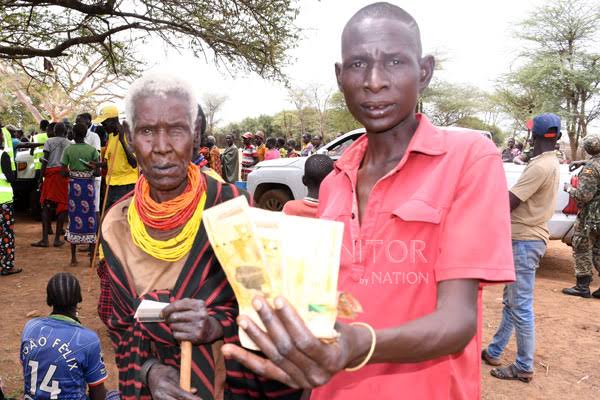

For decades, Karamoja has made national headlines for drought, hunger and humanitarian crises. Yet history may ultimately judge it not as Uganda’s hungriest sub-region, but as one of its greatest missed opportunities.
The prolonged dry spell that began in March has left many households across Karamoja facing severe food insecurity, following widespread crop failure and dwindling water and pasture.
The government, through the Office of the Prime Minister, deserves recognition for responding with emergency food relief to protect vulnerable families - saving lives must always be the immediate priority.
But after decades of recurring drought and hunger, Uganda must ask itself a harder question: How many more droughts must end in food aid before we invest in ending the cycle itself?
The answer lies beyond failed rains. Karamoja’s recurring hunger sits at the intersection of climate change, environmental degradation, and decades of underinvestment.
While climate change has intensified the frequency and severity of droughts, the sub-region’s resilience has also been eroded by deforestation, watershed degradation and unsustainable land use.
And because the communities living through this crisis have contributed least to the emissions driving it, Karamoja’s hunger is not simply a climate problem; it is a climate injustice.
Yet one of the greatest misconceptions about Karamoja is that it is naturally incapable of feeding itself.
Scientists from the National Agricultural Research Organisation (Naro) have challenged this view, arguing that the sub-region has highly fertile soils whose potential remains largely untapped due to inadequate investment, limited irrigation, weak extension services and low adoption of modern farming technologies.
Karamoja should, therefore, not be viewed as a permanent recipient of relief food, but as one of Uganda’s most promising climate-smart agricultural frontiers.
Recognising this agricultural potential does not diminish pastoralism, which remains the backbone of the sub-region’s economy and central to its cultural heritage.
Rather, it underscores the need to invest in both modern pastoralism and climate-smart agriculture as complementary paths to resilient livelihoods.
Around the world, countries have shown that harsh climatic conditions do not have to condemn communities to chronic food insecurity.
Israel has become a global leader in dryland agriculture through sustained investment in irrigation, water management, scientific research and innovation.
Egypt’s New Delta Project is transforming vast desert landscapes into productive farmland to strengthen food security, reduce imports, and create millions of jobs.
Uganda needs not replicate these models wholesale, but it can draw lessons from countries that have turned climate constraints into agricultural opportunity.
Uganda is endowed with abundant lakes, rivers, wetlands and groundwater resources, fertile land, and enormous agricultural potential.
The challenge is not a lack of natural resources; it is a lack of sustained, strategic investment in unlocking them.
Public investment in irrigation, water harvesting and research has long fallen short of what Karamoja’s climate resilience demands.
The time has come to move from relief to resilience. Government should establish a Karamoja Climate Justice and Agricultural Transformation Initiative to unlock the sub-region’s immense potential, prioritising sustainable pastoral development, irrigation, watershed restoration, climate-smart agriculture and agro-processing industries capable of creating decent jobs and strengthening food security.
These are not merely investments in Karamoja; they are investments in Uganda’s long-term prosperity and resilience.
Emergency food relief will save lives today, and for that, the government deserves recognition. But to truly honour the people of Karamoja, we must ensure future generations inherit a sub-region where relief food is the exception, not the expectation.


 Government will not gazette Kijanangoma as King of Tooro for now - Attorney General insists
Ultimate Uganda
Government will not gazette Kijanangoma as King of Tooro for now - Attorney General insists
Ultimate Uganda
 King Oyo’s Body to Arrive Thursday
Ultimate Uganda
King Oyo’s Body to Arrive Thursday
Ultimate Uganda
 Besigye, Lukwago expected to meet Gen. Salim Saleh today at Kapeeke
Ultimate Uganda
Besigye, Lukwago expected to meet Gen. Salim Saleh today at Kapeeke
Ultimate Uganda
 Rwabwogo Advised to ‘Eat His Bishop’ As MK Prepares to Enter State H’se: PREZ MUSEVENI ON HIS WAY OUT
Ultimate Uganda
Rwabwogo Advised to ‘Eat His Bishop’ As MK Prepares to Enter State H’se: PREZ MUSEVENI ON HIS WAY OUT
Ultimate Uganda
0 Comments