
Ugandan revenue authority turns up heat on taxpayers
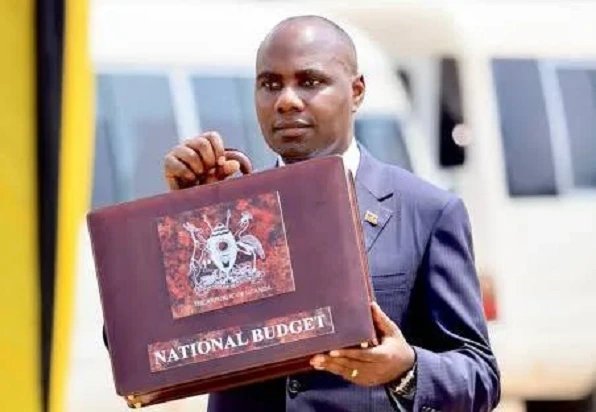

Uganda Revenue Authority has intensified its pursuit of unpaid taxes, issuing a wave of demand notices to entities.
Over the past two months, Uganda’s tax authority has intensified its pursuit of unpaid taxes, issuing a wave of demand notices to entities and requesting information from commercial banks as it races to meet higher revenue targets.
These letters include demands for unpaid taxes and requests for taxpayer information from banks. They have raised concerns about the financial health of businesses, the mounting collection pressure of the Uganda Revenue Authority, data privacy obligations, and the wider economic fallout from the US–Iran military conflict.
Since June 2026, more than 1,000 compliance notices have been issued to various taxpayers, the majority of which are tied to outstanding tax obligations, The East African has learnt. One such letter, addressed to a local pharmaceutical distributor, referred to a URA review of tax returns filed between June 2024 and June 2025, and highlighted the taxpayer's claims of stolen goods. According to documents seen by The East African, this letter also contained a fresh tax demand notice for Value Added Tax (VAT) worth billions of shillings.
The URA issued another one-page letter dated July 27, 2026 to Standard Chartered Bank Uganda, seeking information connected to a local steel company. The letter highlighted an extensive tax audit targeting the taxpayer over a five-year period from December 2020 to December 2025.
The requested information includes bank statements covering the same period, personal identity information relating to the company’s directors, and correspondence between the bank and the client in question.
While URA's information requests are legally valid under the Tax Procedures Code Act, the strict data-sharing regulations set out in the Data Privacy and Protection Act of 2019 present significant obstacles to accessing personal data held by regulated entities, including commercial banks, insurance companies, telecommunications firms, and audit firms.
According to the Data Privacy and Protection Act of 2019, sharing personal information with third parties requires the owner's consent, unless a court order is in place. URA officials were unavailable for comment by the time of publication.
However, these demands may suggest that past economic upheavals are catching up with businesses. Over the last three years, businesses have experienced the transition from the lockdowns imposed during the pandemic to the geopolitical chaos of the Russian invasion of Ukraine and the US-Iran war. Some of these events have crippled businesses such as hotels and private schools, with some of them being unable to honour their obligations at the time. The URA is under pressure to meet targets.
URA is under so much pressure to collect more taxes because of higher targets, and this piles pressure on administrative interventions.
A source at the consultancy and audit firm Deloitte & Touche Uganda suggested that the URA is seizing on identified errors in tax ledgers to follow up with the enterprises in question.
Tony Bocana, a small business owner in Kampala, said that many small businesses are struggling to make sales, reflecting a slow economy. Still, some are exploiting loopholes to avoid paying tax.
“Some people have taken advantage of the Uganda Registration Services Bureau’s decision to deregister some companies over failure to file tax returns for a long time, in order to avoid clearing their old tax obligations, but URA might follow up with some of them,” Bocana said.
Uganda’s tax revenue collection targets increased from Ush36 trillion ($9.6 billion) in the 2025/26 financial year to Ush40 trillion ($10.7 billion) in the 2026/27 financial year. Non-tax and tax revenues suffered a shortfall of Ush1.5 trillion ($401.6 million) during the first 10 months of the 2025/26 financial year.
Alexander Venter, an economist at Oxford Economics Africa based in South Africa, predicted that Uganda’s tax revenue from income, profits, and capital gains could total USh12.1 trillion ($3.2 billion) in the 2026/27 financial year.
“This should not be interpreted as our forecast for total tax collections reported by the Ugandan government, as our measure is narrower and excludes several other tax categories,” he said.
“For context, we project overall government revenue to increase by roughly 13 percent in the 2026/27 financial year, compared with the previous financial year. The growth outlook is underpinned by robust economic activity, with the expected start of commercial oil production later this year providing an additional boost to government revenues.”


 Government will not gazette Kijanangoma as King of Tooro for now - Attorney General insists
Ultimate Uganda
Government will not gazette Kijanangoma as King of Tooro for now - Attorney General insists
Ultimate Uganda
 King Oyo’s Body to Arrive Thursday
Ultimate Uganda
King Oyo’s Body to Arrive Thursday
Ultimate Uganda
 Besigye, Lukwago expected to meet Gen. Salim Saleh today at Kapeeke
Ultimate Uganda
Besigye, Lukwago expected to meet Gen. Salim Saleh today at Kapeeke
Ultimate Uganda
 Rwabwogo Advised to ‘Eat His Bishop’ As MK Prepares to Enter State H’se: PREZ MUSEVENI ON HIS WAY OUT
Ultimate Uganda
Rwabwogo Advised to ‘Eat His Bishop’ As MK Prepares to Enter State H’se: PREZ MUSEVENI ON HIS WAY OUT
Ultimate Uganda
0 Comments