
Supreme Court Rejects Gov’t Bid to Overturn Shs50bn Henley Properties Award
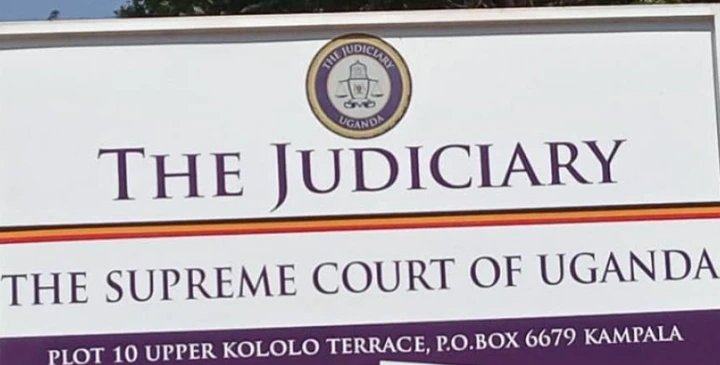

KAMPALA — Uganda’s Supreme Court has dismissed an attempt by the Attorney General to overturn a Shs50 billion compensation award to Henley Properties Ltd, ruling that the government was effectively seeking to reopen an appeal that had already been conclusively determined.
A five-member panel comprising Justices Lillian Tibatemwa-Ekirikubinza, Percy Night Tuhaise, Mike Chibita, Stephen Musota and Christopher Madrama Izama unanimously rejected the application and ordered the Attorney General to pay costs to Henley.
“The decision and orders in Civil Appeal No. 05 of 2023 stand,” Tibatemwa-Ekirikubinza said in the court’s final order seen by ChimpReports on Friday morning.
The ruling preserves a Shs50 billion award, together with interest of 15% a year, arising from the cancellation of Henley’s title to about 305.86 acres of land at Kasenso-Namasaga in Mukono district.
The dispute dates back to 2011 when Henley identified the land for development of a commercial business park.
Before purchasing it, the company carried out three official searches at the Mukono land office between October 2011 and February 2012. The searches, certified by the Registrar of Titles, showed that Nantume Flomera Nakalema, administrator of the estate of Samuel Kiwanuka Katiginya, was the registered proprietor and that there were no encumbrances.
Henley also commissioned a boundary-opening survey before buying the property.
The company initially agreed to purchase the land for Shs6.097 billion before an addendum revised the consideration to Shs6.117 billion. Henley was registered as proprietor on May 8, 2013.
Three years later, however, the Commissioner for Land Registration found that the land overlapped with a freehold title covering Kasenso Estate, registered in the name of Sugar Corporation of Uganda Ltd, or SCOUL, since 2007 and tracing its ownership to a 1947 freehold title.
The Commissioner cancelled Henley’s title on Sept. 5, 2016, saying it had been issued in error.
Henley sued the Attorney General, accusing the Land Registry of negligence in maintaining overlapping titles and arguing that it had relied on official government records before investing in the property.
High Court Judge Boniface Wamala ruled in Henley’s favour in May 2021 and awarded the company Shs50 billion as compensation for the land, with interest of 15% a year from the date the suit was filed until payment.
The Court of Appeal upheld the decision, before the Supreme Court dismissed a further government appeal in Civil Appeal No. 5 of 2023.
The Attorney General then returned to the Supreme Court seeking review of that decision, arguing that the Shs50 billion award was excessive, that the government should not be liable for the compensation and that the case should, alternatively, be sent back to the High Court to determine who should pay.
Government lawyers argued that Henley had bought the land for about Shs6.1 billion but was awarded Shs50 billion about a decade later, an increase the state described as unjust enrichment.
They also challenged the evidence that the purchase price had been paid and said the courts had failed to rely on a 2017 valuation by the Chief Government Valuer, which put the land’s value at Shs40.392 billion.
Henley had relied on other valuation evidence, including a 2016 assessment of Shs55 billion and another in 2020 valuing the property at Shs75 billion.
Madrama said the trial court had considered the competing valuations before settling on Shs50 billion, a finding later upheld by both appellate courts.
“The Attorney General’s attempt to address these factual issues afresh is an effort to get a third chance on a case that has already been fully litigated and resolved on its merits,” Madrama said.
He said the Supreme Court could not sit as an appellate court over its own final decision simply because one party disagreed with the result.
“The application is a disguised appeal that fails to identify any manifest error on the face of the record,” Madrama said.
Justice Musota agreed, saying the government’s challenge to the damages, proof of payment and interest rate involved questions of evidence and fact that had already been considered.
“The Supreme Court does not sit as an appellate court over its own decisions and has no such jurisdiction,” Musota said.
Justice Chibita similarly said the court had to interpret its powers to review previous judgments as restrictively as possible to prevent “endless litigation.”
A key part of Madrama’s ruling also faulted the Attorney General for failing during the original trial to bring the land vendors into the case through third-party proceedings.
The vendors had received more than Shs6.1 billion from Henley, and the government could have sought indemnity from them if it believed they had sold land they did not own.
“The vendors took the money and the Attorney General could have taken out third-party proceedings for indemnity to mitigate its damages against the vendors,” Madrama said.
Because that was not done, he said, the state could not later use review proceedings to shift liability away from itself or force Henley to pursue the vendors.
The court also rejected the Attorney General’s argument that the earlier judgment was per incuriam for allegedly failing to apply Section 164 of the Registration of Titles Act.
Madrama said Henley’s claim concerned negligence by the Land Registry and was brought under the provision allowing a person who suffers loss through the Registrar’s exercise of statutory functions to sue the government for damages.
He said the government’s proposed statutory defence had also not been advanced during the trial and appeals and could not be introduced at the review stage.
The judges strongly defended the principle that buyers are entitled to rely on certified records maintained by the government under Uganda’s Torrens land registration system.
“The Land Registry cannot just create titles and cancel them after transactions after business and property rights have been executed with full searches of the land register confirming the title,” Madrama said.
He warned that weakening that principle would have wider consequences for property transactions, lending and investment.
“If the public cannot rely on certified land registry searches, the commercial utility of land titles is destroyed, undermining the banking and real estate sectors,” Madrama said.
While acknowledging that Shs50 billion was a significant charge on public funds, he said the cost of undermining confidence in Uganda’s land registration system could be greater.
All five justices agreed that the Attorney General had failed to establish the exceptional circumstances required for the Supreme Court to revisit its final judgment.
The application was dismissed with costs to Henley Properties.


 Government will not gazette Kijanangoma as King of Tooro for now - Attorney General insists
Ultimate Uganda
Government will not gazette Kijanangoma as King of Tooro for now - Attorney General insists
Ultimate Uganda
 King Oyo’s Body to Arrive Thursday
Ultimate Uganda
King Oyo’s Body to Arrive Thursday
Ultimate Uganda
 Besigye, Lukwago expected to meet Gen. Salim Saleh today at Kapeeke
Ultimate Uganda
Besigye, Lukwago expected to meet Gen. Salim Saleh today at Kapeeke
Ultimate Uganda
 Rwabwogo Advised to ‘Eat His Bishop’ As MK Prepares to Enter State H’se: PREZ MUSEVENI ON HIS WAY OUT
Ultimate Uganda
Rwabwogo Advised to ‘Eat His Bishop’ As MK Prepares to Enter State H’se: PREZ MUSEVENI ON HIS WAY OUT
Ultimate Uganda
0 Comments