
Uganda’s 230,000-Barrel Oil Plan Nears Export Stage
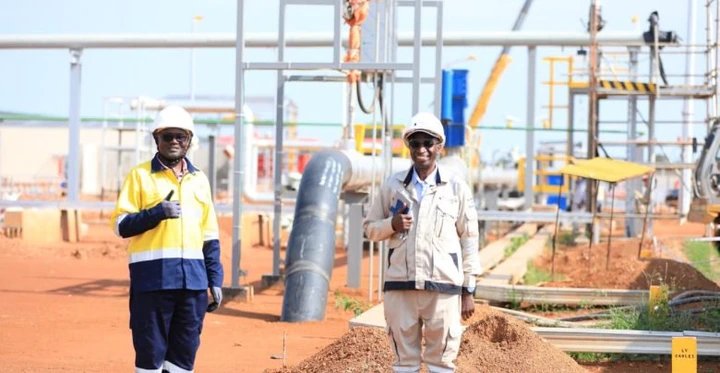

Rubondo inspecting the pre-oil production process in Hoima
HOIMA, Uganda — Uganda’s planned 230,000-barrel-a-day oil industry moved closer to production after the East African Crude Oil Pipeline reached 92% completion and maintained a target of receiving its first crude before the end of 2026.
The progress was reported during a two-day inspection of oil projects in the Albertine Graben by Petroleum Authority of Uganda Executive Director Ernest Rubondo.
“The project is now 92% complete and remains on track to receive first crude oil before the end of 2026,” PAU said on Saturday after Rubondo visited Pump Station One in Hoima.
The station is where crude from the Tilenga and Kingfisher developments will enter the heated export pipeline for transportation to Tanzania’s Indian Ocean port of Tanga.
Rubondo said the inspection was intended to evaluate progress towards First Oil and establish whether production, power and transportation infrastructure would be ready within the government’s timeline.
Tilenga, operated by TotalEnergies SE, is designed to produce as much as 190,000 barrels a day from six fields.
Cnooc Ltd.’s Kingfisher project is expected to add 40,000 barrels daily, bringing Uganda’s planned peak production to about 230,000 barrels a day. 
EACOP, the outlet for most of that production, will have capacity to transport as much as 246,000 barrels a day.
The buried, insulated pipeline stretches 1,443 kilometres from Hoima to Tanga, including 296 kilometres in Uganda and 1,147 kilometres in Tanzania.

Uganda’s crude is waxy and must be maintained above 50 degrees Celsius during transportation, making reliable electricity supplies critical to the pipeline’s operation.
Rubondo also inspected the Kabalega Sub-Power Station, which is being developed to supply electricity to EACOP facilities.
Project officials told ChimpReports that the station remained on schedule to begin supplying power by October 2026.
Completion of the power station, upstream processing facilities and the pipeline will determine whether Uganda meets its latest First Oil schedule.
PAU said EACOP had created about 12,000 jobs, compared with an initial target of 7,500. The project has also constructed and handed over 520 replacement houses to affected households and planted more than 500,000 trees.
“The socio-economic achievements have surpassed several of the initial targets,” the authority said.
The EACOP Academy has enrolled 141 students as part of efforts to prepare a local technical workforce for the petroleum industry.
On the second day of the inspection, Rubondo is expected to visit the Tilenga project in Buliisa and Nwoya districts.
The development involves about 420 wells drilled from 29 locations and a central processing facility at Kasenyi.
PAU did not publish a verbatim statement from Rubondo with the field update; his position is therefore reported indirectly to avoid attributing words he was not recorded as saying.


 Starlink goes live in Uganda; price comparisons against MTN, Airtel
Ultimate Uganda
Starlink goes live in Uganda; price comparisons against MTN, Airtel
Ultimate Uganda
 NSSF sets September 24 for Annual Members Meeting as savers await interest rate declaration
Ultimate Uganda
NSSF sets September 24 for Annual Members Meeting as savers await interest rate declaration
Ultimate Uganda
 Boda boda riders launch e-commerce, digital loans platform
Ultimate Uganda
Boda boda riders launch e-commerce, digital loans platform
Ultimate Uganda
 Rwanda: We Cannot Sit and Watch As Illicit Alcohol Kills People - Kagame
Ultimate Uganda
Rwanda: We Cannot Sit and Watch As Illicit Alcohol Kills People - Kagame
Ultimate Uganda
0 Comments