
BoU Directs Banks to Submit Plans for $500bn Credit Expansion


BoU governor Atingi-Ego speaking at the Financial Services’ second annual research conference in Kampala this past week
KAMPALA — Bank of Uganda has directed supervised financial institutions to submit board-approved strategies showing how they will support a more than sixteen-fold increase in private-sector credit by 2040, as the country pursues its goal of building a $500 billion (Shs 490tn) economy.
Governor Michael Atingi-Ego said banks and other regulated institutions must explain how their business models, capital positions and risk appetites will evolve to support the government’s tenfold economic growth agenda.
Uganda will need to expand private-sector credit from just under Shs30 trillion currently to more than Shs490 trillion by 2040, while raising the credit-to-gross domestic product ratio from 12.4% towards 50%, he said.
The directive requires each institution’s board to formally state how it intends to participate in financing that expansion.
The submissions will also inform how the central bank adjusts the regulatory environment.
Atingi-Ego announced the requirement while delivering a speech titled The Role of Financial Sector Regulation in Advancing the 10x Growth Agenda at the Uganda Institute of Banking and Financial Services’ second annual research conference.
“Our task is not risk avoidance, but risk mastery,” Atingi-Ego said. “Institutions that succeed will build strong risk governance, robust balance sheets, deep analytical capability and the confidence to finance long-term economic transformation.”
He called on financial institutions to “build the capital, the risk governance, and the balance sheet capacity to lend at a scale and pace this country has not previously attempted.”
The proposed credit expansion would require banks to carry considerably larger loan books while managing higher exposure to sectors such as agriculture, manufacturing, infrastructure, housing and export-oriented industries.
The governor said the central bank would pursue regulation that is proportionate and forward-looking, balancing financial stability with the need to support investment.
“Regulation, done well, is the mechanism that lets ambition and safety advance together,” he said.
Atingi-Ego also raised concern over capital tied up in prolonged commercial disputes, saying money trapped in litigation cannot be lent or invested.
Faster dispute resolution should therefore be treated as both a judicial and financial-sector priority, he said.
At the conference, the governor symbolically approved the launch of a Financial Sector Research Hub comprising a research agenda, research fund and research centre.
The initiative is intended to expand the use of evidence in regulation, policy formulation and institutional decision-making.
He urged researchers to test prevailing assumptions in the financial industry, including those relating to credit scoring, climate exposure, capital-market behaviour and supervisory technology.
“Test our assumptions on credit scoring, climate exposure, capital market behaviour, and supervisory technology, and hold us to what the data shows,” Atingi-Ego said.


 Starlink goes live in Uganda; price comparisons against MTN, Airtel
Ultimate Uganda
Starlink goes live in Uganda; price comparisons against MTN, Airtel
Ultimate Uganda
 NSSF sets September 24 for Annual Members Meeting as savers await interest rate declaration
Ultimate Uganda
NSSF sets September 24 for Annual Members Meeting as savers await interest rate declaration
Ultimate Uganda
 Boda boda riders launch e-commerce, digital loans platform
Ultimate Uganda
Boda boda riders launch e-commerce, digital loans platform
Ultimate Uganda
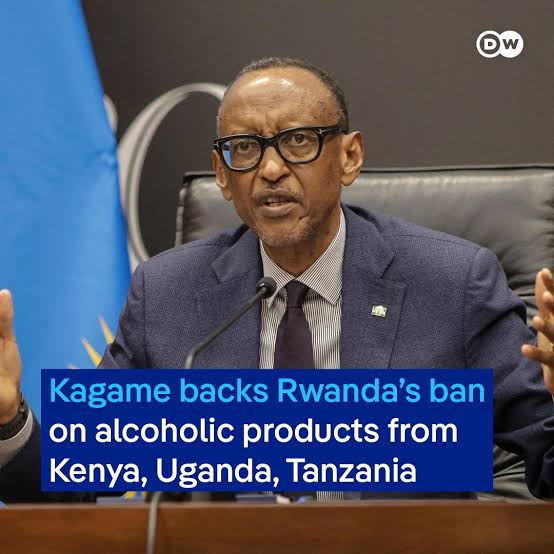 Rwanda: We Cannot Sit and Watch As Illicit Alcohol Kills People - Kagame
Ultimate Uganda
Rwanda: We Cannot Sit and Watch As Illicit Alcohol Kills People - Kagame
Ultimate Uganda
0 Comments