
Recalled Diplomat Tusubira Faces Questions Over $400 Monthly Legal Retainer
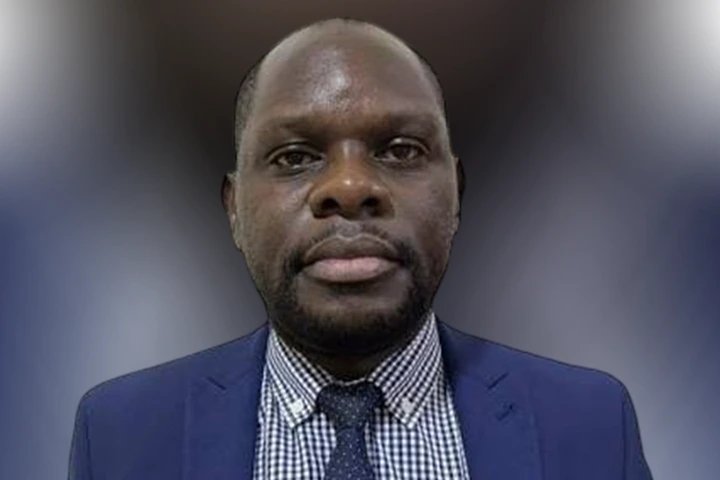

Recalled Diplomat Tusubira Faces Questions Over $400 Monthly Legal Retainer
Ugandan diplomat Eriya Tusubira is facing questions over a private legal-services agreement that earned him $400 (about Shs1.4 million) a month from the World Islamic Call Society (WICS) while he was serving at the Ministry of Foreign Affairs.
The agreement, covering a year from October 1, 2019 to September 30, 2020, was signed while WICS was establishing its formal relationship with the Ugandan government through the Foreign Affairs Ministry.
Documents reviewed by Nile Post show that Tusubira was retained by WICS Uganda in his “individual and private capacity” as an advocate, with the contract requiring him to provide a range of legal services to the organisation.
The arrangement entitled Tusubira to $400 per month, translating to $4,800 (Shs18 million) over the full year if the retainer was paid throughout the contract period. Litigation costs, travel, disbursements and assignments outside Kampala were to be charged separately.
Officials familiar with the matter say Tusubira did not notify his supervisors about the private engagement or declare his financial interest in WICS. There is also no indication that he sought permission to undertake the work or recused himself from official ministry business involving the organisation.
The Ministry of Foreign Affairs and WICS had signed a host-country agreement in April 2019, formally recognising the organisation’s operations in Uganda.
Tusubira is alleged to have handled matters concerning WICS at the ministry while providing private legal services to the same organisation, creating potential questions about a conflict between his official responsibilities and personal financial interests.
The documents do not independently establish Tusubira’s exact role in drafting, negotiating or processing the host-country agreement. They do, however, show that he accepted a broad private legal mandate from an organisation whose official relationship with the Ugandan government was being managed through his ministry.
Under the agreement, Tusubira was required to advise WICS on legal matters, prepare legal briefs, draft contracts and correspondence, handle property transactions and represent the organisation in negotiations, meetings, mediation and arbitration.
The contract further barred WICS from retaining another provider for similar legal services during the period of the agreement. It was signed by Tusubira and WICS Uganda Country Director Saleh Ahmed Ashour.
The arrangement raises questions about compliance with Uganda’s public service ethics rules, which require public officers to put public interest ahead of personal interests and avoid circumstances in which the two may conflict.
Section 4.6 of the Code of Conduct and Ethics for Uganda Public Service provides that an officer conducting government business should not place himself or herself in a position where personal interests conflict with official duties and responsibilities.
Where such a conflict arises, the officer is required to inform the supervisor about the nature and extent of the interest.
The 2010 edition of the Uganda Public Service Standing Orders, which was in force when Tusubira signed the agreement, also required public officers to maintain professional integrity, avoid using their positions for personal benefit and obtain the necessary authority before undertaking outside work that could interfere with their official responsibilities.
Tusubira’s reported failure to disclose the retainer is therefore central to questions over whether he complied with the applicable public service rules.
Sources familiar with the matter say any disciplinary process should examine Tusubira’s ministry responsibilities at the time, the extent to which they overlapped with his private legal work for WICS and whether the arrangement influenced, or could reasonably have appeared to influence, his handling of government business.
The private retainer ended on September 30, 2020.
Recall from Abuja
The questions surrounding the contract emerge as Tusubira deals with separate scrutiny over his conduct while serving at Uganda’s High Commission in Abuja.
Tusubira, who was First Secretary and accounting officer at the mission, became embroiled in a dispute with locally recruited employees after 17 staff members staged a strike on May 8, 2026 over what they said were several months of unpaid salaries.
Tusubira called Nigerian police to the mission to disperse the protesting employees, resulting in a confrontation that was captured on video.
The police intervention was reportedly made without prior consultation with the ministry headquarters in Kampala.
Foreign Affairs Permanent Secretary Vincent Bagiire subsequently removed Tusubira from his duties as accounting officer.
Following further inquiries into administrative disputes and corruption allegations at the mission, Bagiire recalled Tusubira to Kampala and directed him to return by August 31, 2026.
The recall does not, in itself, constitute a finding of wrongdoing against Tusubira.
The latest scrutiny adds to wider concerns about discipline and financial management at Uganda’s diplomatic missions abroad.
Uganda’s High Commission in Nigeria has previously been subject to a criminal investigation over allegations of money laundering and embezzlement.
In July 2024, the Criminal Investigations Directorate, working with the State House Anti-Corruption Unit, asked the Foreign Affairs Ministry to provide documents required for investigations into senior officials at the mission.
The allegations included suspected misuse of funds intended for construction of Uganda’s chancery in Abuja and irregular foreign-exchange transactions.
The renewed scrutiny of Tusubira’s earlier private engagement with WICS is likely to place further attention on how public officers manage private professional interests while handling government business, particularly where the private interests involve organisations with official dealings with the state.


 Government will not gazette Kijanangoma as King of Tooro for now - Attorney General insists
Ultimate Uganda
Government will not gazette Kijanangoma as King of Tooro for now - Attorney General insists
Ultimate Uganda
 King Oyo’s Body to Arrive Thursday
Ultimate Uganda
King Oyo’s Body to Arrive Thursday
Ultimate Uganda
 Besigye, Lukwago expected to meet Gen. Salim Saleh today at Kapeeke
Ultimate Uganda
Besigye, Lukwago expected to meet Gen. Salim Saleh today at Kapeeke
Ultimate Uganda
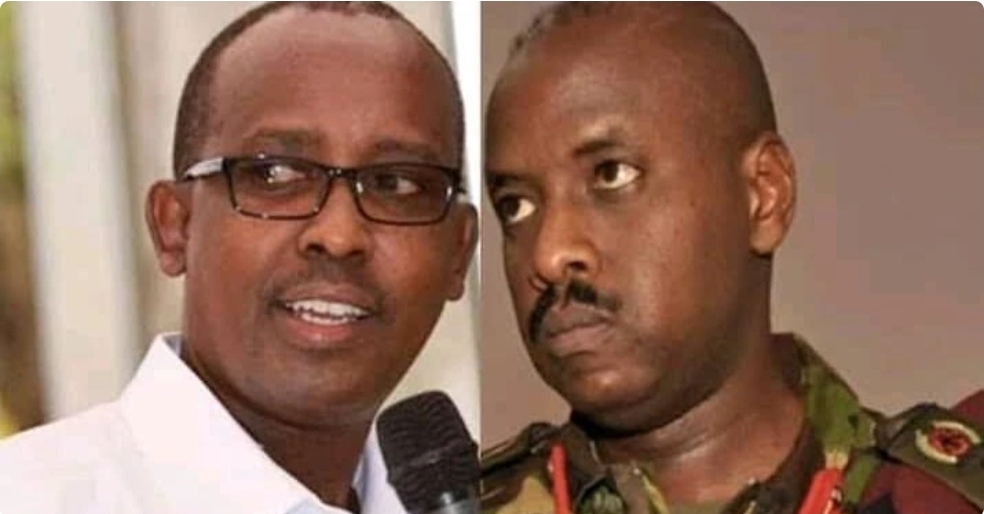 Rwabwogo Advised to ‘Eat His Bishop’ As MK Prepares to Enter State H’se: PREZ MUSEVENI ON HIS WAY OUT
Ultimate Uganda
Rwabwogo Advised to ‘Eat His Bishop’ As MK Prepares to Enter State H’se: PREZ MUSEVENI ON HIS WAY OUT
Ultimate Uganda
0 Comments