
Bodas gone wild: Kampala’s deadly traffic crisis
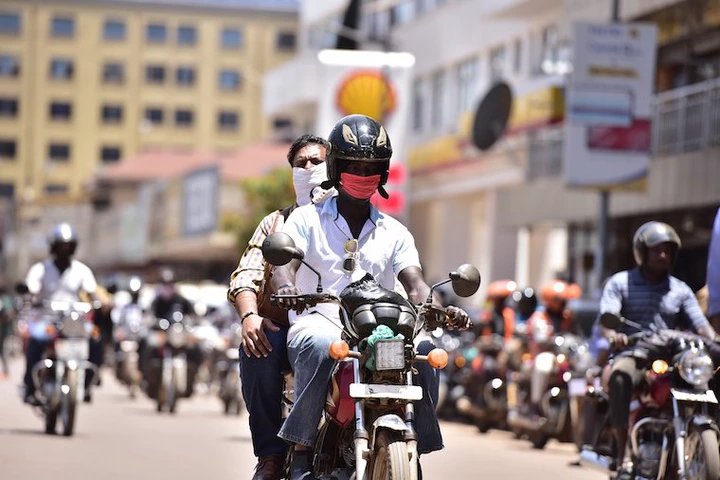

Public transport was banned in the country in the wake of a coronavirus outbreak
On most mornings in the city, before the sun has burned the mist off Kampala’s hills or the jam has begun to choke roads, you can already hear them, hundreds of boda bodas revving awake, a restless swarm preparing to carry Kampala through another day.
They move, ferrying office workers, students, groceries, grief, joy, and everything in between. In a city built on hills but threaded with narrow roads, they are both a lifeline and, increasingly, a threat. Bodas have become the pulse of Kampala’s transport economy.
They are, fast and available on every corner. But behind that convenience is a harder story about unemployment, desperation, survival, and a city struggling to manage the consequences of a transport revolution it never fully planned for.
Uganda’s National Census 2024 captures the pressure behind this boom: unemployment stands at 12.3 percent for those aged 15 and above; among young people aged 15 to 24, a staggering 42.6 percent are not in school, not working, and not training. In that vacuum, the boda boda becomes more than a motorcycle. It becomes Plan A, B and C.
“Kampala today has more than two million bodas,†says a senior official at the Kampala Capital City Authority (KCCA).
“Every month, about 25,000 new motorcycles enter the market. But our ability to regulate them is nowhere near that pace.â€
And the numbers tell their own story. A joint boda boda census by KCCA and the ministry of Works found that 94 percent of riders have no driving license, 98 percent lack Public Service Vehicle permits, 73 percent have no logbooks, and dozens don’t even have national IDs.
Basic safety checks, helmets, reflectors and functioning indicators are often absent altogether. The consequences are visible on the city’s roads. In 2024, Uganda recorded 25,107 road crashes. Motorcycles were involved in 1,720 of them, killing far more riders and passengers than the year before.
“Fatalities among motorcyclists rose by 13.2 percent,†the police report notes. And more boda passengers died too—676, up from 614.
“SOMETIMES PASSENGERS ARE PART OF THE PROBLEMâ€
Wandegeya, a known chaos point where bodas buzz like flies around stalled cars, riders cut across three lanes in defiance of a red light. “This is what we deal with daily,†Michael Kananura, spokesperson for the directorate of Traffic and Road Safety, said.
“Riders go against traffic, ride on pavements, ignore lights. But passengers also contribute. They rush them, pressure them, even demand shortcuts through one-way streets.â€
“Before waiting for police to act, passengers themselves must enforce standards. Refuse a rider who has no helmet or is drunk or has a bike in bad condition. If the public insists on safety, riders will follow,†he said.
The force is now running its “Arrive Alive†campaign, arresting and fining errant riders while trying to shift public attitudes around safety. But enforcement alone is hard in a city where boda-bodas outnumber cars nearly five to one.
At Kabugo stage in Makerere Kikoni, 29-year-old Ahumuza leaned against his red motorcycle, the engine still warm. A few years ago, he was running a small electronics shop. Then thieves cleaned out his stock.
“I had no job and no qualifications,†he said. “With the boda boda, I am looking after my family, paying school fees for my children, and soon I will start building my house in Kisoro.â€
He knows he should have a license, but says the fees are simply out of reach. “Where do I get Shs 500,000? I struggle to make Shs 30,000 on a good day.â€
A few metres away, Ahimbisibwe, who holds a bachelor’s degree in accounting, told a similarly uneasy story. He took up riding because his office job paid too little.
“I got the bike on loan. When I finish paying it off, then I’ll apply for the license. Right now, survival comes first.†These stories are the quiet engine of the boda economy. For many, the motorcycle is not a choice. It’s the last open door.


 Starlink goes live in Uganda; price comparisons against MTN, Airtel
Ultimate Uganda
Starlink goes live in Uganda; price comparisons against MTN, Airtel
Ultimate Uganda
 NSSF sets September 24 for Annual Members Meeting as savers await interest rate declaration
Ultimate Uganda
NSSF sets September 24 for Annual Members Meeting as savers await interest rate declaration
Ultimate Uganda
 Boda boda riders launch e-commerce, digital loans platform
Ultimate Uganda
Boda boda riders launch e-commerce, digital loans platform
Ultimate Uganda
 Rwanda: We Cannot Sit and Watch As Illicit Alcohol Kills People - Kagame
Ultimate Uganda
Rwanda: We Cannot Sit and Watch As Illicit Alcohol Kills People - Kagame
Ultimate Uganda
0 Comments