
Uganda: Kasese Cotton Farmers Decry Climate Change, Low Prices, Call for Government Intervention
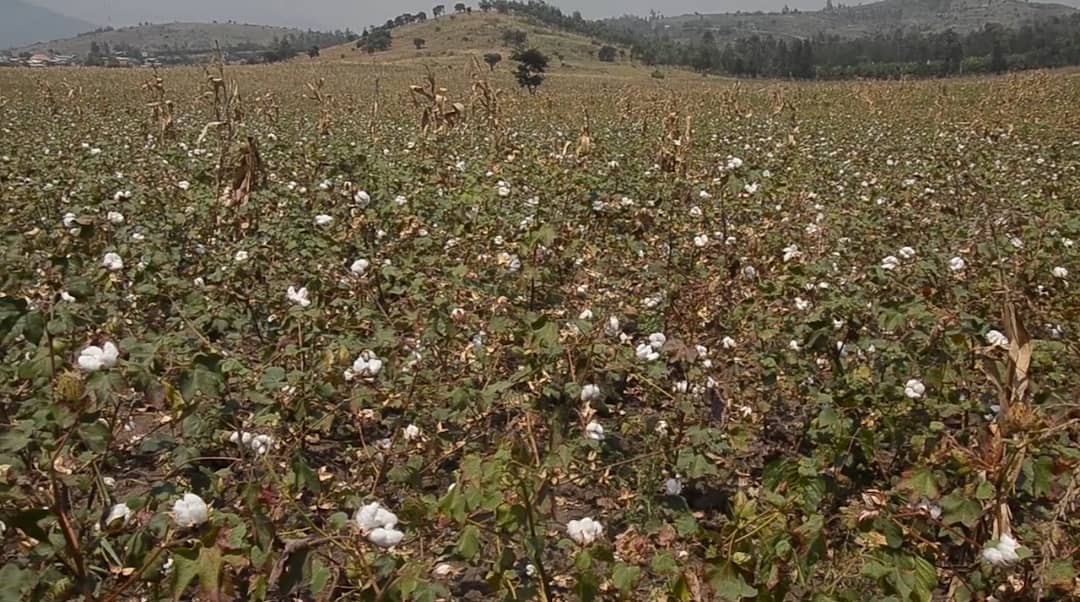

Cotton farmers in Kasese District have raised fresh concerns over climate change and falling market prices, warning that the twin challenges are threatening the survival of one of the region's once most reliable cash crops.
Farmers say prolonged dry spells, erratic rainfall and unstable prices have combined to make cotton farming increasingly unprofitable. They are now calling on the government to invest in research for improved seed varieties that can withstand changing climate conditions, alongside measures to stabilise prices.
For decades, cotton has been a backbone of household incomes in Kasese. However, many growers now say they are struggling to justify continued investment in the crop.
"Weather patterns have changed completely. We experience long dry spells followed by unpredictable rains, which badly affect yields," said Adam Bwambale, Manager of the Nyakatonzi Growers Cooperative Union.
Follow us on WhatsApp | LinkedIn for the latest headlines
"We urgently need cotton varieties that can survive under these new climate conditions. Without research into better seeds, productivity will continue to decline," Bwambale warned.
Despite these challenges, Kasese remains among the leading cotton-producing districts in Uganda. However, farmers on the ground say production costs have risen sharply while returns continue to shrink.
For Brian Bwambale, a cotton farmer in Nyakatonzi, the numbers no longer add up.
"By the time you pay for seedlings, labour, pesticides and land preparation, the price offered for cotton cannot even cover the costs," he said. "We are working at a loss."
The Kasese District Agricultural Office acknowledges the pressure farmers are under. Julius Rukara, the District Agricultural Officer, says climate stress and low prices are creating dangerous incentives.
"When farmers are desperate, some may be tempted to adulterate cotton to increase weight," Rukara noted. "This is risky because it lowers quality and can further depress market prices."
At the national level, the Minister of State for ICT and National Guidance, Godfrey Kabyanga, said Uganda has limited influence over cotton prices, which are determined on the global market.
"Cotton prices are set internationally. As a country, we cannot easily control what farmers are paid," Kabyanga explained.
The minister suggested that small-scale farmers may need to consider alternative crops, arguing that cotton farming is more viable for growers with large land holdings.
"Cotton requires sizeable acreage to be profitable. Farmers with very small land holdings may be better off diversifying," he said.
However, many farmers in Kasese strongly disagree with this position. They argue that abandoning cotton is not the solution, but rather strengthening support systems around it.
Stephen Katekere, a cotton farmer in the district, said the government should focus on empowering growers instead of pushing them out of the sector.
"We are not asking to quit cotton. We want climate-resilient seeds, subsidised inputs and better guaranteed prices," Katekere said. "With the right support, cotton can still sustain our families."
As climate pressures intensify and prices remain uncertain, Kasese cotton farmers say urgent intervention is needed to protect livelihoods and preserve a crop that has long defined the district's agricultural identity


 Starlink goes live in Uganda; price comparisons against MTN, Airtel
Ultimate Uganda
Starlink goes live in Uganda; price comparisons against MTN, Airtel
Ultimate Uganda
 NSSF sets September 24 for Annual Members Meeting as savers await interest rate declaration
Ultimate Uganda
NSSF sets September 24 for Annual Members Meeting as savers await interest rate declaration
Ultimate Uganda
 Boda boda riders launch e-commerce, digital loans platform
Ultimate Uganda
Boda boda riders launch e-commerce, digital loans platform
Ultimate Uganda
 Rwanda: We Cannot Sit and Watch As Illicit Alcohol Kills People - Kagame
Ultimate Uganda
Rwanda: We Cannot Sit and Watch As Illicit Alcohol Kills People - Kagame
Ultimate Uganda
0 Comments