
URA restricts importation of Starlink equipment, requires UPDF clearance
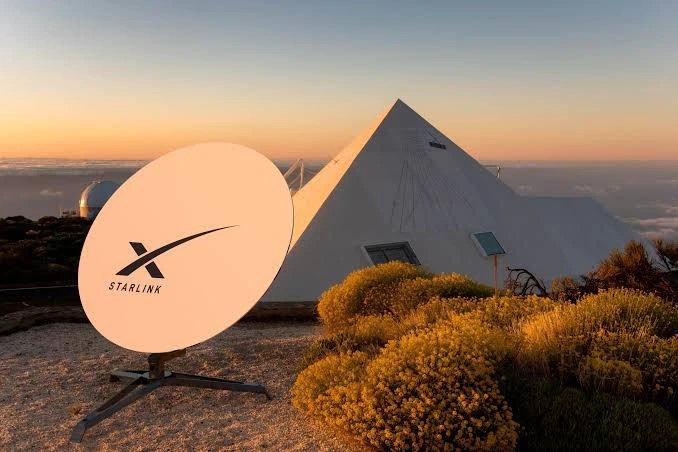

The Uganda Revenue Authority (URA) has imposed an immediate restriction on the importation and customs clearance of Elon Musk’s Starlink technology and other communication equipment, requiring special authorization from the Uganda Peoples Defence Forces (UPDF) before such items can enter the country.
The directive is contained in a memorandum dated December 19, 2025, signed by Asadu Kigozi Kisitu of the Customs Commissionerate Department (CCD), and addressed to all customs staff across the country.
“This communication serves to officially notify staff about the immediate restriction on the importation and customs clearance of Starlink technology gadgets, communication equipment and associated components,†the memorandum states.
According to the guidance issued by Kisitu, any importer seeking to clear Starlink-related devices or communication equipment must first obtain a clearance or authorization letter from the Chief of Defence Forces of the Uganda Peoples Defence Forces.
“Any import declaration of the aforementioned items should be accompanied by a clearance or authorization letter from the Chief of Defence Forces – Uganda Peoples Defence Forces,†the memo adds.
URA emphasized that the directive takes effect immediately and applies to all customs entry points, placing responsibility on customs officers to ensure strict compliance.
“This guidance takes effect immediately and all staff are expected to adhere to it,†Kisitu notes in the communication.
Although URA did not publicly outline the reasons behind the restriction, the move highlights increased scrutiny over satellite-based internet technology and advanced communication equipment, which authorities increasingly consider sensitive due to national security and regulatory concerns.
The memorandum was copied to the Commissioner General, underscoring the importance of the directive within the tax and customs administration as URA reinforces control over the importation of specialized communication technologies.
Responding to the debate on social media, URA Assistant Commissioner for Public and Corporate Affairs, Kalumba dismissed claims that the directive was politically motivated, saying the public debate is based on a misunderstanding of standard customs and security procedures.
“There is nothing new about requesting security clearance and government licensing for entities importing sensitive communication equipment,†Kalumba said.
He stressed that Uganda is not acting in isolation and that similar requirements exist across the world.
“It is not only Uganda that asks for security clearance. This is a worldwide practice carried out by many countries,†Kalumba noted, urging the public to view the directive in its proper context.
“So let us not create a storm in a teacup,†he added.
Kalumba further explained that the importation of controlled or sensitive communication technologies is subject to strict regulation globally, often involving licensing regimes, product-specific approvals, and security vetting by customs authorities and specialized government agencies.
“These measures are intended to safeguard national security by ensuring that sensitive communication technologies are not misused or allowed to fall into the wrong hands,†he said.
He also pointed to international precedents, noting that several countries require security clearance before approving the rollout or importation of Starlink equipment and services.
“Countries such as India, Pakistan, South Africa, Senegal, Vietnam and the Democratic Republic of Congo, among others, have all required security clearance before the rollout of Starlink services,†Kalumba said.
URA officials maintain that Uganda’s approach mirrors these international practices, emphasizing that prior security clearance is a common regulatory requirement in jurisdictions where Starlink technology is licensed and deployed.


 Government will not gazette Kijanangoma as King of Tooro for now - Attorney General insists
Ultimate Uganda
Government will not gazette Kijanangoma as King of Tooro for now - Attorney General insists
Ultimate Uganda
 King Oyo’s Body to Arrive Thursday
Ultimate Uganda
King Oyo’s Body to Arrive Thursday
Ultimate Uganda
 Besigye, Lukwago expected to meet Gen. Salim Saleh today at Kapeeke
Ultimate Uganda
Besigye, Lukwago expected to meet Gen. Salim Saleh today at Kapeeke
Ultimate Uganda
 Rwabwogo Advised to ‘Eat His Bishop’ As MK Prepares to Enter State H’se: PREZ MUSEVENI ON HIS WAY OUT
Ultimate Uganda
Rwabwogo Advised to ‘Eat His Bishop’ As MK Prepares to Enter State H’se: PREZ MUSEVENI ON HIS WAY OUT
Ultimate Uganda
0 Comments