
From Ballot Box to Terror Docket: Inside the Case Against Muwanga Kivumbi
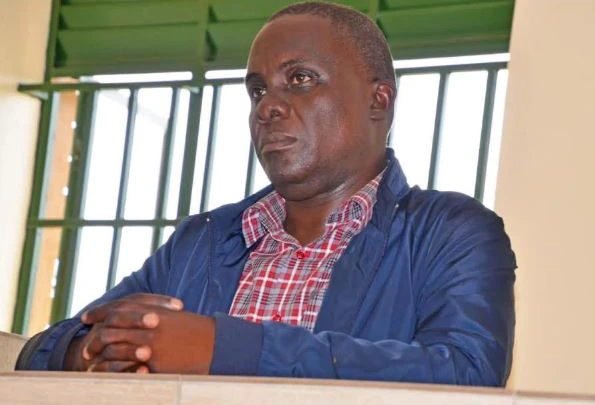

KAMPALA — What began as a fiercely contested parliamentary race in rural Butambala has now hardened into one of the most consequential legal battles of Uganda’s post-election moment.
Muwanga Kivumbi, a veteran opposition legislator and vice president for Buganda of the National Unity Platform (NUP), is facing terrorism charges—an escalation that has jolted the political class and set off a nationwide debate over the reach of national security laws.
Court documents reviewed by this publication show that prosecutors have charged Kivumbi under sections 6(1)(a) and 3(o) of the Anti-Terrorism Act, Cap 120, accusing him and unnamed accomplices “still at large†of orchestrating coordinated violence in the days surrounding the election.
What the charge sheet alleges
Filed as Police Form 53 at Butambala Police Station (CRB 025/2026) and dated January 22, 2026, the charge sheet identifies the accused as “Muwanga Kivumbi Muhammad, aged 52 years, Muganda, MP Butambala County, resident of Buwate Village, Kira Municipality, Wakiso District.â€
Under “Particulars of Offence,†prosecutors allege that between January 11 and January 17, 2026, Kivumbi and others carried out acts:
“For purposes of influencing the government or intimidating the public or a section of the public and for a political or economic aim, indiscriminately without due regard to the safety of others or property.â€
The document further claims the group:
“Orchestrated and executed a violent attack on Kibibi Police Station and Butambala Electoral Commission Tally Centre.â€
Header advertisement
Investigators also cite alleged infrastructure and property damage, including:
“Serious damage to sections of the Butambala–Gomba road,†and damage to vehicles bearing registration numbers UBM 614Q (Toyota Land Cruiser), UBH 333U (Ford Double Cabin), UBQ 496Z (Subaru), UAV 378H (Toyota Raum), and UAQ 033X (Toyota Spacio).
At the center of the prosecution’s case is the claim that the alleged actions: “Directly resulted in the death of seven (7) people,†whose names are listed on the charge sheet.
The document carries signatures from the officer preferring the charge, a magistrate, and consent from the Director of Public Prosecutions—signaling that the case has cleared multiple prosecutorial thresholds.
Two versions of the same night
Authorities say the charges stem from organised attacks on state installations after results turned against the opposition. President Yoweri Kaguta Museveni echoed that view last Sunday while receiving the official declaration of presidential results at Rwakitura, alleging that armed gangs attempted to storm a polling station following Kivumbi’s defeat, prompting a lethal security response.
Kivumbi rejects that account. Before his arrest, he said security forces raided his home at night while vote tallying was ongoing, killing members of his campaign team inside the residence, not during an attack on public facilities.
He cited video footage showing bullet holes in doors and walls and insisted he was the target.
Police have dismissed that version, saying officers were responding to violence earlier in the day, including attacks on a tally centre and a police station.
Opposition fury
The terrorism charge has electrified opposition ranks. Former Leader of Opposition Winnie Kiiza condemned Kivumbi’s arrest as “a repeat of a dirty script†used to neutralise regime critics.
“They paint you as an enemy of your people, attack them, then spin the narrative until it is believable,†Kiiza said, arguing that the aim is to isolate opposition figures before arresting them on grave charges. “Hon. Kivumbi isn’t a criminal.â€
NUP officials warn that invoking terrorism statutes in an election dispute risks criminalising political competition itself.
Why this case matters
Terrorism charges are rare in electoral disputes involving mainstream politicians. If sustained, the case could redraw the boundary between political dissent and national security enforcement—with heavy penalties at stake and a precedent that may shape how future election-related violence is prosecuted.


 Government will not gazette Kijanangoma as King of Tooro for now - Attorney General insists
Ultimate Uganda
Government will not gazette Kijanangoma as King of Tooro for now - Attorney General insists
Ultimate Uganda
 King Oyo’s Body to Arrive Thursday
Ultimate Uganda
King Oyo’s Body to Arrive Thursday
Ultimate Uganda
 Besigye, Lukwago expected to meet Gen. Salim Saleh today at Kapeeke
Ultimate Uganda
Besigye, Lukwago expected to meet Gen. Salim Saleh today at Kapeeke
Ultimate Uganda
 Rwabwogo Advised to ‘Eat His Bishop’ As MK Prepares to Enter State H’se: PREZ MUSEVENI ON HIS WAY OUT
Ultimate Uganda
Rwabwogo Advised to ‘Eat His Bishop’ As MK Prepares to Enter State H’se: PREZ MUSEVENI ON HIS WAY OUT
Ultimate Uganda
0 Comments