
Shs 5.3tn Karuma Dam Delivers Only 30% of Installed Power Capacity, Threatens Loan Repayments
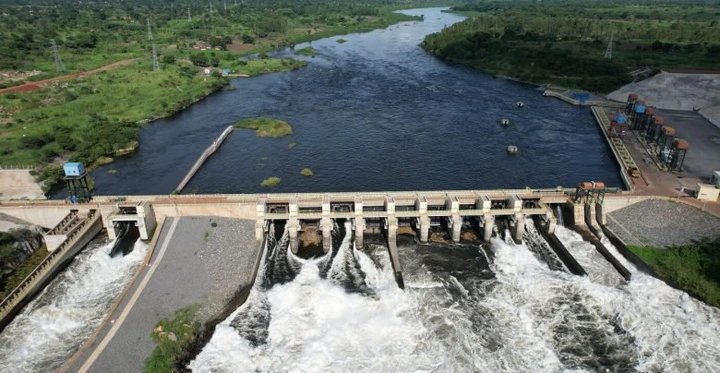

Kampala — Uganda’s flagship hydropower projects are operating far below their available generation capacity, raising concerns over revenue shortfalls and the country’s ability to service billions of dollars in Chinese loans used to build the plants, the Auditor General has warned.
In a review of the Sustainable Energy Development Programme submitted to Parliament of Uganda, the Auditor General found that while Uganda has rapidly expanded installed capacity in pursuit of its Vision 2040 target of 52,481 megawatts (MW), actual electricity dispatch remains weak—particularly at the Karuma Hydropower Plant.
Karuma, a 600MW facility financed through an on-lent loan of $1.40 billion (about Shs5.3 trillion) from EXIM Bank of China, generated a net output of 808.27 gigawatt-hours (GWh) during the year under review—just 30% of its declared available capacity of 2,652 GWh.
The audit shows that in its first year of operation, Karuma averaged just 70 megawatt-hours (MWh), rising to 116 MWh in the second year—well below the minimum required dispatch of 300 MW per hour needed to identify and rectify latent defects in turbines and associated structures during the defects liability period.
As a result, the plant realized only Shs148.16 billion in revenue—46.8% of the Shs316.42 billion that had been projected.
“In these circumstances, the company may fail to meet loan and interest repayment obligations, as well as operation and maintenance costs,†the Auditor General cautioned, adding that insufficient dispatch could also limit the ability to detect defects before warranty periods expire.
Mixed performance
Performance was stronger at older assets. The Nalubaale Kiira power complex dispatched 778.8 GWh, equivalent to 112% of its declared capacity of 695.6 GWh, reflecting heavy utilization of legacy infrastructure.
Header advertisement
The Isimba Hydropower Plant, built at a cost of $567.7 million (about Shs2.15 trillion), produced 1,046.41 GWh, or 72% of its available capacity of 1,451.06 GWh.
Together, Karuma and Isimba were constructed using loans totaling nearly $2.0 billion (about Shs7.5 trillion), dramatically increasing Uganda’s installed capacity—but also its debt exposure.
Management at Uganda Electricity Generation Company (UEGCL) attributed Karuma’s low dispatch to inadequate domestic demand and the prioritisation of cheaper plants and private producers that earn capacity charges regardless of output.
UEGCL said it has engaged the Electricity Regulatory Authority (ERA) and Uganda Electricity Transmission Company (UETCL) to allow third parties to buy excess power and to accelerate improvements in export transmission infrastructure.
Push for industry and exports
The Auditor General urged UEGCL to deepen coordination with the Ministry of Energy and Mineral Development, ERA and UETCL to stimulate demand through industrial park development, faster grid connections under the Electricity Access Scale-Up Project, and expanded cross-border power trade through the East African Power Pool.
The findings underscore a central challenge of Uganda’s power strategy: capacity has outpaced consumption. Without a rapid expansion of industry and exports, the country risks carrying underutilized assets financed by costly loans—turning hydropower from a development catalyst into a fiscal strain.


 Government will not gazette Kijanangoma as King of Tooro for now - Attorney General insists
Ultimate Uganda
Government will not gazette Kijanangoma as King of Tooro for now - Attorney General insists
Ultimate Uganda
 King Oyo’s Body to Arrive Thursday
Ultimate Uganda
King Oyo’s Body to Arrive Thursday
Ultimate Uganda
 Besigye, Lukwago expected to meet Gen. Salim Saleh today at Kapeeke
Ultimate Uganda
Besigye, Lukwago expected to meet Gen. Salim Saleh today at Kapeeke
Ultimate Uganda
 Rwabwogo Advised to ‘Eat His Bishop’ As MK Prepares to Enter State H’se: PREZ MUSEVENI ON HIS WAY OUT
Ultimate Uganda
Rwabwogo Advised to ‘Eat His Bishop’ As MK Prepares to Enter State H’se: PREZ MUSEVENI ON HIS WAY OUT
Ultimate Uganda
0 Comments