
Court Appoints Administrator General to Manage Shs 1 Trillion Garuga Estate
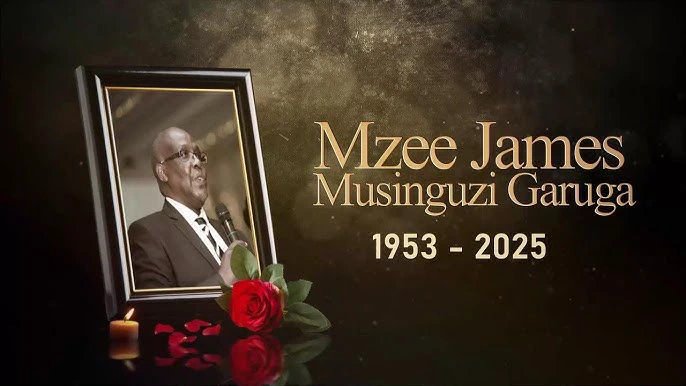

KAMPALA | The High Court’s Family Division has appointed the Administrator General to temporarily manage the estate of the late businessman James Garuga Musinguzi, valued at more than Shs 1 trillion, after ruling that warring family members are incapable of jointly administering the vast fortune.
In a ruling delivered Friday by Justice John Eudes Keitirima, the court declined an application by Garuga’s son, Alwyn Garuga Musinguzi, who had sought temporary joint letters of administration pending determination of a substantive civil suit challenging the widow’s fitness to serve as sole administrator.
Instead, the court invoked Section 214 of the Succession Act and placed the estate under neutral control.
Background
James Garuga Musinguzi died on August 6, 2025, at Nakasero Hospital and is presumed to have died intestate.
His estate includes prime Kampala real estate, a three-storey mansion in Mbuya, a 20-acre country home in Rugyeyo, over 210 acres of land in Garuga, tea factories in southwestern Uganda, ranches, a Koome Island pine plantation, and interests in companies such as Garuga Properties Ltd, Savannah Resort Hotel Ltd, Incafex Ltd and Kanungu Broadcasting Services.
After his death, Peace Kesiime Musinguzi, the widow, petitioned the court in Administration Cause No. 1046 of 2025 for letters of administration.
Her son, Alwyn Garuga, opposed the petition, lodging a caveat and filing Civil Suit No. 346 of 2025. He alleges that she under-declared the estate, acted in bad faith, and is not a fit and proper person to administer the assets.
Header advertisement
Peace Kesiime denies the claims, insisting she is the lawful surviving spouse, physically and mentally fit, and capable of managing the estate. She also argues that some of the companies cited are separate legal entities distinct from the deceased’s personal estate.
In his ruling, Justice Keitirima acknowledged the intensity of the family dispute.
“It is therefore apparent that the parties herein who are close relatives cannot work in harmony to manage the estate and it would instead cause a lot of disruptions and acrimony,†the judge stated.
The court emphasized that the purpose of appointing an administrator pendente lite is preservation, not distribution.
Quoting Section 214 of the Succession Act, the judge noted that:
“The court may, pending any suit… appoint an administrator of the estate… who shall have all the rights and powers of a general administrator, other than the right of distributing the estate, and every such administrator shall be subject to the immediate control of the court.â€
Justice Keitirima outlined the rationale for such an appointment, stating that it is meant:
“To preserve the estate assets, ensure continuity by managing estate affairs during court proceedings, safeguard the beneficiaries’ interests, and handle urgent matters in the estate without prejudice.â€
He warned that leaving the estate without formal administration would expose it to risk:
“Leaving the said estate without any administration would subject the estate to intermeddlers and would be prone to waste.â€
Why the Family Was Sidelined
The judge further held that any interim administrator must be impartial and free from conflict of interest.
“It is my considered view that a person granted letters of administration pendente lite should be impartial and have no conflict of interest in the dispute,†he ruled.
Given the accusations and counter-accusations between the widow and her children, the court concluded that none of the disputing parties met that threshold at this stage.
Justice Keitirima ordered:
“I will appoint the Administrator General as the administrator pendente lite for the estate of the late Musinguzi James Garuga until the determination of Civil Suit 346 of 2025.â€
The Administrator General will now manage the estate under court supervision but will not have powers to distribute the assets until the substantive case is concluded.
Costs of the application will abide the outcome of the main suit.
Implications
The ruling effectively removes immediate control of the trillion-shilling estate from the feuding family members and places it under neutral state oversight.
With the main civil suit still pending, the final determination of who will ultimately administer — and eventually distribute — one of Uganda’s largest private estates remains before the Family Division.


 Government will not gazette Kijanangoma as King of Tooro for now - Attorney General insists
Ultimate Uganda
Government will not gazette Kijanangoma as King of Tooro for now - Attorney General insists
Ultimate Uganda
 King Oyo’s Body to Arrive Thursday
Ultimate Uganda
King Oyo’s Body to Arrive Thursday
Ultimate Uganda
 Besigye, Lukwago expected to meet Gen. Salim Saleh today at Kapeeke
Ultimate Uganda
Besigye, Lukwago expected to meet Gen. Salim Saleh today at Kapeeke
Ultimate Uganda
 Rwabwogo Advised to ‘Eat His Bishop’ As MK Prepares to Enter State H’se: PREZ MUSEVENI ON HIS WAY OUT
Ultimate Uganda
Rwabwogo Advised to ‘Eat His Bishop’ As MK Prepares to Enter State H’se: PREZ MUSEVENI ON HIS WAY OUT
Ultimate Uganda
0 Comments