
KCCA’s Clean Streets Gamble: Can They Keep Vendors at Bay?
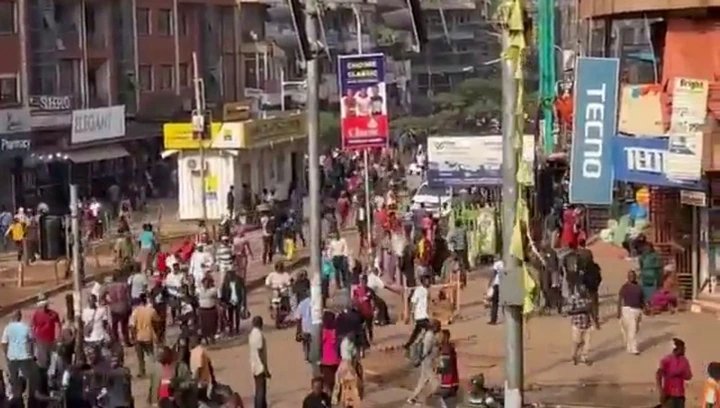

Kampala city after street vendors being evicted.
Overview:
KCCA spokesperson Daniel Nuwabine said this time it will be different. He said eviction of street vendors in the Central Business District (CBD) is part of a broader effort to organize trade in the city and the entire Greater Kampala Metropolitan Area.
The Kampala Capital City Authority (KCCA), in collaboration with the police, has evicted all street vendors from the Central Business District (CBD), offering relocation to government markets, which vendors have messily rejected. Earlier this month, KCCA asked vendors to move to 2,320 free stalls across city markets, including Usafi, Busaga, Owino, and Wandegeya, by February 19, 2026.
In addition, 1,980 stalls were announced in Entebbe, Mpigi, and Mukono, all within the Kampala Metropolitan Area. Vendors, however, dismissed the offer, saying the markets lack sufficient space and urging the government to build a dedicated market if it genuinely cares about their welfare.
On Friday night, enforcement teams dismantled makeshift stalls and cleared merchandise along major streets. KCCA officers, backed by police and military, also removed barricades and fencing around police posts, including those at Mini Price and Nakivubo Road opposite Jesco Building.
By Friday morning, streets previously congested were noticeably clearer. Enforcement teams had cleared areas like Mutaasa Kafeero Plaza to Namirembe Road, Arua Park, Mini Price, Kikubo, and Nakivubo. Pedestrians could walk freely, and journeys that previously took much longer due to overcrowding now took just minutes.
Most vendors had left the streets by Thursday, but some remained in empty areas, frustrated and unsure what to do next. Trucks with confiscated stocks were parked at downtown police posts, having picked up merchandise to be taken to KCCA’s Nakawa stores.
Some street vendors remained optimistic that the operations, like others in the past, would soon blow over and they would return to the streets to earn a living. Brian Ssemanda, a leader of Street Vendors and Walkers Uganda, an association with 500 vendors, told Uganda Radio Network that they had written to the Prime Minister, KCCA Executive Director, Lord Mayor, and Kampala Central Division, asking them to allocate favorable locations for their businesses instead of evicting them with nowhere to go.
Ssemanda said, “Evicting vendors to create a trade order isn’t bad, but they haven’t answered our questions. They ignore that street vending is the backbone of Kampala’s business community. It’s how people get capital to start shops. If they’re pushing us to markets they know are full, this eviction will fail like others.â€
Gonzalez Nkalubo, another vendor, said most merchandise on the streets belongs to shop owners who hire vendors and set up displays. He added that without evening and Sunday markets, vendors will always be forced back onto the streets.
“We demand the government construct our own market, not send us to Usafi or Owino—they’re already full. Without Sunday and evening markets, this eviction won’t work. We’ll wait a week or two and be back. The very enforcement officers we’ve been paying off will be the first to see us back; they can’t survive without our bribes,†Nkalubo said.
Edward Ntale, UTEA Uganda Chairperson, welcomed the evictions, saying traders were being suffocated by street vendors who’d occupied the streets, blocking customers from accessing shops.
Ntale said: “Now there’s a walkway, displays are visible, and customers can shop freely.†He expressed concern that authorities might not sustain the operation, as in previous evictions. Authorities have also removed all gazetted boda boda and taxi stages. Hajji Rashid Ssekindi, chairman of the Federation of Uganda Taxi Operators (UTOF), welcomed the operations, saying congestion in the city center makes maneuvering difficult for anyone.
“We’re tired of hearing about Rwanda and Kenya’s tidy streets. Are we really going to keep this up? The vendors are just biding their time, waiting for the authorities to ease off, and we’ll be back where we started,†Ssekindi said. KCCA has attempted to clear street vendors since 2014, with earlier efforts in 2007 and 2011. Vendors often return due to poor market conditions, low customer traffic, high costs, and the need for daily survival. Designated markets often lack the foot traffic that busy streets provide.
KCCA spokesperson Daniel Nuwabine said this time it will be different. He said eviction of street vendors in the Central Business District (CBD) is part of a broader effort to organize trade in the city and the entire Greater Kampala Metropolitan Area.


 Government will not gazette Kijanangoma as King of Tooro for now - Attorney General insists
Ultimate Uganda
Government will not gazette Kijanangoma as King of Tooro for now - Attorney General insists
Ultimate Uganda
 King Oyo’s Body to Arrive Thursday
Ultimate Uganda
King Oyo’s Body to Arrive Thursday
Ultimate Uganda
 Besigye, Lukwago expected to meet Gen. Salim Saleh today at Kapeeke
Ultimate Uganda
Besigye, Lukwago expected to meet Gen. Salim Saleh today at Kapeeke
Ultimate Uganda
 Rwabwogo Advised to ‘Eat His Bishop’ As MK Prepares to Enter State H’se: PREZ MUSEVENI ON HIS WAY OUT
Ultimate Uganda
Rwabwogo Advised to ‘Eat His Bishop’ As MK Prepares to Enter State H’se: PREZ MUSEVENI ON HIS WAY OUT
Ultimate Uganda
0 Comments