
All Cash Withdrawals Now to be Taxed:
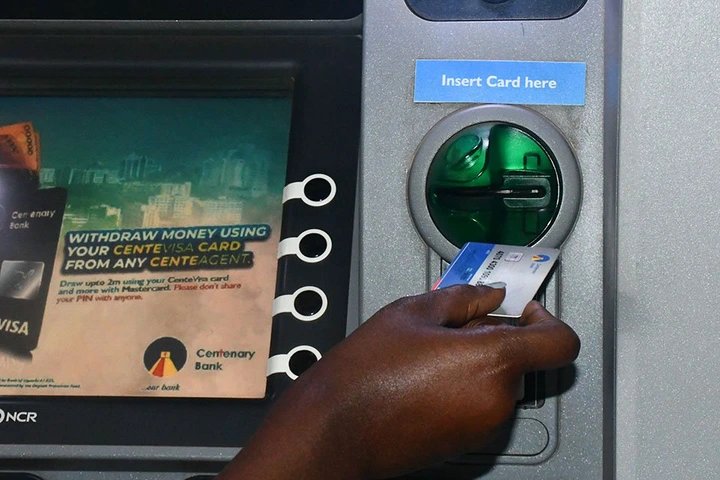

Even as Uganda pushes toward digital transformation, its deep-rooted reliance on cash presents a complex policy challenge, balancing revenue generation, fairness, and financial inclusion. The proposed tax may reshape behavior, but its success will depend on whether citizens trust, access, and ultimately embrace the country’s evolving digital financial systems.
Government says the proposed excise duty on all cash withdrawals aims to boost revenue and fairness, as Uganda grapples with high cash usage and pushes toward a more transparent, digital financial system.
Government says the proposed excise duty on all cash withdrawals aims to boost revenue and fairness, as Uganda grapples with high cash usage and pushes toward a more transparent, digital financial system.
In a move that seeks to boost domestic revenue, government has proposed a new levy on all cash withdrawals across the financial system.
The 2026/27 Revenue Enhancement and Compliance Measures propose introducing an excise duty of 0.25% on the value of every cash withdrawal, extending beyond the current framework that primarily targets mobile money transactions.
Government says the reform is designed to create a fair and balanced financial ecosystem while closing loopholes that have long enabled tax avoidance.
Under the existing structure, a 0.5% excise duty applies to withdrawals from mobile money platforms, a policy that has often been criticized for disproportionately affecting digital financial users.
The new measure seeks to harmonize taxation across all channels, including bank counters, ATMs, and agent banking services.
“This reform is about neutrality,†a policy brief under the Revenue Enhancement and Compliance Measures notes.
“By applying the duty uniformly, we eliminate the disadvantage placed on mobile money users and ensure equal treatment across the financial sector.â€
Beyond equity, government is also pursuing a broader strategic objective: accelerating the transition to a cashless economy.
Digital transactions are easier to track, making them a powerful tool in improving tax compliance and reducing informal, unreported financial activity.
Government argues that the expanded excise duty will discourage excessive cash usage, encourage digital payments, and enhance transparency in financial flows.
The measure is also expected to mitigate risks associated with tax evasion, particularly through less traceable cash-based transactions.
If implemented, the policy is projected to generate approximately UGX 250 billion in additional revenue, providing a significant boost to government coffers at a time when fiscal pressures remain high.
However, the proposal is likely to spark debate among consumers and businesses alike, especially those who rely heavily on cash for daily transactions.
The tax is expected to increase the cost of accessing money, but it is likely to be a necessary step toward modernization and fiscal sustainability.
As the 2026/27 budget cycle approaches, all eyes will be on policymakers to see whether this sweeping reform will pass, and how it will reshape the country’s financial landscape.


 Starlink goes live in Uganda; price comparisons against MTN, Airtel
Ultimate Uganda
Starlink goes live in Uganda; price comparisons against MTN, Airtel
Ultimate Uganda
 NSSF sets September 24 for Annual Members Meeting as savers await interest rate declaration
Ultimate Uganda
NSSF sets September 24 for Annual Members Meeting as savers await interest rate declaration
Ultimate Uganda
 Boda boda riders launch e-commerce, digital loans platform
Ultimate Uganda
Boda boda riders launch e-commerce, digital loans platform
Ultimate Uganda
 Rwanda: We Cannot Sit and Watch As Illicit Alcohol Kills People - Kagame
Ultimate Uganda
Rwanda: We Cannot Sit and Watch As Illicit Alcohol Kills People - Kagame
Ultimate Uganda
0 Comments