
Inside Uganda’s Boda Boda Road Safety Crisis
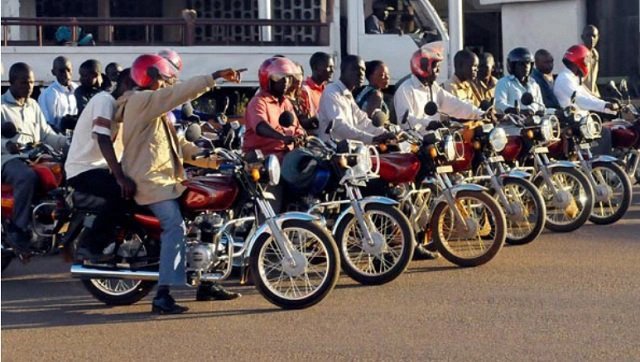

They are on the road before dawn and still riding long after dark, threading through Kampala’s gridlocked streets for fares that rarely exceed a few thousand shillings. For Uganda’s boda boda riders, the pressure to earn is relentless and increasingly, it is deadly.
Motorcycles are at the centre of Uganda’s road safety crisis, and the numbers make the case starkly. Of the 43,204 vehicles involved in road traffic crashes in 2025, motorcycles accounted for 15,096 more than a third of the total, and nearly double the figure for motorcars, which came in at 12,084.
More damning still is what happens when those crashes turn fatal. Motorcycles were involved in 3,224 fatal crashes last year, against 953 for motorcars meaning riders are dying at more than three times the rate of car occupants when vehicles collide.
“Males constitute 83% of all road traffic fatalities, while females account for only 17%,†said Director of Traffic and Road Safety Lawrence Nuwabiine, a gap he links directly to men’s dominance in commercial riding.
The victims are overwhelmingly young. Those aged below 35 account for 56.2% of all fatalities, a demographic that maps almost exactly onto the boda boda workforce.
Uganda recorded 5,383 road traffic deaths in 2025, up 4.7% from 5,144 in 2024. Serious injuries rose 8.4% to 18,444, while minor injuries edged up 0.5% to 3,668.
BUILT TO FAIL
The risks facing riders are not accidental. They are baked into the economics of the job.
Header advertisement
Many operators enter the sector without formal training, purchasing or renting motorcycles and hitting the road with little preparation beyond watching others ride. Licencing gaps are widespread, with enforcement unable to keep pace with the sheer volume of riders entering an industry that requires almost no barrier to entry.
Helmet use, legally mandatory, remains inconsistent. Riders cite discomfort, cost and the reluctance of passengers to wear them as reasons compliance stays low even as head injuries continue to account for a significant share of crash fatalities.
The pressure to maximise daily earnings compounds every risk. Riders working under rental agreements must first cover the cost of the motorcycle before anything goes into their own pocket, creating an incentive to take on more passengers, cut more corners and stay on the road longer than is safe.
WHEN THE CRASHES HAPPEN
The data shows when the danger peaks. Crashes are most frequent between 1800 and 2000, the evening rush when riders are competing hardest for passengers in the heaviest traffic of the day. A second spike comes late at night, when lighter roads and reduced enforcement create conditions that reward speed.
The severity of motorcycle crashes also varies sharply by region. The Crash Severity Index which measures deaths per 100 crashes recorded its highest levels in Albertine North, Busoga North, Rwenzori West, Masaka West, Kigezi and Bukedi North, with between 30 and 55 deaths per 100 crashes. The lowest severity was recorded in Kiira, KMP North, KMP East and KMP South, where the index sits between 8 and 19 suggesting that urban familiarity with traffic, however chaotic, may offer some marginal protection.
Pedestrians bear a separate share of the cost. One in five crashes involves someone on foot, many of them hit-and-run incidents in which motorcycles and fast-moving vehicles disappear before authorities arrive.
WHAT POLICE ARE DOING
Authorities say they are not standing still. Traffic police have intensified operations targeting speeding, helmet compliance and drink-driving, while separate crackdowns have focused on riders and drivers flouting lane discipline and vehicles fitted with illegal swiveling lights.
Cameras are increasingly central to enforcement. The directorate has expanded its network of Automated Number Plate Recognition cameras, blacklisting vehicles linked to offences for real-time tracking and interception. Officers in traffic monitoring centres use the same network to manage congestion, feeding live information to personnel on the ground.
A digital crash database built on the Survey123 tool is being rolled out across nine police stations in the Kampala Metropolitan area, allowing authorities to map exactly where crashes cluster and target resources accordingly.
On the ground, the directorate has conducted 34 television talk shows, 320 radio talk shows and 830 physical engagements during the reporting period, with riders among the primary audiences. Community drives have drawn in local council leaders, religious figures and grassroots organisations to extend the message beyond the capital.
The directorate has also trained its officers in partnership with Bloomberg Philanthropies for Global Road Safety and the Global Road Safety Partnership, building capacity across enforcement and crash investigation.
THE HARDER PROBLEM
Yet the structural forces driving the crisis remain largely intact. As long as boda bodas offer one of the most accessible routes to daily income for young Ugandan men, the sector will keep drawing in riders who are underprepared, under-equipped and under pressure.
Police say stricter enforcement, better data and sustained awareness are the levers available to them. But the riders threading through Kampala’s streets each evening are also navigating a labour market with few alternatives a reality that no crackdown alone is likely to change.


 Government will not gazette Kijanangoma as King of Tooro for now - Attorney General insists
Ultimate Uganda
Government will not gazette Kijanangoma as King of Tooro for now - Attorney General insists
Ultimate Uganda
 King Oyo’s Body to Arrive Thursday
Ultimate Uganda
King Oyo’s Body to Arrive Thursday
Ultimate Uganda
 Besigye, Lukwago expected to meet Gen. Salim Saleh today at Kapeeke
Ultimate Uganda
Besigye, Lukwago expected to meet Gen. Salim Saleh today at Kapeeke
Ultimate Uganda
 Rwabwogo Advised to ‘Eat His Bishop’ As MK Prepares to Enter State H’se: PREZ MUSEVENI ON HIS WAY OUT
Ultimate Uganda
Rwabwogo Advised to ‘Eat His Bishop’ As MK Prepares to Enter State H’se: PREZ MUSEVENI ON HIS WAY OUT
Ultimate Uganda
0 Comments