
Uganda launches second satellite to space
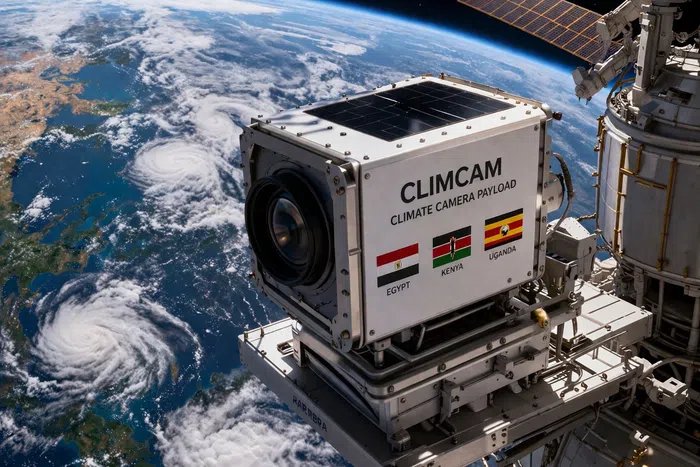

Officials say once the satellite is in operation, it will complement data already being collected from ground weather sensors and machine-learning early warning tools in use across the region.
Uganda has moved ahead with its second space mission, with a new climate-monitoring payload known as ClimCam set to fly to the International Space Station.
Uganda launch is part of the country's push into Earth observation and disaster preparedness.
The mission is a joint project involving Uganda, Kenya and Egypt, and was selected under the United Nations Office for Outer Space Affairs and Airbus “Access to Space for All†programme.
Science and Technology minister Monica Musenero said on Wednesday that the camera will support flood monitoring, drought assessment, agriculture, disaster response and environmental management.
She said the payload is expected to begin operations in August and will monitor climate conditions over East Africa at least four times a day.
“We expect that it will be deployed to start operations in August. It will monitor climate conditions passing over East Africa at least four times a day,†she said
“CLIMCAM will provide ~10 m resolution imagery and up to 4 orbital passes per day over Eastern Africa, supporting flood monitoring, drought assessment, agriculture, disaster response, and environmental management, complimenting data obtained from ground weather sensors and Machine Learning Early Warning Tools currently in use.â€
Minister Monica Musenero
Regional mission with Ugandan engineers
ClimCam was developed through collaboration between the Egyptian Space Agency, the Kenya Space Agency and the Uganda National Space Programme.
Uganda said it funded the specialised training of four engineers at the Egyptian Space Agency to help design and develop the camera. The government says the mission will strengthen environmental monitoring, technical skills, regional cooperation and data sovereignty.
Launch timing shifted
Initial statements had pointed to a Wednesday, April 8, 2026 launch aboard Northrop Grumman’s Cygnus NG-24 mission on a SpaceX Falcon 9 rocket.
However, NASA later said the launch opportunity was pushed back to no earlier than Friday, April 10, because of poor weather at Cape Canaveral.
The payload will be hosted on the Airbus Bartolomeo platform attached to the European Columbus module on the ISS.
Officials say that once in operation, it will complement data already being collected from ground weather sensors and machine-learning early warning tools in use across the region.
What happened to Uganda’s first satellite
Uganda’s first satellite, PearlAfricaSat-1, was launched to the ISS on November 7, 2022 and deployed into orbit from the station on December 2, 2022, with officials saying the ground station in Mukono had established contact with it.
It was built to support weather forecasting, disaster monitoring, agriculture, land and water mapping, and other planning needs.
PearlAfricaSat-1 did not remain in orbit permanently. Reports citing Musenero said it was deorbited after about 13 months in service, while satellite tracking databases list its re-entry in 2023.


 The women who have been in King Oyo’s life
Ultimate Uganda
The women who have been in King Oyo’s life
Ultimate Uganda
 Ex Kagame Guard Commander Tom Byabagamba Dies in Rwandan Prison After 12 Years
Ultimate Uganda
Ex Kagame Guard Commander Tom Byabagamba Dies in Rwandan Prison After 12 Years
Ultimate Uganda
 Government begins salary payments for public sector workers – Reform Committee
Ultimate Uganda
Government begins salary payments for public sector workers – Reform Committee
Ultimate Uganda
 Temangalo land: NSSF, Nzenyi reach agreement
Ultimate Uganda
Temangalo land: NSSF, Nzenyi reach agreement
Ultimate Uganda
0 Comments