
Uganda Wildlife Authority break silence on chimpanzee war in Kibale national park
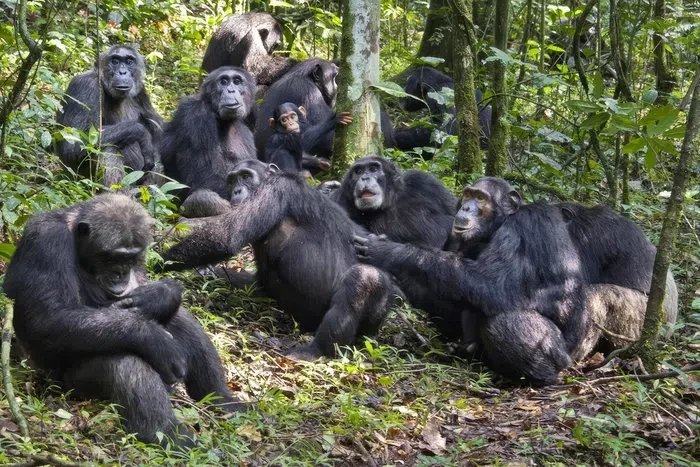

He noted that scientists documented a rare and gradual social split within the group over nearly a decade
Uganda Wildlife Authority (UWA) has dismissed reports of an ongoing chimpanzee war in Kibale National Park, saying the claims misrepresent a long-running scientific study of one chimpanzee community.
The clarification follows recent online reports suggesting violent clashes between rival chimpanzee groups in Kibale, with some accounts describing it as a “chimpanzee warâ€. The stories drew attention after researchers studying primates at Ngogo reported a gradual split within one of the world’s largest chimpanzee communities.
UWA Head of Communication and Public Relations Bashir Hangi said there is no active conflict in the park. He explained that what has been reported relates to the Ngogo chimpanzee community, a long-term research group studied for more than 30 years.
“There is no ongoing ‘chimpanzee war’ in Kibale National Park. What has been reported comes from the Ngogo chimpanzee community, a long-term research group that has been studied for over 30 years,†Hangi said.
He noted that scientists documented a rare and gradual social split within the group over nearly a decade. He added that there were isolated past conflicts, but not a current active battle.
“Crucially, the drivers are not yet fully understood. Researchers have proposed possible explanations, including group size pressures, shifting alliances, and loss of key individuals, but no definitive cause has been established,†Hangi said.
Researchers at Ngogo have for years monitored one of the largest known chimpanzee populations in Africa. Previous scientific publications have shown that chimpanzee communities can split when groups grow too large, leading to competition over territory and resources. Such splits are rare and typically unfold slowly rather than through sudden confrontation.
Hangi said the findings represent scientific insight rather than a crisis. “This is high-level scientific research from one of the world’s leading primate study sites offering insight, not alarm. Let’s avoid sensational headlines and focus on facts,†he said.
The authority urged the public and media to rely on verified information and avoid exaggerated claims about wildlife behaviour in protected areas.


 Starlink goes live in Uganda; price comparisons against MTN, Airtel
Ultimate Uganda
Starlink goes live in Uganda; price comparisons against MTN, Airtel
Ultimate Uganda
 NSSF sets September 24 for Annual Members Meeting as savers await interest rate declaration
Ultimate Uganda
NSSF sets September 24 for Annual Members Meeting as savers await interest rate declaration
Ultimate Uganda
 Boda boda riders launch e-commerce, digital loans platform
Ultimate Uganda
Boda boda riders launch e-commerce, digital loans platform
Ultimate Uganda
 Rwanda: We Cannot Sit and Watch As Illicit Alcohol Kills People - Kagame
Ultimate Uganda
Rwanda: We Cannot Sit and Watch As Illicit Alcohol Kills People - Kagame
Ultimate Uganda
0 Comments