
UCC backs Shs1,000 Wi-Fi hotspot economy, tells telecoms to innovate

Uganda's communications regulator has thrown its weight behind the fast-growing informal Wi-Fi hotspot business model, urging telecommunications companies to respond with innovation rather than oppose a service that is expanding internet access for low-income consumers.
The Uganda Communications Commission (UCC) said it would not move to stop individuals who resell internet access through neighbourhood Wi-Fi hotspots, arguing that the trend reflects consumer demand for cheaper and more flexible connectivity options.
"We're not going to stop consumers from accessing services," said Julianne Mweheire, UCC's Director of Economic Regulation, Content and Consumer Affairs.
The hotspot model has expanded rapidly across urban and peri-urban areas, allowing users to access unlimited internet for as little as Shs1,000 to Shs1,500 per day. Weekly packages typically cost between Shs5,000 and Shs7,000, while monthly access ranges from Shs10,000 to Shs15,000.
Under the arrangement, subscribers purchase unlimited internet packages from licensed Internet Service Providers (ISPs) and use routers to share access with neighbours for a fee.
The model has emerged as a low-cost alternative to conventional mobile data bundles in a country where internet affordability remains a challenge despite widespread network coverage.
According to GSMA Africa, more than 70 percent of Ugandans remain offline despite network coverage reaching about 96 percent of the population, suggesting that affordability, rather than infrastructure, remains the main barrier to internet access.
The growth of hotspot businesses has, however, sparked concern among telecom operators, who argue that the practice violates service agreements and undermines their business models.
MTN Uganda said reselling internet purchased under consumer packages amounts to unfair competition.
"Imagine a customer pays, fills pots with enough food for 20 people, opens a small restaurant nearby, and sells meals cheaper than the original. The original restaurant cannot match those prices because, unlike the reseller, it is bearing the full cost," said MTN Uganda Head of Communications Rhona Arinaitwe.
"It is against the terms of service to resell these packages. It should not be tolerated," she added.
Airtel Uganda also criticised the practice, describing it as illegal and disruptive to the market.
Airtel spokesperson David Birungi argued that Uganda's main challenge is not the cost of data but the affordability of internet-enabled devices.
"Uganda does not have a problem with the affordability of data. The only problem we have here is the cost of devices," Birungi said.
Uganda's smartphone penetration is estimated at about 33 percent, below the regional average of roughly 50 percent.
But UCC maintains that the hotspot model has emerged because operators have failed to adequately respond to consumer needs.
"I'm not going to call it illegal because somebody has actually paid for it and it's a non-illegal service," Mweheire said during a May phone interview with this reporter.
She argued that consumers have effectively created their own solutions because existing products do not align with their spending patterns and internet usage preferences.
"The consumers are now the ones who are creating models within the operator models, which is wrong. That means it is very clear that the operator is not listening to the consumer," she said.
Mweheire said many consumers prefer unlimited, speed-based internet access over conventional volume-based bundles that expire once purchased data is exhausted.
"The consumers want speed-based services and not volume-based services," she said.
Rather than seeking regulatory intervention, she urged telecom operators and ISPs to engage communities using hotspot services and design products that better reflect market demand.
"Be creative, listen to the consumer, and figure out how best you can approach their needs where they are," she said.
Technology expert Michael Niyitegeka of Refactory Uganda said the model has expanded internet access to many people who would otherwise remain offline but warned of potential security and accountability risks.
"The positive side is that you're making the internet available to people who would never easily have access. The negative side is there's some security risk," he said.
Niyitegeka suggested that telecom companies consider formalising hotspot operators through reseller agreements, transforming informal internet vendors into recognised distribution partners.
"If this person is buying more bundles, then how do I support him to become a franchise owner?" he said.


 Starlink goes live in Uganda; price comparisons against MTN, Airtel
Ultimate Uganda
Starlink goes live in Uganda; price comparisons against MTN, Airtel
Ultimate Uganda
 NSSF sets September 24 for Annual Members Meeting as savers await interest rate declaration
Ultimate Uganda
NSSF sets September 24 for Annual Members Meeting as savers await interest rate declaration
Ultimate Uganda
 Boda boda riders launch e-commerce, digital loans platform
Ultimate Uganda
Boda boda riders launch e-commerce, digital loans platform
Ultimate Uganda
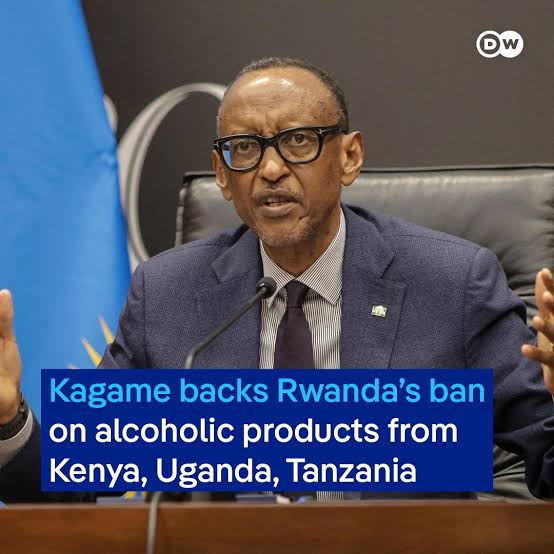 Rwanda: We Cannot Sit and Watch As Illicit Alcohol Kills People - Kagame
Ultimate Uganda
Rwanda: We Cannot Sit and Watch As Illicit Alcohol Kills People - Kagame
Ultimate Uganda
0 Comments