
Gov’t Refuses to Reduce Tax on Mobile Money
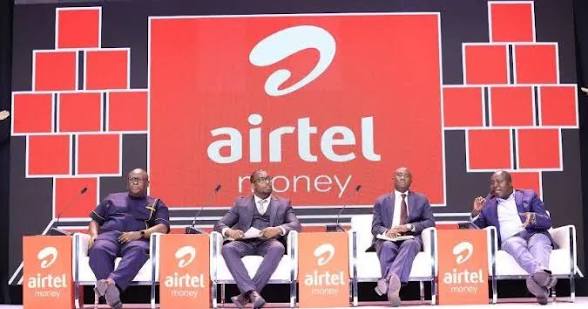

Ugandans using mobile money platforms will continue to contend with the 0.5 percent tax to withdraw cash, a tax that has been blamed for the high cost and low uptake of digital money.
The Ministry of Finance, Planning and Economic Development, declined to include the proposal of halving the tax and spreading it across the ecosystem, as has been recently proposed by the mobile money service providers.
Transfers from a bank account to a mobile money wallet would also benefit from this, which would also see banks taxed half and mobile money companies half too, to ensure ‘equity’.
Currently, many people find it easier to withdraw cash through the ATM and spend, or deposit it on their mobile wallet at an agent’s, than moving the money digitally from the bank to the wallet.
Banks charge a fixed or tiered fee for pushing money to mobile wallets and the charges increase with the amount transferred, ranging between UGX 1,000 and UGX 2,000 for the smallest transaction depending on the bank, to 12,000 for the large amounts.
While the fees are set by the banks, there is a 15 percent excise duty on the service charges. For instance, a 3,000 shillings bank fee could attract an extra 450 shillings in duty bringing the total to 3,450 shillings.
On the other hand, withdrawing cash from an agent becomes costly because the 0.5 percent excise duty is charged on the amount withdrawn at an agent, ATM or bank.It is not charged on just the fee.Mobile Money companies have insisted that while generally the taxes are high, their business is more highly affected that the other players especially the banks.
Richard Yego, former MTN MOMO General Manager said they, together with Airtel Money, were asking the government to ensure that the taxes on withdrawals are shared across the platforms so that a mobile platform is charged 0.25 percent and the bank the same.
This makes the end-to-end cost; that is, bank-to-wallet-to-cash, significantly higher than pure bank-to-bank transfers or keeping money in a bank account.
They say that this would meaningfully lower the overall end-to-end cost of using a bank-to-wallet route for many users, especially those who later withdraw cash or move money frequently. Receiving the money into the mobile wallet is usually free from the mobile operator side.
However, the withdrawal stage is what makes the overall cost high, hence the call for cutting the tax to 0.25 percent would indirectly make the difference when replenishing the wallet from the bank. So, reducing the tax would lower the “penalty†for cashing out and therefore make the mobile wallet a more viable “bridge†between bank and daily spending needs.
Earlier this year, in the 2026-27 Revenue Enhancement and Compliance Measures, the Ministry had proposed cutting the excise duty by half to 0.25% rcent on every cash withdrawal, and extend to ATMs, bank counters and agents. It explained that this was aimed at creating neutrality and equity, while actually increasing the tax base and therefore, more revenues for government.
Experts say that while the end user is served by a whole system, the players along the value chain operate as separate ecosystems, with banks treating mobile wallets as an “external†destination, leading to higher pricing than internal bank transfers (which are often cheaper or free for small amounts). The Ministry has since dropped the idea for the 2026/2027 budget.
Ramathan Ggoobi, Permanent Secretary and Secretary to the Treasury, says reducing the tax is not among the proposed revenue measures for the next financial year. “Nevertheless, we intend to undertake further analysis in future on how to incentivize a gradual shift away from excessive cash transactions toward more transparent and formal financial channels,†he says.
The Civil Society Budget Advocacy Group (CSBAG) says many Ugandans, especially those who usually do smaller transactions, are finding it more convenient again to keep cash in their pockets, which defeats the financial inclusion and the push for a cashless economy.MTN Uganda, which claims a 52 percent share of the market in Uganda, reported robust expansion in its mobile money business for the year ended December 2025, with active fintech subscribers growing 6.5 %year-on-year to 14.7 million.
Transaction volume grew 16.8 percent to 5 billion transactions, while transaction value went up 23 percent to UGX 195.5 trillion. When the tax on withdrawals was first introduced in 2018 at 1%, and later reduced to 0.5%, reports also carried by the International Monetary Fund showed that there was a contraction in mobile money transactions.
Julius Mukunda, CSBAG Executive Director, says financial inclusion and the move away from cash transactions is being damaged by the many and high taxes including the 0.5% levy on mobile money withdrawals, 15% excise duty on telecom service fees and a 10% withholding tax on agent commissions.
Mukunda says that for example, when withdrawing 1 million shillings at the bank counter or ATM, the tax is 315shillings , while via mobile money, the same amount will cost UGX 6,630. “Sending and withdrawing one million will cost more than 20,000shillings, nearly four times more than physically transporting the same amount between Kampala suburbs,†he says.


 Starlink goes live in Uganda; price comparisons against MTN, Airtel
Ultimate Uganda
Starlink goes live in Uganda; price comparisons against MTN, Airtel
Ultimate Uganda
 NSSF sets September 24 for Annual Members Meeting as savers await interest rate declaration
Ultimate Uganda
NSSF sets September 24 for Annual Members Meeting as savers await interest rate declaration
Ultimate Uganda
 Boda boda riders launch e-commerce, digital loans platform
Ultimate Uganda
Boda boda riders launch e-commerce, digital loans platform
Ultimate Uganda
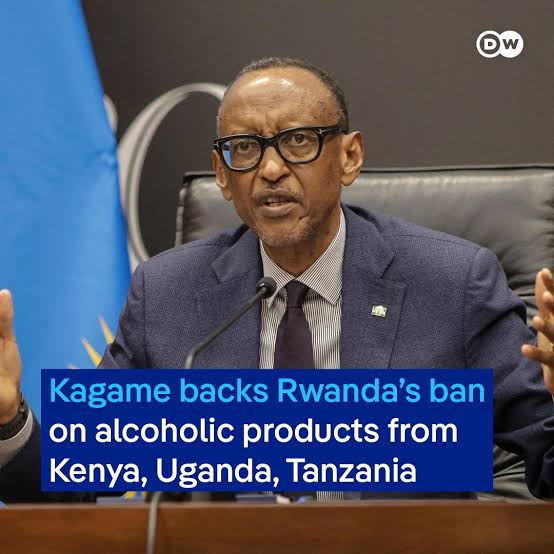 Rwanda: We Cannot Sit and Watch As Illicit Alcohol Kills People - Kagame
Ultimate Uganda
Rwanda: We Cannot Sit and Watch As Illicit Alcohol Kills People - Kagame
Ultimate Uganda
0 Comments