
Museveni Ministers’ Jokes! Otafiire Threatens to Deploy Karoza Witchcraft to Force Kamuntu’s Cows to Disappear from His Farm
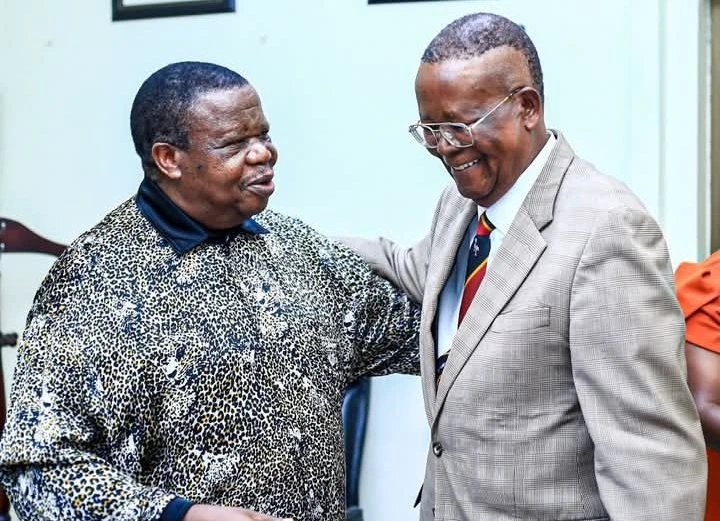

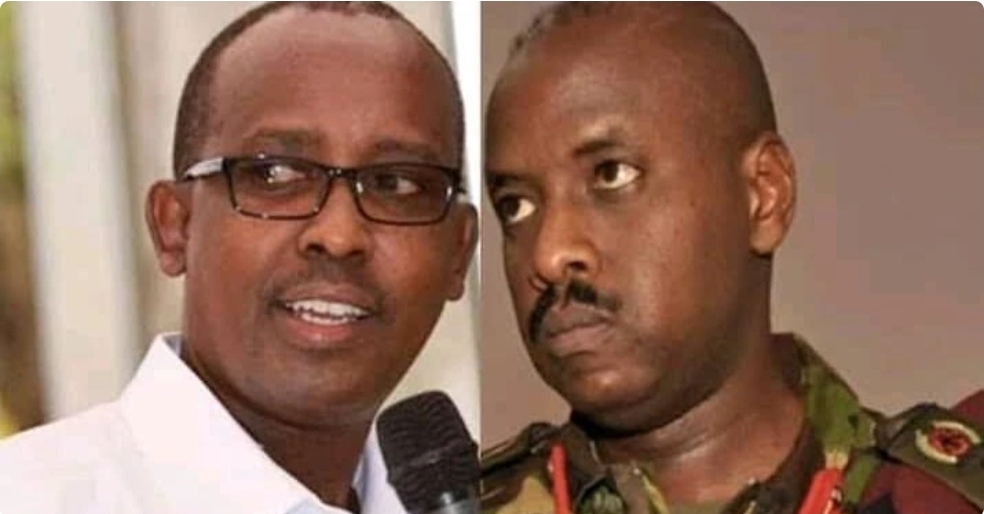
— It began as a routine ministerial handover on paper, but quickly morphed into one of those uniquely Ugandan moments where politics, philosophy, and pastoral economics collide in full public view. Kahinda Otafiire and Ephraim Kamuntu are veteran politicians and friends. Replacing each other in ministerial reshuffles, one joke never seems to go away: one where Kamuntu claims that Otafiire took his cows and refused to pay. In this report, The Pearl Times takes a look at the humorous conversation between these old friends and politicians.
After Maj Gen (Rtd) Kahinda Otafiire handed over the Ministry of Internal Affairs docket toProf Ephraim Kamuntu, what followed on X (formerly Twitter) was less a formal exchange of pleasantries and more a witty duel involving cows, contract law, witchcraft allegations, and a surprisingly intense theological exchange about Jesus.
Otafiire, who now moves to his new assignment as Minister in charge of Water and Environment, and Kamuntu, the incoming Internal Affairs minister, kept their exchanges cordial on the surface—but layered with humour that quickly drew public attention.
It started formally enough.
Kamuntu posted: “Today I assumed office as minister of internal affairs. Gratitude to former Ministers Gen. Kahinda Otafiire and Gen. David Muhoozi for their distinguished service, upon which I now build. My thanks to H.E. President Yoweri Museveni for the trust placed in me to serve my country. For God and my country.â€
The reference to continuity of service was standard bureaucratic decorum. But what followed next from Otafiire—now in retirement from Internal Affairs but not from public banter—set the tone for the day.
“Thank you, Hon. Minister Prof Kamuntu. I congratulate you on your appointment and wish you a successful tenure in service to our nation, Uganda.â€
So far, so diplomatic.
Then came the cows.
Kamuntu, apparently unwilling to let a long-running rural-economic subplot die quietly, injected humour into the exchange:
“Thank you, Gen. Otafiire for your distinguished service to the nation. While we celebrate public duty, a quick reminder: some debts are also public… my cows are still waiting on you.â€
At that point, what had been a dignified transfer of office suddenly turned into what appeared as “cow diplomacy.â€
Otafiire did not retreat.
Instead, he leaned in—with philosophical resignation and comedic finality:
“Okunyaga [defaulting] was there before we were born , it is here with us, it will be there long after we are gone so, Kankunyaga, Hon. Prof Kamuntu, accept it and Merry Christmas!â€
The doctrine of “okunyagaâ€â€”loosely framed as defaulting or non-payment—had now been elevated to an almost eternal principle of human existence.
Kamuntu, however, is not only a politician but an academic, and he responded like one entering a courtroom already warmed up:
“Gen. Otafiire, “okunyaga†has long been understood in our jurisprudence as a wrong that does not go unaddressed. As the laws of this country remind us, failure to settle a debt attracts consequence. Interesting, then, that with the mantle of Minister of Internal Affairs now upon me, we shall see how swiftly principle meets practice.â€
At this point, the exchange had evolved into a hybrid of constitutional law lecture and friendly financial warning.
But Otafiire, never one to leave a metaphor unexpanded, escalated the tone into cultural folklore and local mythology:
“Okunyaga†is a result of a frustrated contract, so accepted by law, no custom or practice supersedes tradition and don’t forget the Karoza chemistry [Karoza is a place in Mitooma famed for witchcraft]. The rest of your herd could voluntarily walk to my ranch including Ihinda rya Kahinda.â€
Kamuntu’s reply, however, took the conversation into even stranger philosophical terrain, invoking both constitutional reasoning and spiritual protection:
“It appears that non-payment was predicated on an asymmetry of authority, rather than an absence of obligation. Now that asymmetry has shifted, the matter invites a more consequential review. About Karoza chemistry, we stand covered by the blood of Jesus …we fear none.â€
The invocation of “the blood of Jesus†instantly transformed the exchange from political banter into theological territory.
Otafiire, sensing an opening, pushed further into doctrinal humour:
“Professor Kamuntu, that’s risky, remember He [Jesus] was abandoned by His father on the cross.â€
The line, half provocation and half philosophical musing, could have ended the exchange entirely. But Kamuntu shot back, preaching to Otafiire who is known to question Christian doctrine in his speeches.
“Gen. Otafiire, He wasn’t abandoned out of rejection. He was abandoned into your place. The One who took the hit for the debt you couldn’t pay is now saying: ‘I’ve got you.’ If that doesn’t make you pause before trading recklessly, I don’t know what will.â€
At that point, X users declared the conversation “closed on both legal and spiritual grounds.â€
The Pearl Times social media editor put together the conversation, and shares it below:
Prof Ephraim Kamuntu: Today I assumed office as minister of internal affairs. Gratitude to former Ministers Gen. Kahinda Otafiire and Gen. David Muhoozi for their distinguished service, upon which I now build. My thanks to H.E. President Yoweri Museveni for the trust placed in me to serve my country. For God and my country.
Maj Gen (Rtd) Kahinda Otafiire: Thank you, Hon. Minister Prof Kamuntu. I congratulate you on your appointment and wish you a successful tenure in service to our nation, Uganda.
Prof Ephraim Kamuntu: Thank you, Gen. Otafiire for your distinguished service to the nation. While we celebrate public duty, a quick reminder: some debts are also public… my cows are still waiting on you.
Maj Gen (Rtd) Kahinda Otafiire: Okunyaga [defaulting] was there before we were born , it is here with us, it will be there long after we are gone so, Kankunyaga, Hon. Prof Kamuntu, accept it and Merry Christmas!
Prof Ephraim Kamuntu: Gen. Otafiire, “okunyaga†has long been understood in our jurisprudence as a wrong that does not go unaddressed. As the laws of this country remind us, failure to settle a debt attracts consequence. Interesting, then, that with the mantle of Minister of Internal Affairs now upon me, we shall see how swiftly principle meets practice.
Maj Gen (Rtd) Kahinda Otafiire: “Okunyaga†is a result of a frustrated contract, so accepted by law, no custom or practice supersedes tradition and don’t forget the Karoza chemistry [Karoza is a place in Mitooma famed for witchcraft]. The rest of your herd could voluntarily walk to my ranch including Ihinda rya Kahinda.
Prof Ephraim Kamuntu: It appears that non-payment was predicated on an asymmetry of authority, rather than an absence of obligation. Now that asymmetry has shifted, the matter invites a more consequential review. About Karoza chemistry, we stand covered by the blood of Jesus …we fear none.
Maj Gen (Rtd) Kahinda Otafiire: Professor Kamuntu, that’s risky, remember He [Jesus] was abandoned by His father on the cross.
Prof Ephraim Kamuntu: Gen. Otafiire, He wasn’t abandoned out of rejection. He was abandoned into your place. The One who took the hit for the debt you couldn’t pay is now saying: “I’ve got you.†If that doesn’t make you pause before trading recklessly, I don’t know what will.
Talk about witchcraft in Uganda is not uncommon. Recently, Speaker Jacob Oboth Oboth decried witchcraft in parliament, weeks after it emerged that Museveni had reportedly played audios of Rebecca Kadaga directing witchdoctors to bewitch and kill him, Muhoozi, Janet Museveni and Salim Saleh.


 Government will not gazette Kijanangoma as King of Tooro for now - Attorney General insists
Ultimate Uganda
Government will not gazette Kijanangoma as King of Tooro for now - Attorney General insists
Ultimate Uganda
 King Oyo’s Body to Arrive Thursday
Ultimate Uganda
King Oyo’s Body to Arrive Thursday
Ultimate Uganda
 Besigye, Lukwago expected to meet Gen. Salim Saleh today at Kapeeke
Ultimate Uganda
Besigye, Lukwago expected to meet Gen. Salim Saleh today at Kapeeke
Ultimate Uganda
 Rwabwogo Advised to ‘Eat His Bishop’ As MK Prepares to Enter State H’se: PREZ MUSEVENI ON HIS WAY OUT
Ultimate Uganda
Rwabwogo Advised to ‘Eat His Bishop’ As MK Prepares to Enter State H’se: PREZ MUSEVENI ON HIS WAY OUT
Ultimate Uganda
0 Comments