
Parliament Rejects UGX300 Billion Request For Rural Electrification
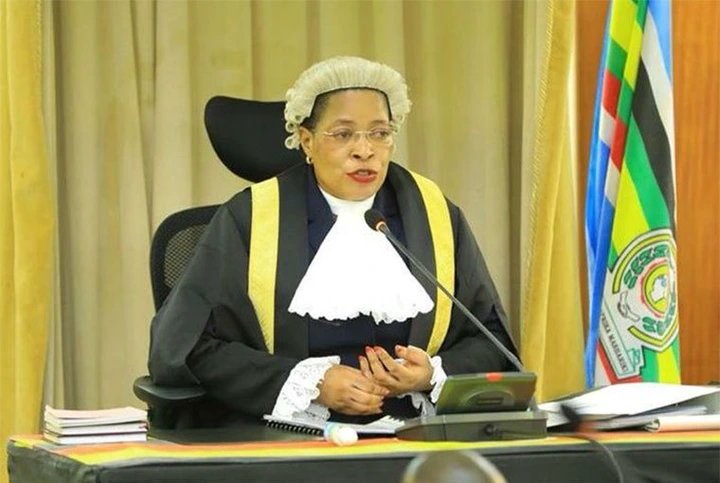

Parliament has rejected a proposal by the Ministry of Energy and Mineral Development to allocate an additional 300 billion Shillings for rural electrification in the 2026/27 financial year.
Presenting the report of the Committee on Natural Resources, Soroti East MP Herbert Ariko urged the government to reconsider the restructuring of the Rural Electrification Agency (REA), arguing that the current institutional arrangement under the Ministry has slowed project delivery.
“Provide an additional UGX300Bn… to clear priority inherited rural electrification obligations and restore visible implementation under last mile delivery,†Ariko recommended.
The legislators argue that increasing allocations without addressing systemic inefficiencies would not resolve the crisis. Ariko framed the issue as one of performance rather than purely financing.
“It is not only an issue of money. It is an issue of non-performance,†he said, noting that the former REA had successfully mobilised donor funding through project development, a capacity MPs say has weakened since its absorption.
At the centre of the dispute is the government’s decision to merge the Rural Electrification Agency – REA into the Ministry of Energy as part of a broader rationalisation of public agencies.
Speaker of Parliament, Anita Among, criticised the move, suggesting that governance challenges at REA were used to justify dismantling an otherwise functional institution.“You would rather remove the management and replace it than kill the institution.
REA used to be very, very good,†Among said.Minister of State for Energy Sidronius Okaasai defended the Ministry’s approach, attributing slow progress primarily to inadequate funding and heavy reliance on external financing.
“When I sit down to calculate, I need four trillion dollars to electrify this country fully,†Okaasai told Parliament, underscoring the scale of Uganda’s electrification challenge.
He noted that a significant portion of rural electrification funding comes from development partners, often tied to conditions that shape project implementation timelines and priorities.
According to the 2026/27 budget framework, the Ministry has been allocated over 2.2 trillion, up from 1.844 trillion Shillings in the previous financial year.
Of this, over 1.1 trillion Shillings is externally financed, highlighting the country’s continued dependence on donor support in the energy sector.MPs reported growing frustration among constituents over delayed electrification projects, with some warning of potential vandalism of idle infrastructure.
Bushenyi Woman MP, Annet Katusiime, said communities are increasingly losing patience.“People are threatening to vandalise those electric poles. We are going to lose money and yet people have no access to electricity,†she said.
Similar concerns were raised by Terego Woman MP Rose Obigah, who highlighted stalled projects in refugee-hosting districts.
“If you go to Madi-Okollo, we are fed up. Something drastic should be done,†she said.Otuke County MP Paul Omara described the situation as “shambolic,†citing cases where project surveys were conducted but no infrastructure was delivered.
Uganda has made notable progress in expanding electricity access over the past decade, with national electrification rates rising from about 20 percent in 2014 to an estimated 45–50 percent in 2024, according to data from the Electricity Regulatory Authority – ERA. However, rural electrification remains significantly lower, with access rates in some regions below 20 percent.


 Government will not gazette Kijanangoma as King of Tooro for now - Attorney General insists
Ultimate Uganda
Government will not gazette Kijanangoma as King of Tooro for now - Attorney General insists
Ultimate Uganda
 King Oyo’s Body to Arrive Thursday
Ultimate Uganda
King Oyo’s Body to Arrive Thursday
Ultimate Uganda
 Besigye, Lukwago expected to meet Gen. Salim Saleh today at Kapeeke
Ultimate Uganda
Besigye, Lukwago expected to meet Gen. Salim Saleh today at Kapeeke
Ultimate Uganda
 Rwabwogo Advised to ‘Eat His Bishop’ As MK Prepares to Enter State H’se: PREZ MUSEVENI ON HIS WAY OUT
Ultimate Uganda
Rwabwogo Advised to ‘Eat His Bishop’ As MK Prepares to Enter State H’se: PREZ MUSEVENI ON HIS WAY OUT
Ultimate Uganda
0 Comments