
Dokolo North MP Ogwal Unveils Millet Revival Drive to Reposition Lango as Northern Uganda’s Production Hub

Otafiire+amongi+return+to+oyam+with+your+expired+politics6369642828908690989.
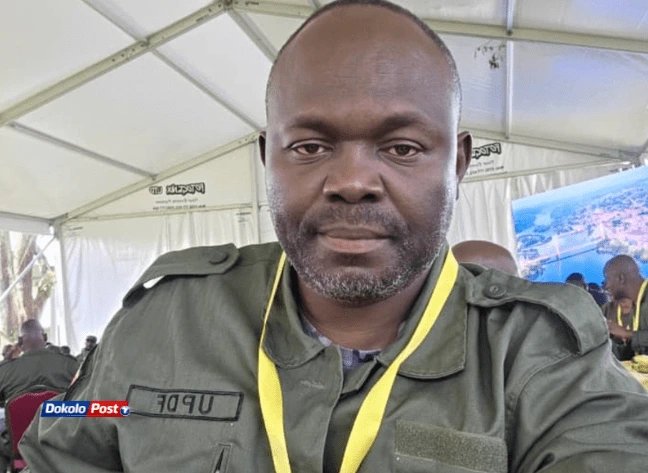
Dokolo North MP-elect Joseph Jones Ogwal Addresses Farmers at Baronger village, Amwoma Subcounty, During a Meeting on Revitalising Millet Production in Lango.
Addressing farmers on Sunday, April 19, 2026, at Baronger Village in Aburcero Parish, Amwoma Subcounty, Ogwal announced seed capital support to about 300 farmers under the Kal Yen Project. He noted that millet, once central to Lango’s agricultural heritage, had steadily declined as farmers shifted to crops such as cassava, chia, and maize that replaced the region’s traditional stable food and people are highly consuming them yet millet has more nutritional values and global demand.
He contrasted this shift with other regions, citing Buganda’s sustained attachment to banana cultivation, and observed that many restaurants in Kampala still depend on best millet supplies sourced from western districts such as Bushenyi.
Ogwal outlined plans to transform Dokolo North into a leading millet production hub, adding that a formal project launch will involve key stakeholders, including officials from the Ministry of Agriculture, Animal Industry and Fisheries and academia from Makerere University Faculty of Agriculture.
He further highlighted the nutritional value of millet, particularly its high iron content, and pledged to engage cultural leadership under the Won Nyaci Me Lango to support the initiative. In parallel, the MP-elect revealed plans to roll out a constituency-wide vaccination campaign targeting indigenous poultry breeds, describing them as vital household assets that support education, agriculture, and daily livelihoods.
Ogwal cautioned against politicising the initiative, urging unity among residents to ensure its success.
Outgoing LCIII Chairperson for Amwoma Subcounty, Geoffrey Odur, endorsed the initiative, linking millet revival to cultural restoration. He observed that, unlike Lango, neighbouring Acholi has preserved much of its cultural heritage, including traditional practices that continue to attract international interest.
Odur recommended formal registration of the project under the Ministry of Trade, Industry and Cooperatives, noting that it aligns with the MP-elect’s broader community programmes on sports and cultural promotion.
Kal Yen Project Director, Ogwal Parmenas Willy, said the initiative is designed to extend beyond local consumption to international markets, pointing out that millet is widely consumed in countries such as the United States, China, India, and Israel.
He added that the project also incorporates environmental conservation through tree planting, aimed at addressing firewood scarcity and reducing risks faced by women who travel long distances to collect fuel.
Parmenas emphasised the need for government partnership to scale ongoing efforts, noting that improved infrastructure, particularly roads, water, and electricity, will be critical in unlocking trade potential. He identified Amwoma Subcounty as a future regional centre for millet commerce, calling for upgrades to road networks to support market access.
Project Status and Outlook
▪︎ Approximately 200 members have already planted millet this season.
▪︎ The Kal Yen Project operates under a 25-member executive structure.
▪︎ The official launch, initially slated for June 18, 2026, has been postponed pending further consultations.
▪︎ The initiative commenced earlier this year and is expected to expand across all subcounties and town councils in Dokolo North.
Millet is a gluten-free grain rich in fibre, complex carbohydrates and antioxidants, offering key health benefits such as regulating blood sugar for diabetes management, reducing LDL cholesterol to support heart health, and improving digestion through its prebiotic fibre. It also boosts immunity with essential minerals like iron and magnesium, aids weight control by increasing satiety, and contains plant compounds linked to anti-inflammatory and potential anti-cancer effects, making it a valuable functional food for overall health.
For centuries, millet has been integral to Lango’s socio-economic and cultural fabric, serving as a staple food, a component in traditional rituals, and a resilient crop suited to harsh climatic conditions. Its ability to withstand drought and maintain long storage life has historically made it a reliable food security crop.
Recent agricultural advancements, including improved varieties such as SEREMI 2 and high-yielding foxtail millet, alongside modern row-planting techniques, are now redefining its commercial potential. These innovations are driving a broader transition from subsistence farming to market-oriented production.
The Dokolo initiative signals a renewed effort to reclaim millet’s prominence, this time as both a symbol of cultural identity and a driver of economic transformation in Northern Uganda.


 The women who have been in King Oyo’s life
Ultimate Uganda
The women who have been in King Oyo’s life
Ultimate Uganda
 Ex Kagame Guard Commander Tom Byabagamba Dies in Rwandan Prison After 12 Years
Ultimate Uganda
Ex Kagame Guard Commander Tom Byabagamba Dies in Rwandan Prison After 12 Years
Ultimate Uganda
 Government begins salary payments for public sector workers – Reform Committee
Ultimate Uganda
Government begins salary payments for public sector workers – Reform Committee
Ultimate Uganda
 Temangalo land: NSSF, Nzenyi reach agreement
Ultimate Uganda
Temangalo land: NSSF, Nzenyi reach agreement
Ultimate Uganda
0 Comments