
Today in History: Hajj Musa Sebirumbi Executed After Luweero War Conviction
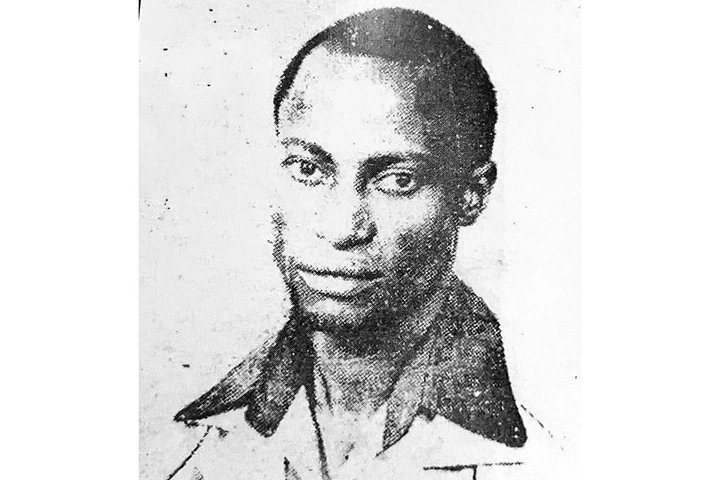

On this day in 1999, Hajj Musa Sebirumbi was executed by hanging at Luzira Upper Prison after being convicted of multiple counts of murder, in one of Uganda’s most prominent post-war prosecutions tied to the Luweero Triangle conflict.
Sebirumbi, a former Uganda People’s Congress (UPC) chairman for Luweero South during the presidency of Milton Obote, was also identified as an operative of the National Security Agency, the intelligence body under the Obote II government.
The charges against him stemmed from events in June 1981, at the onset of the guerrilla war waged by the National Resistance Army (NRA) under Yoweri Museveni in the Luweero Triangle.
Prosecutors told court that Sebirumbi led a group of soldiers to Kikandwa village in Semuto, targeting civilians suspected of collaborating with NRA rebels.
Among the most serious charges was the killing of Edidian Mukiibi Luttamaguzi on June 9, 1981.
Luttamaguzi would later be remembered as a symbol of resistance during the conflict, with accounts indicating he refused to disclose the whereabouts of Museveni and his fighters despite being tortured.
According to witness testimony, Sebirumbi personally dragged Luttamaguzi from his home, beat him with a coffee stem and later struck him with a panga to the back of the head, leading to his death.
Sebirumbi consistently denied the allegations throughout the trial. He maintained that he was in Kampala at the time of the incident, recovering from injuries sustained in a grenade attack and receiving treatment at Mulago Hospital.
He was arrested in February 1987, shortly after the National Resistance Movement (NRM) took power. On April 18, 1989, Justice Alikipo Ouma convicted him on five counts of murder and sentenced him to death.
Following the dismissal of his appeal in 1992, Sebirumbi spent nearly a decade on death row before his execution.
His hanging was carried out alongside 27 other inmates on April 27, 1999, marking a resumption of executions after a three-year hiatus.
However, Uganda would soon enter a prolonged de facto moratorium on executions, with no known hangings carried out in the years that followed.
In 2009, the Supreme Court of Uganda ruled that the mandatory death sentence was unconstitutional, a landmark decision that reshaped the country’s approach to capital punishment while still allowing it under certain circumstances.
Sebirumbi’s case remains one of the most cited examples of post-conflict accountability linked to atrocities in the Luweero Triangle.
It continues to feature in debates about justice, historical memory and the legacy of Uganda’s civil wars, particularly in how the state has addressed crimes committed during the turbulent transition from Obote’s government to the NRM era.


 Government will not gazette Kijanangoma as King of Tooro for now - Attorney General insists
Ultimate Uganda
Government will not gazette Kijanangoma as King of Tooro for now - Attorney General insists
Ultimate Uganda
 King Oyo’s Body to Arrive Thursday
Ultimate Uganda
King Oyo’s Body to Arrive Thursday
Ultimate Uganda
 Besigye, Lukwago expected to meet Gen. Salim Saleh today at Kapeeke
Ultimate Uganda
Besigye, Lukwago expected to meet Gen. Salim Saleh today at Kapeeke
Ultimate Uganda
 Rwabwogo Advised to ‘Eat His Bishop’ As MK Prepares to Enter State H’se: PREZ MUSEVENI ON HIS WAY OUT
Ultimate Uganda
Rwabwogo Advised to ‘Eat His Bishop’ As MK Prepares to Enter State H’se: PREZ MUSEVENI ON HIS WAY OUT
Ultimate Uganda
0 Comments