
Sovereignty Bill undermines responses to refugees' welfare, West Nile leaders say
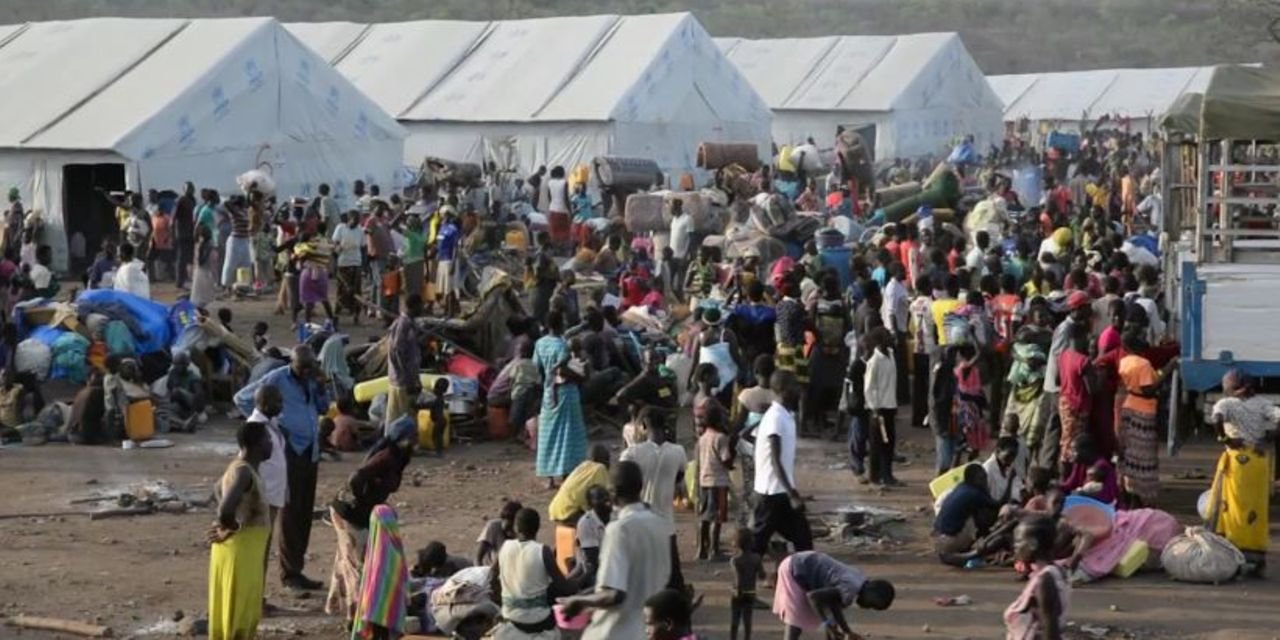

Refugee-hosting communities have raised concerns, warning that the newly proposed Protection Sovereignty Bill could frustrate humanitarian responses to the needs of refugees.
Leaders in the area say Uganda's larger sections rely on external support, especially in matters related to the welfare of refugees. Uganda hosts about 1.9 million refugees, with the majority in the West Nile.
They say education, agriculture, and health among this group will be worsened when the Bill is enacted, fearing that support agencies, which heavily depend on external funding, risk ceasing operations.
They have called for the review of the Bill, which they described as hazardous.
Koboko North Constituency Member of Parliament, Dr Noah Musa, says the Bill puts every Ugandan as a foreign agent, yet the country heavily relies on remittances externally.
''The Bill, in its current form, has far-reaching effects on academia and the balance of payments. As a country, we get a lot of money out of remittances from Ugandans who are abroad’’ Dr Musa explained.
Adding that; ‘’My view is that we needed to do more work, especially listening to stakeholders, Ugandans and look at the Bill and study the provisions because the Bill seems to put Ugandans abroad as foreign agents, and for me, I feel that's not good"
Mr Musa proposes that the 11th parliament pass the bill to the 12th parliament for further scrutiny.
He wants Parliament to look at the Bill from a broader spectrum and engage all stakeholders, including citizens, before passing it.
Mr James Baba, the Member of Parliament for Koboko County, says the Bill may affect sections of the economy because Uganda still depend a lot on external support for many activities in education, agriculture, and health.
"We are calling for it to be reviewed before it is passed, and it has to be taken to a national referendum to get the views of all Ugandans because it’s an important Bill"
Under its current form, the Protection of Sovereignty Bill, 2026, introduces regulations on foreign-linked activities, requiring ministerial approval for foreign funding exceeding 400 million Shillings (20,000 currency points) annually.
The bill also criminalises economic sabotage and policy influence without Cabinet approval, with penalties up to 20 years in prison. It defines "foreigners" to include Ugandan citizens residing abroad, impacting remittances and civil society operations.
Arua City Clerk, Mr Kyansaku David, says, “The West Nile hosts a large number of refugees, and it could affect humanitarian responsesâ€
Koboko Municipality Mayor, Mr Sanya Kirk Fixer Wilson, reechoes that the proposed law could affect refugee-related programmes.
Many stakeholders have called for shelving of the Bill, partly because of its lack of clarity, economic sabotage and restriction on civil liberties.
The government claims the Bill introduced to Parliament on April 15, 2026, seeks to safeguard Uganda's national interests and self-governance by regulating foreign influence and funding.
President Museveni`s position
In his Thursday (April 30, 2026) afternoon statement, Mr Museveni, 81, said he had noticed a "lot of noise regarding the Sovereignty Bill."
"Which Sovereignty Bill is the rwaari (noise) about? The one I initiated in the Cabinet or another one? The Bill will stop FDIs (Foreign Direct Investments), support for religious bodies from abroad, Remittances from Ugandans working abroad, etc., etc. Really!! That is not the Bill I initiated," Mr Museveni said.
According to Mr Museveni, who has been in power since 1986, his party, the NRM, cannot countenance the interference with the freedom of movement of capital and money into or out of Uganda because that is Uganda's insurance against the corrupt public servants and politicians.


 Government will not gazette Kijanangoma as King of Tooro for now - Attorney General insists
Ultimate Uganda
Government will not gazette Kijanangoma as King of Tooro for now - Attorney General insists
Ultimate Uganda
 King Oyo’s Body to Arrive Thursday
Ultimate Uganda
King Oyo’s Body to Arrive Thursday
Ultimate Uganda
 Besigye, Lukwago expected to meet Gen. Salim Saleh today at Kapeeke
Ultimate Uganda
Besigye, Lukwago expected to meet Gen. Salim Saleh today at Kapeeke
Ultimate Uganda
 Rwabwogo Advised to ‘Eat His Bishop’ As MK Prepares to Enter State H’se: PREZ MUSEVENI ON HIS WAY OUT
Ultimate Uganda
Rwabwogo Advised to ‘Eat His Bishop’ As MK Prepares to Enter State H’se: PREZ MUSEVENI ON HIS WAY OUT
Ultimate Uganda
0 Comments