
Swearing-In Without Proof: Where Are the DR Forms?
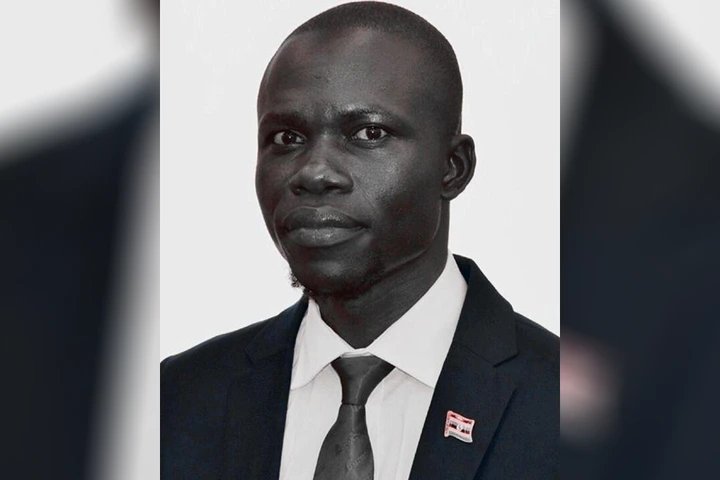

visit to the EC’s official website still displays election results from 1996 to 2021, with nothing for 2026
Ugandans are once again confronted with a troubling question: where are the Declaration of Results (DR) Forms that validate the outcome of the January 15, 2026 presidential election?
According to the Electoral Commission (EC), Yoweri Museveni secured 72 percent of the vote. Yet more than 100 days after polling day, the Commission has not published the DR Forms—the primary evidence detailing how votes were tallied across the country.
A visit to the EC’s official website still displays election results from 1996 to 2021, with nothing for 2026.
This presents a striking contradiction. The EC was able to tally and declare results within 48 hours of polling, yet more than 100 days later, it has failed to publish the very documents that underpin those results.
These are the same figures that delivered another term to Museveni, effectively extending his rule toward 45 years in office in one of the world’s youngest nations, where more than 78 percent of the population is under the age of 30.
This silence prompts a fundamental question: how many days does the EC require to publish DR Forms? In any credible democracy, such documentation should be available within days, not months, after an election. The prolonged delay is not merely unusual; it is unacceptable.
DR Forms are not a procedural technicality; they are the backbone of electoral integrity. They provide polling station-level data that allows candidates, observers, and citizens to independently verify results.
Without them, declared outcomes remain assertions rather than evidence, undermining the very voice of the people.
The implications are profound. Uganda’s democratic trajectory has long been contested, but there has always been an expectation of gradual institutional improvement.
The failure to publish DR Forms signals the opposite: a retreat from transparency and accountability.
It erodes public trust not only in the election outcome but also in the institutions entrusted to uphold it.
As the country approaches May 12, 2026, the scheduled swearing-in date, the situation becomes even more troubling.
Ugandans are effectively being asked to accept a presidential mandate that has not been transparently substantiated.
This raises an unavoidable question: do you organize a wedding before securing a bride?
Proceeding with a swearing-in ceremony under such circumstances risks reducing a constitutional process to a political ritual.
It raises serious legal and moral concerns about legitimacy. More critically, it risks turning public resources into instruments for validating an outcome that has not been verified.
At a time when citizens continue to grapple with economic hardship, using taxpayers’ money to stage such a ceremony is not just questionable—it is unjustifiable.
This moment demands reflection. The struggle between 1980 and 1986 was, in part, anchored in the promise of free and fair elections—elections whose outcomes would be transparent and verifiable.
That promise now stands on shaky ground. If electoral outcomes cannot be independently confirmed, then the very foundation of democratic governance is undermined.
The EC must act decisively and without further delay. Publishing DR Forms is not a favor to the opposition or critics; it is a constitutional and democratic obligation.
It is the minimum requirement for restoring public confidence—confidence that continues to erode in state institutions.
Ugandans deserve more than declarations; they deserve evidence. Until the DR Forms are made public, the legitimacy of the January 15 election will remain in question.


 Government will not gazette Kijanangoma as King of Tooro for now - Attorney General insists
Ultimate Uganda
Government will not gazette Kijanangoma as King of Tooro for now - Attorney General insists
Ultimate Uganda
 King Oyo’s Body to Arrive Thursday
Ultimate Uganda
King Oyo’s Body to Arrive Thursday
Ultimate Uganda
 Besigye, Lukwago expected to meet Gen. Salim Saleh today at Kapeeke
Ultimate Uganda
Besigye, Lukwago expected to meet Gen. Salim Saleh today at Kapeeke
Ultimate Uganda
 Rwabwogo Advised to ‘Eat His Bishop’ As MK Prepares to Enter State H’se: PREZ MUSEVENI ON HIS WAY OUT
Ultimate Uganda
Rwabwogo Advised to ‘Eat His Bishop’ As MK Prepares to Enter State H’se: PREZ MUSEVENI ON HIS WAY OUT
Ultimate Uganda
0 Comments