
Museveni Directs Education Ministry to Phase Out ‘Irrelevant’ Arts Courses
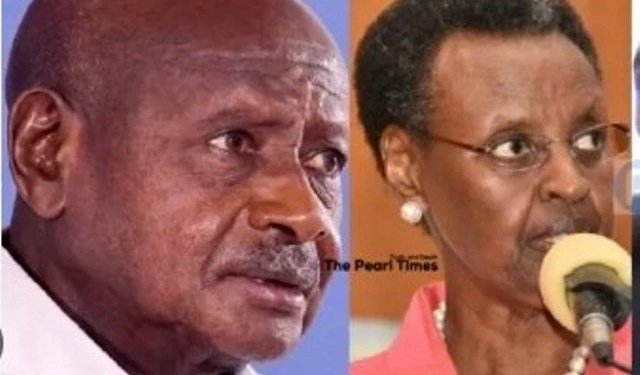

While the issue of increasing university enrollment and relevance of academic programs or courses has been ongoing, little action has been taken.
Museveni used his address at the Labour Day celebrations in Buikwe District on May 01 to give his views and express l concerns about the widening gap between what students study and the skills required in the economy.
He encouraged young people to rethink their career choices and prioritize practical skills that can help them land employment and drive productivity.
“Now the other issue is the courses which don’t have relevance in the job market. They may be useful in giving you information on history and what is happening in Europe but we don’t need them,†Museveni said.
“In our market, we may be wanting tomatoes and you bring yams. Yams are good but we don’t need them.â€
To back his argument, the president shared an encounter with graduates trained in social work, procurement, and psychology, questioning how such qualifications translate into available job opportunities.
“Recently, I met some young people with degrees in SWASA [Bachelor of Social Work and Social Administration], another one in procurement and [another in] psychology,†the president narrated.
“I asked the one of psychology for what he will do with his degree. He said he can look at me and know my thinking. I asked him, how many jobs are there for that and he said he can work in prison and know which prisoner wants to escape. I asked him how many prison jobs exist and he didn’t respond.â€
Museveni said he was now happy that the young people he met attained certificates and diplomas in catering “and now they got jobs in no time.â€
Within Uganda, many of the courses that Museveni wants eliminated are known to train students for professions in areas such as community development, counselling, and human rights work, usually combining classroom learning with practical field exposure.
Museveni noted that his reservations about such programmes are not new, explaining that he had long cautioned education leaders about expanding university admissions without ensuring the economy could absorb the graduates.
He cited earlier engagements with former education ministers Geraldine Namirembe Bitamazire and Amanya Mushega, at a time when the number of qualified students far exceeded available government sponsorship slots.
“I had told former education minister Namirembe Bitamazire [RIP] long ago because I could see the explosion of more graduates,†he continued.
“Many years ago when Amanya Mushega was minister of education…we would get more than 11,000 that would qualify to be admitted to university but government could only pay for 1,000. I asked if they have passed and government cannot afford, why can’t they pay for themselves at university?â€
He added that allowing both privately sponsored and government-sponsored students into universities helped widen access to higher education, but cautioned that insufficient regulation of course selection resulted in many graduates pursuing programmes with limited employment prospects.
“So, eventually, this helped because we could have both private and government sponsorship entering university,†he said.
“I saw the danger because if you have many graduates with carelessly selected courses; I ordered that the Ministry of Education and Sports should give guidelines but it wasn’t followed up well.â€
Museveni promised to ensure that the proposed changes are implemented.
“Now that it has been raised, we are going to follow it up,†he noted.
The proposed changes are expected to be implemented in the new term of office beginning this month, with a possibility of new ministers being appointed in the new docket. Currently, senior education minister and first lady Janet Museveni has not appeared in public for weeks, with Museveni giving an update on her health condition Here.
The president further advised graduates who pursued less marketable degrees to acquire additional skills or training that can improve their chances of employment or enable them to start income-generating activities.
“Those who already have degrees in courses such as SWASA should consider retooling and get other trainings or qualifications that can help in job creation,†he emphasized.
Estimates from national planning bodies indicate that Uganda must create over 884,000 jobs each year in the next five years to curb youth unemployment. Museveni argued that part of the issue is linked to mindset and work ethic.
“The problem is not jobs, but people are asleep. I have not seen any serious farming while on my way [to Buikwe]. We need to be serious and stop running around,†he said.
“Countries like Japan have surplus jobs which you do when you go there. Japan is slightly bigger than Uganda but no agriculture and no minerals. They leverage their fishing and industrializing and all their 127 million people have jobs and surplus work that you people go to do. Stop sleeping.â€
Pointing to agriculture as a major opportunity, Museveni said the country has vast tracts of fertile land that remain underutilized and could significantly increase employment if put to productive use.
“Uganda has over 40m acres of arable land. I calculated that if we can use just 7m acres of the 40m acres for commercial agriculture, more than 150m jobs would be created, far more than Uganda’s population,†he argued.
Relatedly, you can see the names of 2,485 students admitted on government sponsorship (national merit) for all public universities for the 2026-2027 academic year Here.
It should be remembered that government has changed the curriculum at O-level and implementation of proposals under the new A-level curriculum are underway.


 Government will not gazette Kijanangoma as King of Tooro for now - Attorney General insists
Ultimate Uganda
Government will not gazette Kijanangoma as King of Tooro for now - Attorney General insists
Ultimate Uganda
 King Oyo’s Body to Arrive Thursday
Ultimate Uganda
King Oyo’s Body to Arrive Thursday
Ultimate Uganda
 Besigye, Lukwago expected to meet Gen. Salim Saleh today at Kapeeke
Ultimate Uganda
Besigye, Lukwago expected to meet Gen. Salim Saleh today at Kapeeke
Ultimate Uganda
 Rwabwogo Advised to ‘Eat His Bishop’ As MK Prepares to Enter State H’se: PREZ MUSEVENI ON HIS WAY OUT
Ultimate Uganda
Rwabwogo Advised to ‘Eat His Bishop’ As MK Prepares to Enter State H’se: PREZ MUSEVENI ON HIS WAY OUT
Ultimate Uganda
0 Comments