
Unsafe city': Fear grows as theft and burglaries hit Arua
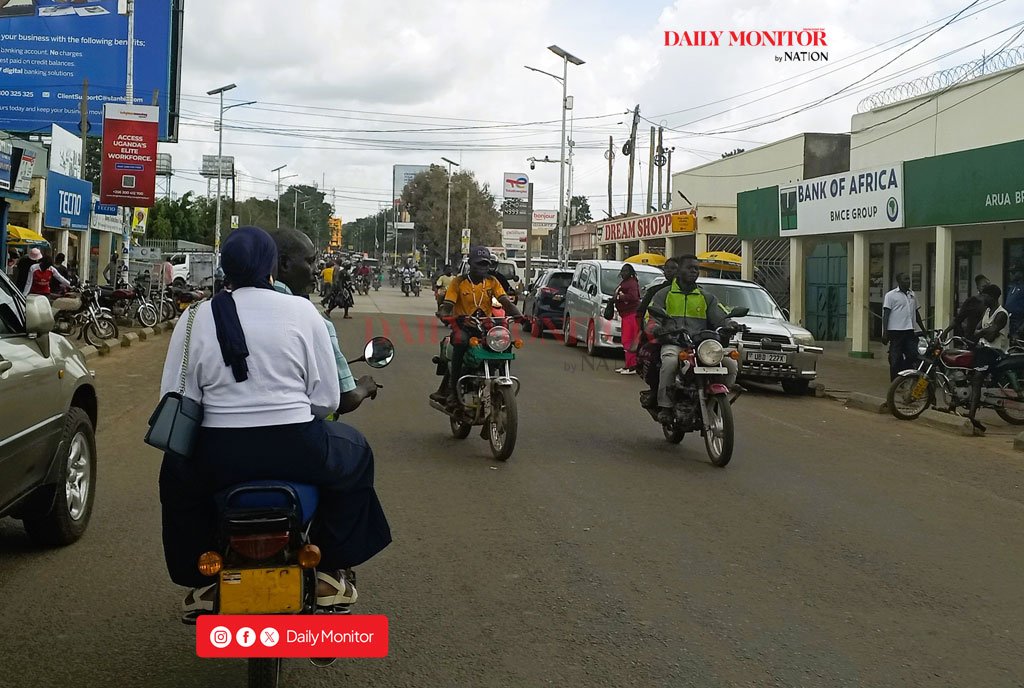

Arua City has always been a place of movement. By daybreak—around 6am—its streets pulse with the high tempo of trade: vendors calling out prices, boda-bodas weaving through traffic, children darting between homes and schools, and street vendors oscillating in all directions to make ends meet.
But lately, something has shifted. The movement is still there, but it feels tighter, more cautious, as if the city itself has learned to look over its shoulder. Thugs are attempting to take over.
At sundown, the transformation becomes undeniable. Ms Loyce Oleru used to keep her small grocery shop open until 9 p.m. It was the best time for business, when workers returning home would stop by for sugar, bread, or soap.
Now she shuts her metal door before the sun has fully set. Every evening, she counts her coins quickly, her fingers trembling just enough to irritate her.
Speaking to the Daily Monitor on Monday about her ordeal, Ms Oleru said: “I am surviving; that is why I am hurrying up. I was once robbed at the shop when I used to close late. So, I am nervous each time.â€
In the city, there are countless stories of stolen phones, motorbikes and break-ins at night. Cities always have stories, but then came the incident on Rhino Camp Road at Old Bus Park Cell on April 29, when a young man was killed after allegedly attempting to snatch a bag from a lady at about 8am.
He was caught in the act. The mob used clubs and stones to hit him, mainly on the head and stomach several times. By the time the police arrived, he had breathed his last at the scene.
By morning, everyone knew they would encounter the thieves. By afternoon, everyone had added something to the story—more attackers, more violence, more fear.
Movements have become calculated. Thefts are carried out both day and night.
At the police general inquiry room, it is a beehive of activity. When the Daily Monitor visited the room, complainants kept trickling in to register their cases. Most of the complaints are about theft, break-ins and robbery of mobile phones, money, laptops or other household items.
Fruitless efforts by police
The West Nile Regional Police Public Relations Officer, Ms Josephine Angucia, confirmed that the suspect was a 20-year-old named Iddi Anguandia.
“We continue to condemn acts of mob justice in communities as it is not only unlawful but barbaric in the current society,†she said.
That afternoon of April 27, guns rang out on Adumi Road as police battled a group of youths who protested the killing of Anguandia, whom they fondly called their friend.
Noting that much of the insecurity that has bred fear among locals is being engineered by youths, Ms Angucia said: “Meanwhile we encourage youths to engage in more productive income-generating activities other than stealing and robbing.â€
On April 27, police arrested 93 suspected criminals within the city. But upon screening, 39 were charged with rogue and vagabond contrary to Chapter 128 of the Penal Code, Section 150, subsections b and c. Their case file was sanctioned by RSA Arua, and they will be taken to Arua court.
Some of the cases
On March 23, at around 00:20am, two youths—31-year-old Godfrey Aliga and 24-year-old Vincent Mabe, residents of Oluodri Cell, Ariwara Ward, Ayivu East Division in Arua City—were killed at Buniababa Trading Centre on allegations of motorcycle theft.
On the night of April 23, 2026 at around 2:00am in Rowu Village, DR Congo, one Titia Martin discovered that 13 heads of cattle had been stolen from his kraal.
On April 27 at Komite Ward, a mob killed a suspected thief. Police said the deceased was found by locals pushing a wheelbarrow with other items and was beaten after being suspected of theft.
Though annual police crime reports show a decline in West Nile, people are still living in fear. The reports indicate that in 2022 there were 7,533 cases, in 2023 there were 7,608 cases, in 2024 there were 6,098 cases, and in 2025 there were 5,579 cases.
Regarding mob-related killings, the 2025 crime report indicates 68 cases in West Nile. The sub-region recorded 184 cases last year. Theft of mobile phones accounted for 180 cases, while motorcycle theft stood at 246 cases.
Mr Daniel Dratibi, Director of Voice of Restoration, believes jobless youth engaged in rampant consumption of mairungi, smoking of opium, and excessive drinking are responsible for the mayhem. “In some areas within the city, you cannot move with any valuables during the day. They can attack you within a second,†he said.
He said government needs to engage youths in productive activities so they can earn a living. Programs that provide job training, apprenticeships, and small business support can redirect that energy.
A generation of violence?
The Team Leader of West Nile Youth Network, Mr Jaffar Drate, said: “By embracing diversity, spreading kindness, and standing up for justice, young people can foster harmony, promote peace, and share it with the world.â€
Mr Drate added: “Let us (youth) be the generation that brings positive change.â€
Investigations by the Monitor indicate that after stealing motorcycles, phones, laptops and other items, suspects return to their dens where they share proceeds with their leaders after sale.
The stolen motorcycles are mainly sold in DR Congo and South Sudan at between Shs1.5 million and Shs2.5 million depending on condition.
The boys remove number plates throughout the night and cross borders using undesignated routes, making it difficult for security to trace them.
Boda-boda riders wait for passengers on Avenue Street in Arua City on May 5, 2026. Many riders in the city have increasingly become targets of thugs. PHOTO/FELIX WAROM OKELLO.
Boda-boda men operating night shifts are at greater risk. Mr James Opar, a boda boda rider, said he has changed his routes completely.
But now, those quiet lanes feel like traps. He avoids them, even if it means losing a fare. “That day (May 2), a passenger insisted we use the road to Jiako. Knowing that this road does not have street lights, I refused. I wanted to use the one via the airfield. And little did I know that we would fall into a trap,†he said.
He noted that they were robbed, but the motorcycle survived. “I have vowed never to use that road because for years it has not been safe. But I used to dare because of money.â€
Across the city, similar conversations unfold behind closed doors. Parents now walk children to school even when they are old enough to go alone, especially in the early hours.
Shopkeepers have installed extra locks. Some now hire night guards, though even that offers only limited comfort.
For Ms Alicia Ochola, a university student, the fear has become suffocating. She came to Arua City with dreams—education, independence, and a future shaped by her own choices. But her world has shrunk to a careful map of “safe†places.
Her friends used to gather in the evenings, sitting outside with music and laughter spilling into the street. Now their meetings end early, if they happen at all.
One night in 2025, her friend suggested they go out anyway. Ochola hesitantly agreed. She felt a little brave, but as she looked at the darkening sky, she felt a frightening shadow.
“It was not about bravery. It was about risk. As we went out in the evening, we didn’t know what was happening at home. On return, I found my room had been broken into at night and my laptop and some valuables were taken,†she said. That deepened her fear.
The city authorities have tried to respond. Patrols have increased, and officials have urged calm. There have been barazas, promises, and plans. But for many residents, these remain distant—words that do not reach the narrow streets where fear lives.
The Assistant Resident City Commissioner for Ayivu Division, Mr Polly Ongom, said: “We need our people to live in a peaceful environment. The government has created a number of programs where youths can be engaged. Insecurity is not good for the development of a place.â€
Organised gangs
The organised gangs have names such as Fire Eaters, Manya Boys, Air Japan, Janjaweed, Jobless Billionaires, Chicken Cannot Pass, The Gaza Boys, and Above the Law Boys, among others.
Hotspots include Asuru Cell in Tanganyika near the airfield, Wadriff Road, Rhino Camp Road stretching to Arua Primary, Hospital Road, Kirabu areas, Adriko Cell in Central Division, Mvaradri areas, and Ediofe Centre.
Despite everything, the bustling life in Arua City does not stop. Markets remain open. And in the space between fear and resilience, the city continues—watchful, wary, and still, somehow, alive.


 Government will not gazette Kijanangoma as King of Tooro for now - Attorney General insists
Ultimate Uganda
Government will not gazette Kijanangoma as King of Tooro for now - Attorney General insists
Ultimate Uganda
 King Oyo’s Body to Arrive Thursday
Ultimate Uganda
King Oyo’s Body to Arrive Thursday
Ultimate Uganda
 Besigye, Lukwago expected to meet Gen. Salim Saleh today at Kapeeke
Ultimate Uganda
Besigye, Lukwago expected to meet Gen. Salim Saleh today at Kapeeke
Ultimate Uganda
 Rwabwogo Advised to ‘Eat His Bishop’ As MK Prepares to Enter State H’se: PREZ MUSEVENI ON HIS WAY OUT
Ultimate Uganda
Rwabwogo Advised to ‘Eat His Bishop’ As MK Prepares to Enter State H’se: PREZ MUSEVENI ON HIS WAY OUT
Ultimate Uganda
0 Comments