
Kabaka’s illness a defining challenge of my 13-year leadership, says Mayiga
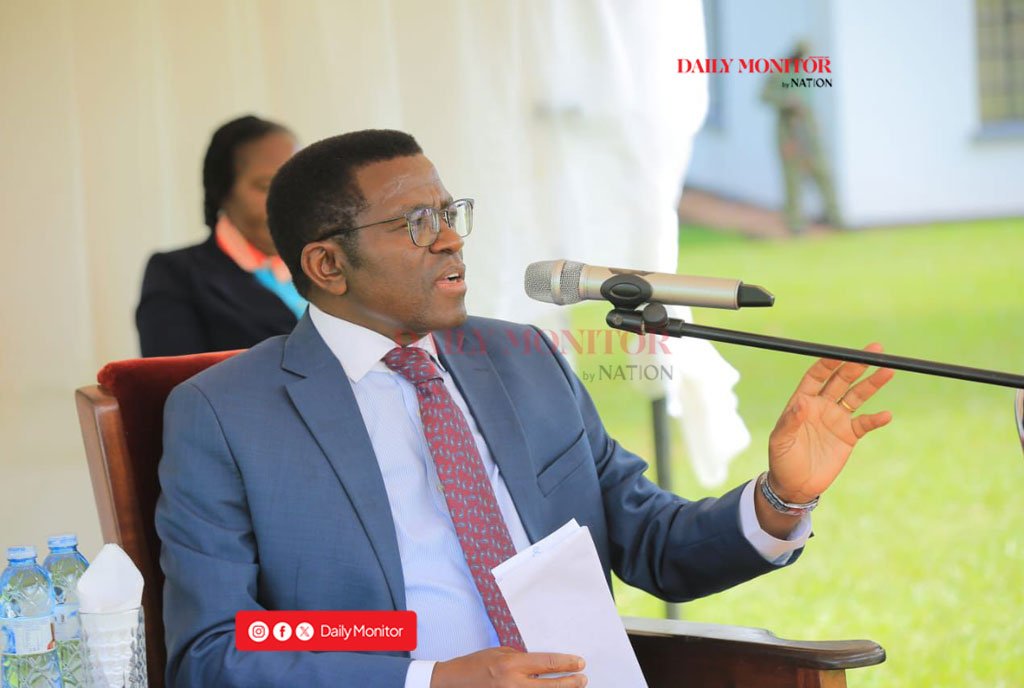

As he marked 13 years in office, Buganda Kingdom Prime Minister (Katikkiro) Charles Peter Mayiga used the milestone to reflect on a tenure shaped by institutional reform, accountability, and difficult moments, including the Kabaka’s illness and resistance to the kingdom’s flagship Etofali campaign.
Speaking to journalists at his official residence, Butikkiro in Mengo, on Tuesday, Mr Mayiga said his leadership has focused on building systems that promote transparency, efficiency, and long-term sustainability within the Buganda Kingdom.
“We streamlined administration and introduced systems that emphasise accountability, so that when you relate with the kingdom, whether as a partner, sponsor or investor, you are guided by clear procedures,†Mr Mayiga said.
He noted that while the reforms strengthened governance, they also disrupted old ways of doing things, drawing resistance from some sections of the public.
“People are not always used to systems. Every new system creates discomfort, depending on where one stands. Some who felt left out became bitter, but the changes were necessary,†he said.
Land accountability and realities
On the sensitive issue of land, Mr Mayiga dismissed claims that Buganda land is widely being grabbed, insisting that the kingdom maintains firm control over what it legally owns.
“The kingdom holds only about 5 per cent of the registered land in Buganda. It is not true that every piece of land belongs to the kingdom,†he explained.
He added that much of the remaining land is privately owned or held by government, including thousands of square miles that Buganda is still demanding be returned.
“The largest landowner in Buganda today is actually the government. We are still demanding the return of the 9,000 square miles and 1,500 square miles of forest land that has not been restituted,†Mr Mayiga said.
He emphasised that land under the kingdom is professionally managed through the Buganda Land Board.
“We have not lost a single piece of land that we hold as a kingdom to land grabbers. What exists is lawful occupation, especially by government institutions,†he said.
According to Mr Mayiga, entities occupying kingdom land, including the army, police, prisons, and some State House installations—are required to either lease or purchase it.
“There are only three options: lease and pay rent, buy outright, or regularise occupancy. We are in constant engagement with government on this,†he noted.
The Katikkiro outlined six major challenges affecting land governance in Uganda, pointing to systemic weaknesses rather than deliberate land grabbing.
“The biggest problem is inefficiency in land offices. You hear of freehold titles being issued on Mailo land, which is illegal, and there are delays in processing documents,†he said.
He also cited under-resourced land protection units, slow court processes, and rapid population growth as major drivers of land disputes.
“Our population has grown significantly. Areas that were sparsely populated 20 years ago are now heavily settled, increasing pressure on land,†he said.
Etofali campaign and resistance
Mr Mayiga described the Etofali initiative as one of the most transformative, but also controversial, programmes of his tenure.
“The Etofali drive was not primarily about money. It was a mindset-change campaign to show that we can do things ourselves, whether we receive external support or not,†he said.
He added that the campaign raised billions of shillings, supporting projects such as the reconstruction of the Kasubi Tombs and other cultural sites.
However, he acknowledged that the initiative faced strong criticism from some quarters.
“Some people opposed it and even claimed I was trying to elevate myself to the level of the Kabaka because of the crowds that welcomed me. But leadership comes with criticism,†Mr Mayiga said.
He added that, in hindsight, the campaign’s impact went beyond financial contributions.
“The message people received was more important than the money. Up to now, we continue to reap the benefits of that campaign,†he said.
'Kabaka’s illness defining test'
Among the most difficult moments of his leadership, Mr Mayiga pointed to the period when the Kabaka’s health became a matter of public concern.
“That was probably the biggest challenge. It was a very difficult time, with a lot of speculation and criticism directed at us,†he said.
He noted that leadership in such moments requires resilience.
“If you are a leader and expect people not to criticise you, then you are not effective. I did not take it personally—it comes with the job,†he added.
Growth and future focus
Despite the challenges, Mr Mayiga highlighted achievements in revenue mobilisation, governance, and social programmes.
He said initiatives such as Luwalo Lwaffe have strengthened the kingdom’s financial base, while investments in education, health, and agriculture have improved livelihoods.
“Our annual collections have grown, and we have strengthened institutions at all levels—from the Lukiiko to grassroots leadership,†he said.
He added that environmental conservation and economic empowerment remain key priorities, with ongoing campaigns in tree planting and coffee growing under the Emmwanyi Terimba programme.
“For the last 13 years, I have helped spearhead this drive, and I am confident it has helped many people improve their standards of living. Farmers are now also rearing animals, which contributes to household income. We have visited farmers in different regions, and the progress is very positive,†he said.
Looking ahead, Mr Mayiga said the focus will be on increasing production and expanding manufacturing to create jobs and boost household incomes through a new initiative dubbed Situla Omutindo.
“We must move from consumption to production. That is where the future lies,†he said.
Who is Peter Mayiga?
Charles Peter Mayiga is a Ugandan lawyer, cultural leader, author, and businessman. He is the current Katikkiro (Prime Minister) of Buganda Kingdom, a constitutional monarchy in Uganda.
He was appointed to the position in May 2013 by Kabaka Ronald Muwenda Mutebi II, replacing John Baptist Walusimbi.
Since 1987, Mr Mayiga has worked closely with Buganda Kingdom elders, deepening his understanding of Buganda’s customs and traditions.
On July 4, 1991, during preparations for the restoration of the kingdom, he was appointed Secretary of the Council of Elders, where he played a key role in organising the cultural restoration process.
Following the restoration of the monarchy in 1993, he became Secretary to the Lukiiko before later serving as Buganda’s Minister of Information and official spokesperson.
He served in that role until his appointment as Katikkiro in 2013.
Before becoming Katikkiro, Mr Mayiga had reportedly turned down at least two opportunities to contest for elective political office.


 The women who have been in King Oyo’s life
Ultimate Uganda
The women who have been in King Oyo’s life
Ultimate Uganda
 Ex Kagame Guard Commander Tom Byabagamba Dies in Rwandan Prison After 12 Years
Ultimate Uganda
Ex Kagame Guard Commander Tom Byabagamba Dies in Rwandan Prison After 12 Years
Ultimate Uganda
 Government begins salary payments for public sector workers – Reform Committee
Ultimate Uganda
Government begins salary payments for public sector workers – Reform Committee
Ultimate Uganda
 Temangalo land: NSSF, Nzenyi reach agreement
Ultimate Uganda
Temangalo land: NSSF, Nzenyi reach agreement
Ultimate Uganda
0 Comments