
Taxi Tales: The Price of Survival in a Boiled Maize Cob
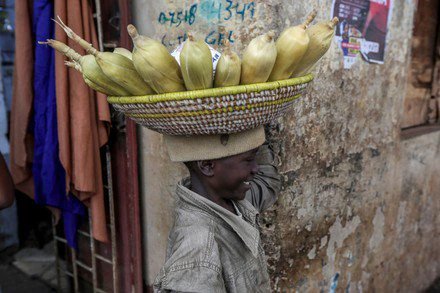

recently got into a taxi, exhausted from the noise of the world. Like many people trying to steal a moment of peace in Kampala’s endless rush, I leaned back, plugged in my AirPods and disappeared into my own quiet space.
But somewhere along the journey, my attention shifted.
Three women boarded the taxi at different stages. Two looked like teenagers, another perhaps in her twenties. Their age was not what caught my attention. It was what they carried.
Each balanced a basket filled with boiled maize. The kind of baskets you immediately know are heavy even before lifting them. The kind that tell a story before a word is spoken.
One by one, each woman got off at a different stop. Before disembarking, they paid the conductor, then asked him to help place the basket carefully back onto their heads. One was fortunate enough to make her first sale to a passenger before she stepped out into the evening traffic.
And then they disappeared into Kampala.
Into junctions, taxi parks, roadside stages, traffic lights and crowded streets where thousands battle every day to make enough money to survive another sunrise.
As I watched them walk away, one question stayed with me: Would they sell everything they prepared for the day?
And even if they did, was it worth it?
That question pushed me to look deeper into the price of maize in Uganda today and the hidden economics behind a single boiled cob sold by the roadside.
At the farm gate, one piece of maize currently costs between Shs50 and Shs150 depending on the region and season. By the time it reaches traders in Kampala after transport and middlemen costs, that same piece could cost between Shs250 and Shs500.
But that is only the beginning.
There is charcoal currently expensive and rising steadily with a sack costing close to Shs90,000 in some areas. There is water for boiling. Rent for where they prepare the maize. Casual labour sometimes needed to peel or carry the produce. Taxi fare. Market dues in some places. And above all, the physical exhaustion of carrying heavy baskets for hours under the sun and dust of Kampala.
The final customer buys one ready to eat cob at Shs1,000.
To the buyer, it may seem affordable.
But when the costs are broken down, one begins to wonder how much profit truly remains for the women carrying these baskets on their heads every evening.
How many cobs must one sell before making actual profit?
How many remain unsold?
What happens when it rains?
What happens when charcoal prices increase again?
What happens when they fall sick for even one day?
In a city where the cost of living continues to rise sharply, survival itself has become labour intensive.
Transport fares have gone up. Rent has gone up. Food prices fluctuate almost weekly. Yet for many informal workers, income has remained uncertain and painfully small.
And perhaps that is what stayed with me most during that taxi ride.
Not just the boiled maize.
But the quiet resilience of the women carrying Uganda’s informal economy on their heads.
No office titles.
No contracts.
No guarantees.
Just baskets, hope, and another evening in Kampala trying to turn maize into survival.
Sometimes the true story of the economy is not found in government reports or statistics.
Sometimes it is found in a taxi.


 The women who have been in King Oyo’s life
Ultimate Uganda
The women who have been in King Oyo’s life
Ultimate Uganda
 Ex Kagame Guard Commander Tom Byabagamba Dies in Rwandan Prison After 12 Years
Ultimate Uganda
Ex Kagame Guard Commander Tom Byabagamba Dies in Rwandan Prison After 12 Years
Ultimate Uganda
 Government begins salary payments for public sector workers – Reform Committee
Ultimate Uganda
Government begins salary payments for public sector workers – Reform Committee
Ultimate Uganda
 Temangalo land: NSSF, Nzenyi reach agreement
Ultimate Uganda
Temangalo land: NSSF, Nzenyi reach agreement
Ultimate Uganda
0 Comments