
Uganda confirms five Ebola cases as regional leaders meet at Speke Resort Munyonyo to strengthen cross-border response
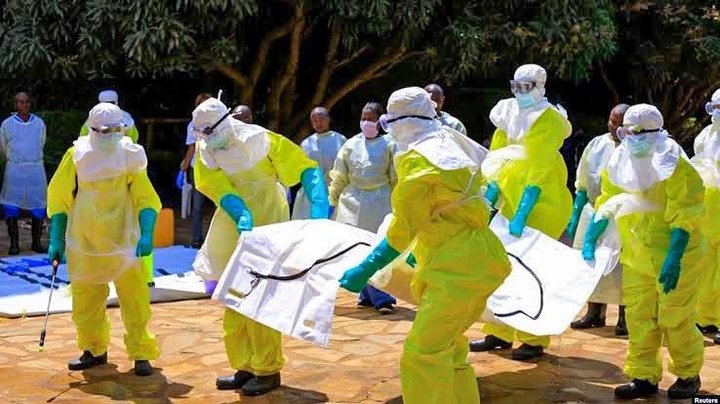

Uganda has confirmed three new cases of Ebola Virus Disease (EVD), raising the country’s total number of confirmed infections to five, as regional health leaders convene at Speke Resort Munyonyo for a high level meeting aimed at strengthening cross-border preparedness and coordinated outbreak response.
The latest update was announced by the Ministry of Health in a press release signed by Director General Health Services, Prof. Charles Olaro, who said the new cases emerged from ongoing surveillance and contact follow up efforts.
According to the Ministry, the newly confirmed cases include a Ugandan driver who transported the country’s first confirmed Ebola patient and is currently receiving treatment, as well as a Ugandan health worker who contracted the virus while caring for the first case and is also under treatment.
Prof. Olaro said both cases had already been identified as known contacts and had remained under active monitoring by health authorities.
The third confirmed case involves a Congolese woman residing in the Democratic Republic of Congo who entered Uganda while experiencing mild abdominal symptoms.
According to the Ministry, the woman travelled from Arua to Entebbe aboard a chartered flight before seeking medical attention at a private hospital in Kampala on May 10, 2026.
She was treated and later discharged in stable condition on May 14 before returning to the DRC.
However, Prof. Olaro explained that health authorities later received a tip off from the pilot who had transported her, prompting surveillance teams to intensify follow up efforts.
“A sample was retrieved and tested for Ebola Virus Disease, with results later returning positive,†Prof. Olaro said.
He added that all contacts linked to the confirmed cases have since been identified and placed under close monitoring by response teams.
Prof. Olaro urged the public not to panic but to remain vigilant and continue following all recommended public health measures.
“The Ministry of Health urges all members of the public to remain calm, vigilant, and continue observing all recommended preventive measures. Report any suspected Ebola symptoms immediately to the nearest health facility. Early treatment greatly improves chances of survival,†he said.
He further noted that the Ministry continues to strengthen surveillance, case management, contact tracing and public awareness efforts to contain the outbreak and safeguard public health.
The announcement comes as a high level Ministerial Meeting on cross border coordination for the Ebola outbreak response gets underway at Speke Resort Munyonyo in Kampala.
The meeting has drawn senior government officials, regional health leaders and development partners seeking to establish a coordinated strategy to manage and prevent further spread of the disease across borders.
Among the key participants are Permanent Secretary Dr. Diana Atwine, Africa CDC Director General Dr. Jean Kaseya, Ministers of Health from the Democratic Republic of Congo and South Sudan, alongside technical and development partners.
Addressing the meeting, Dr. Diana Atwine called for greater commitment, openness and collective action among countries in the region.
“No one is safe until everyone is safe,†Dr. Atwine said.
Africa CDC Director General Dr. Jean Kaseya praised President Yoweri Museveni for what he described as decisive leadership and commended Uganda’s rapid emergency response structures.
He also applauded Dr. Atwine’s role in steering the national response.
“This outbreak response will be led by Africa, for Africa, and by Africans,†Dr. Kaseya said.
The Democratic Republic of Congo’s Minister of Health, Dr. Roger Samuel Kamba, warned that outbreaks do not respect borders and stressed the need for coordinated interventions to protect populations across the region.
South Sudan’s Minister of Health, Hon. Luke Thompson, welcomed the timely convening of the meeting and emphasized that regional preparedness depends on unity, readiness and public trust.
He said communities must remain at the centre of response efforts to ensure interventions succeed.
Delegates have concluded the meeting with a joint communique outlining urgent actions including stronger cross border surveillance and early warning systems, improved preparedness at points of entry and protection of frontline communities.
The delegates further urged for enhanced clinical management and infection prevention measures, stronger community engagement, improved operational coordination, sustainable financing mechanisms, and long-term regional health security backed by continued political commitment and solidarity.


 Government will not gazette Kijanangoma as King of Tooro for now - Attorney General insists
Ultimate Uganda
Government will not gazette Kijanangoma as King of Tooro for now - Attorney General insists
Ultimate Uganda
 King Oyo’s Body to Arrive Thursday
Ultimate Uganda
King Oyo’s Body to Arrive Thursday
Ultimate Uganda
 Besigye, Lukwago expected to meet Gen. Salim Saleh today at Kapeeke
Ultimate Uganda
Besigye, Lukwago expected to meet Gen. Salim Saleh today at Kapeeke
Ultimate Uganda
 Rwabwogo Advised to ‘Eat His Bishop’ As MK Prepares to Enter State H’se: PREZ MUSEVENI ON HIS WAY OUT
Ultimate Uganda
Rwabwogo Advised to ‘Eat His Bishop’ As MK Prepares to Enter State H’se: PREZ MUSEVENI ON HIS WAY OUT
Ultimate Uganda
0 Comments