
Traffic police arrest 551 motorists in week-long road safety crackdown
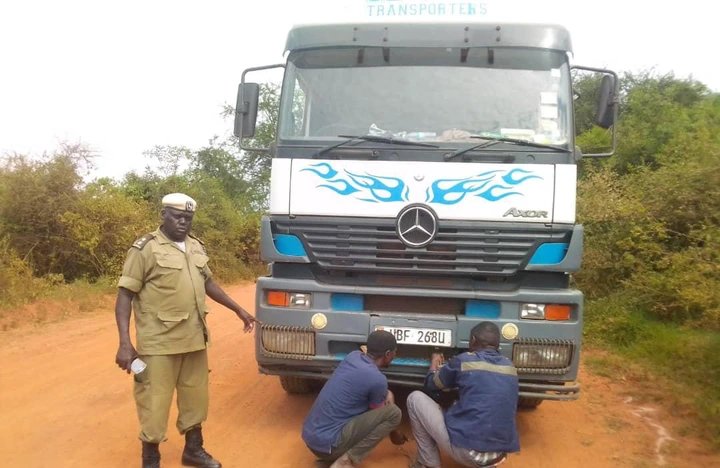

‎The Directorate of Traffic and Road Safety has arrested 551 drivers and riders over the past week as part of ongoing enforcement operations aimed at improving compliance with traffic laws and reducing road crashes.
‎
‎According to Traffic Police spokesperson Michael Kananura, the offenders were apprehended for a range of violations that continue to contribute to road safety risks on Uganda's roads.
‎
‎The offenses included driving a motor vehicle in a dangerous mechanical condition (185 cases), driving without a valid driving licence (121), careless overtaking (84), riding without a helmet (60), illegal vehicle modification (38), dangerous loading (24), violation of traffic directions (21), riding without a valid riding licence (13), violating route charts (three) and abandoning a vehicle on the road (one).
‎
‎"The Directorate of Traffic and Road Safety apprehended 551 drivers and riders over the past week for various traffic offenses," Kananura said on Tuesday.
‎
‎"These enforcement operations are ongoing. All drivers and riders are urged to obey traffic rules and regulations to enhance road safety and prevent crashes," he added.
‎
‎The latest crackdown comes at a time when Uganda continues to grapple with rising road crashes and fatalities.
‎
‎According to the Uganda Police Force Annual Crime and Traffic Safety Report for 2025, the country recorded 26,044 road crashes last year, up from 25,107 crashes registered in 2024, representing a 3.7 percent increase.
‎
‎The report further shows that road traffic deaths rose by 4.7 percent, with 5,383 people losing their lives in 2025 compared to 5,141 in the previous year. The figures translate to an average of about 15 deaths every day on Uganda's roads.
‎
‎Road safety experts have repeatedly attributed many crashes to reckless driving, dangerous overtaking, poor vehicle maintenance and non-compliance with traffic regulations.
‎
‎Traffic police say sustained enforcement, public awareness campaigns and stricter adherence to road safety rules remain critical in reversing the worrying trend.


 Government will not gazette Kijanangoma as King of Tooro for now - Attorney General insists
Ultimate Uganda
Government will not gazette Kijanangoma as King of Tooro for now - Attorney General insists
Ultimate Uganda
 King Oyo’s Body to Arrive Thursday
Ultimate Uganda
King Oyo’s Body to Arrive Thursday
Ultimate Uganda
 Besigye, Lukwago expected to meet Gen. Salim Saleh today at Kapeeke
Ultimate Uganda
Besigye, Lukwago expected to meet Gen. Salim Saleh today at Kapeeke
Ultimate Uganda
 Rwabwogo Advised to ‘Eat His Bishop’ As MK Prepares to Enter State H’se: PREZ MUSEVENI ON HIS WAY OUT
Ultimate Uganda
Rwabwogo Advised to ‘Eat His Bishop’ As MK Prepares to Enter State H’se: PREZ MUSEVENI ON HIS WAY OUT
Ultimate Uganda
0 Comments