
Fish farming emerges as new weapon against poverty in Kibuku
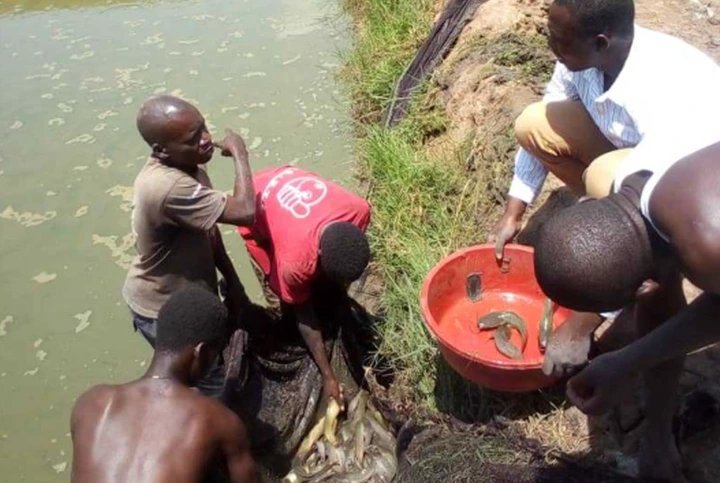

For decades, crop farming has been the backbone of livelihoods in Kibuku District. Yet unpredictable weather patterns, declining soil fertility, pests and fluctuating market prices have continued to frustrate farmers, leaving many households struggling to escape poverty.
Now agricultural experts and local leaders are promoting fish farming as a viable alternative, arguing that aquaculture could transform rural incomes while improving food security in the eastern Uganda district.
The growing demand for fish across Uganda has created a ready market for farmers willing to invest in fish ponds, with officials saying the district's wetlands, favourable climate and water resources provide ideal conditions for aquaculture.
Unlike conventional crop farming, fish farming requires relatively small land space and can generate substantial returns within a relatively short period.
Kibuku District Production Officer Michael Mbayo said fish farming offers households an opportunity to diversify their income sources while improving nutrition.
"Fish farming not only diversifies household income but also improves food security. Fish provide an affordable source of protein and help families improve nutrition," Mr Mbayo said.
He said income from fish sales has enabled some farmers to pay school fees, improve housing conditions, access healthcare and invest in other businesses.
"The fish farming enterprise is a very lucrative activity that can help farmers earn extra household income and complement efforts aimed at fighting poverty," he added.
Among those championing aquaculture is Dr Stephen Birungi, a veterinary doctor and model farmer in Nakisenyi Village, Saala Parish, Kirika Sub-county.
Dr Birungi believes fish farming offers one of the most effective pathways out of poverty.
"Fish farming is such a lucrative enterprise. People should learn and embrace this activity if communities are to fight household poverty," he said, adding: "We need to recognise fish as an important food source for millions of people. The market is available."
Dr Birungi established his fish farming project in October 2022 and has since developed four ponds, each measuring 30 feet by 60 feet.
The ponds were initially stocked with about 5,000 fingerlings but now hold an estimated 20,000 fish following natural multiplication.
"I don't regret starting fish farming because it has turned into a training centre for the region. Many local residents frequently come here to acquire skills. This is the way to push people out of poverty," he said.
According to Dr Birungi, each pond cost approximately Shs1.6 million to construct.
His farm now combines fish farming with cattle rearing and a hatchery, generating income throughout the year.
The veterinarian said he was inspired to venture into commercial farming after visiting successful farms in western Uganda while providing veterinary services.
"I was motivated when I visited people's farms. When I came back, I decided to start seriously and it has started paying off," he said.
Beyond income generation, the project has also improved access to fish within the community, where residents previously relied on supplies from distant markets.
Dr Birungi hopes more farmers will adopt aquaculture as a commercial enterprise.
"My vision is to see more people embrace fish farming because it is a viable business," he said.
However, some challenges remain. Project supervisor Geoffrey Kalele said prolonged drought has reduced water levels and increased operational costs.
"The biggest challenge is the long dry spell. Water levels have dropped significantly and it has become expensive to pump water into the ponds," he said.
He warned that prolonged water shortages could threaten fish survival.
Feeding costs have also risen, with fish feed now costing about Shs3,500 per kilogramme.
Kirika Sub-county extension worker Reagan Wekubisya said fish farming aligns with government efforts to commercialise agriculture and increase household incomes.
"We need to realise that fisheries is now a commercial activity and farmers should take advantage of it," he said.
District Fisheries Officer Joseph Wandira said his department is ready to support farmers interested in establishing fish ponds.
"We are encouraging people to embrace fish farming and we shall provide technical support to farmers," he said.
The district also plans to distribute fingerlings to prospective fish farmers, particularly those living near wetlands.
About Uganda’s fishing sector
According to the National Agricultural Advisory Services (NAADS), Uganda produces about 15,000 tonnes of fish annually through aquaculture, including production from small-scale and commercial farmers.
NAADS estimates there are about 20,000 fish ponds across the country, with an average surface area of 500 square metres each.
However, experts say the sector remains underdeveloped despite increasing demand for fish.
Rising population growth and pressure on natural fish stocks have heightened the need for alternative sources of fish production.
Globally, the 2022 State of World Fisheries and Aquaculture report showed fisheries and aquaculture production reached a record 214 million tonnes in 2020 despite disruptions caused by the COVID-19 pandemic.
For residents such as Julius Mwigo, fish farming presents an opportunity, but one that remains out of reach for many due to limited access to start-up capital.
"The project is a good initiative, but many local people lack the money needed to begin," Mr Mwigo said.
"We call upon the government to support young people who want to venture into fish farming. Without financing, it will remain difficult for many to participate."
As Kibuku searches for solutions to persistent rural poverty, local leaders believe fish farming could provide the next wave of agricultural transformation, turning underutilised water resources into a source of jobs, nutrition and economic growth.


 The women who have been in King Oyo’s life
Ultimate Uganda
The women who have been in King Oyo’s life
Ultimate Uganda
 Ex Kagame Guard Commander Tom Byabagamba Dies in Rwandan Prison After 12 Years
Ultimate Uganda
Ex Kagame Guard Commander Tom Byabagamba Dies in Rwandan Prison After 12 Years
Ultimate Uganda
 Government begins salary payments for public sector workers – Reform Committee
Ultimate Uganda
Government begins salary payments for public sector workers – Reform Committee
Ultimate Uganda
 Temangalo land: NSSF, Nzenyi reach agreement
Ultimate Uganda
Temangalo land: NSSF, Nzenyi reach agreement
Ultimate Uganda
0 Comments