
WITCHCRAFT IN PARLIAMENT: Speaker Jacob Oboth Oboth Asks for Prayers
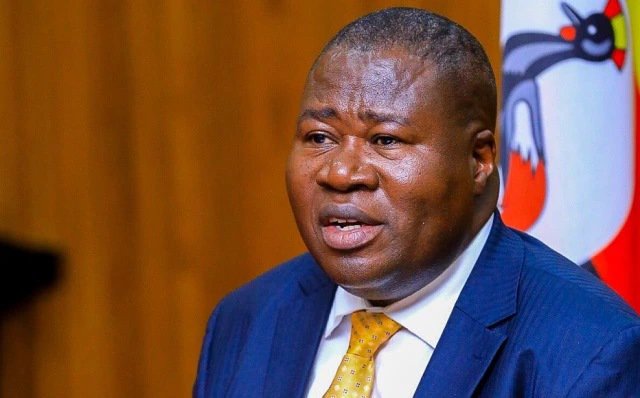

Speaker Jacob Oboth Oboth
KAMPALA — The Speaker of Uganda’s 12th Parliament, Jacob Marksons Oboth Oboth, has sparked fresh debate about the influence of witchcraft and spiritual practices in Uganda’s political circles after calling for prayers for Parliament and the country’s leadership.
Speaking during a thanksgiving ceremony held for State Minister for Agriculture Desire Muhooza in Kampala on June 8, 2026, the Speaker urged religious leaders and believers to pray for the nation’s institutions, particularly Parliament.
His remarks came in a speech in which he emphasized the need for spiritual guidance and moral leadership within Uganda’s highest legislative body.
“Pray for the leadership of this nation; pray for Parliament such that that place should not be a place where witchcraft is exalted,†Oboth Oboth said.
“It should be a place of praise, power, and where good laws are made.â€
Speaker Jacob Oboth Oboth on Witchcraft in Parliament | #PearlTimesNews pic.twitter.com/QO7WZbrNL0
— The Pearl Times (@thepearltimes) June 9, 2026
The comments immediately drew attention because allegations of witchcraft, spiritual manipulation and the use of traditional shrines have long surfaced in discussions surrounding Ugandan politics, especially during election periods.
A Long-Running Debate in Ugandan Politics
While claims involving witchcraft are often difficult to verify, reports over the years have shown that belief in supernatural influence remains widespread among some politicians and their supporters.
There have been reported incidents in which political leaders, candidates and their followers were accused of consulting traditional healers, visiting shrines or seeking spiritual protection ahead of elections.
The issue is not unique to Uganda. Across several African countries, political contests have frequently been accompanied by claims of spiritual warfare, protective rituals and consultations with traditional healers. Political observers say such beliefs continue to shape how some leaders and communities interpret success, failure and power.
In Uganda, discussions around witchcraft in politics have periodically resurfaced whenever prominent leaders are photographed visiting cultural shrines or are linked to traditional spiritual practices.
Religious leaders have repeatedly warned against reliance on witchcraft, arguing that public institutions should instead be guided by integrity, accountability and faith.
It is against this backdrop that Oboth Oboth’s appeal for prayers has attracted public attention.
Uganda’s New Speaker
Oboth Oboth was elected Speaker of the 12th Parliament on May 25, 2026, after securing a landslide victory during the inaugural sitting of the new Parliament held at Kololo Ceremonial Grounds in Kampala. He won 441 votes, comfortably defeating opposition-backed candidate Paul Mwiru and Democratic Party president Norbert Mao.
His election marked a major leadership transition at Parliament following months of intense political speculation over who would succeed former Speaker Anita Among.
Among, who had initially been expected to seek another term as Speaker, eventually withdrew from the race after weeks of internal political maneuvering and growing pressure within the ruling National Resistance Movement (NRM). Reports at the time indicated that support among influential party figures had shifted toward Oboth Oboth following consultations involving senior NRM leaders.
In announcing her withdrawal, Among said she had reached the decision after consultations and reflection, stressing the need for unity within the ruling party. Her exit effectively cleared the path for Oboth Oboth, who was widely viewed as the establishment candidate heading into the vote.
Following his election, Oboth Oboth pledged to strengthen Parliament’s oversight role and preserve public confidence in the institution at a time when it faces increasing scrutiny from citizens.
A Call for Spiritual Renewal
Observers say the Speaker’s latest remarks may resonate with many Ugandans who believe the country needs stronger moral leadership in public institutions.
His comments also reflect the enduring intersection between faith and politics in Uganda, where religious gatherings frequently attract senior government officials and where national leaders often call upon citizens to pray for peace, unity and development.
For supporters, Oboth Oboth’s statement was a call for spiritual renewal within Parliament. For others, it highlighted the continued presence of concerns about occult practices and the influence they are perceived to wield within political spaces.
Whatever the interpretation, the Speaker’s remarks have once again placed the issue of witchcraft and politics into the national conversation, raising questions about the values that should guide Uganda’s democratic institutions.
As Parliament begins a new five-year term under Oboth Oboth’s leadership, his appeal was clear: the House should be remembered as a place where sound laws are made and public service is advanced — not as a place associated with fear, superstition or spiritual intrigue.
There were reports that witchcraft items were allegedly found in the homes of former speaker Anita Among, as reported Here.


 Government will not gazette Kijanangoma as King of Tooro for now - Attorney General insists
Ultimate Uganda
Government will not gazette Kijanangoma as King of Tooro for now - Attorney General insists
Ultimate Uganda
 King Oyo’s Body to Arrive Thursday
Ultimate Uganda
King Oyo’s Body to Arrive Thursday
Ultimate Uganda
 Besigye, Lukwago expected to meet Gen. Salim Saleh today at Kapeeke
Ultimate Uganda
Besigye, Lukwago expected to meet Gen. Salim Saleh today at Kapeeke
Ultimate Uganda
 Rwabwogo Advised to ‘Eat His Bishop’ As MK Prepares to Enter State H’se: PREZ MUSEVENI ON HIS WAY OUT
Ultimate Uganda
Rwabwogo Advised to ‘Eat His Bishop’ As MK Prepares to Enter State H’se: PREZ MUSEVENI ON HIS WAY OUT
Ultimate Uganda
0 Comments