
Museveni Salary: How Much Uganda’s President Earns Every Month and How He Spends It
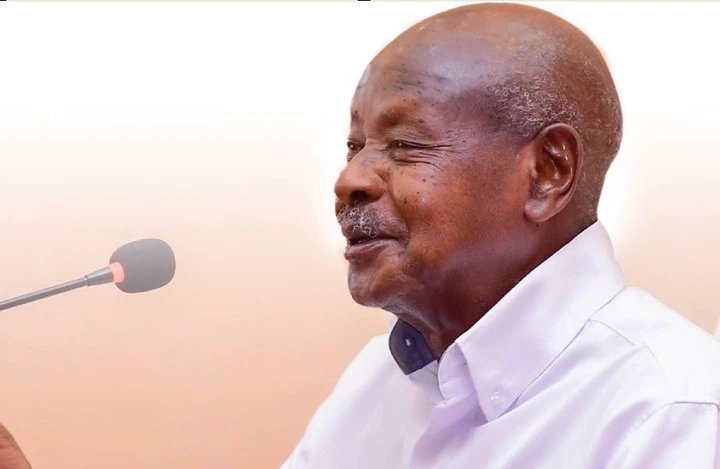

For many Ugandans, it would seem natural to expect the President to be among the highest-paid public servants, given the immense responsibilities that come with leading the country, overseeing national security, directing government policy and representing Uganda on the international stage.
However, Museveni has repeatedly surprised the public with claims that his official salary is far lower than many people imagine. Over the years, the President has disclosed that he earns Shs3.6 million per month, insisting that his personal wealth comes not from government pay but from commercial agriculture and private enterprise.
Speaking at an NRM event, Museveni revealed that part of his salary is deducted as a contribution to the ruling National Resistance Movement (NRM).
“They pay me sh3.6m only. 20% goes to NRM and sh2.7m for Mama,†Museveni said, referring to First Lady Janet Museveni.
The President’s remarks attracted widespread attention because many Ugandans expected the country’s top leader to be earning a significantly larger salary.
According to Museveni, a portion of his monthly earnings goes to the NRM as a party contribution, while another portion is handed to his wife, Janet Museveni, for family use.
Museveni explained that after contributing 20 percent of his salary to the NRM, he is left with a smaller amount than many senior government officials and professionals in the private sector earn.
His comments were not the first time he had publicly spoken about his earnings.
While addressing supporters in Bukedea District in eastern Uganda on July 25, 2015, Museveni described himself as one of Africa’s least-paid presidents, arguing that his wealth does not come from his government salary but from commercial agriculture.
“Your President is one of the least paid on the continent. Although I earn little from your government, I’m a rich man from agriculture,†he said.
The President has frequently used his own farming enterprises as an example when encouraging Ugandans to embrace commercial agriculture and wealth creation.
According to Museveni, productive agriculture has enabled him to earn far more than what he receives from the government as salary.
He has consistently urged Ugandans, especially young people, to focus on income-generating activities rather than relying solely on formal employment.
Addressing student leaders at the International University of East Africa (IUEA) in Kampala on September 4, 2015, Museveni emphasized that public leadership should be viewed as service to the nation rather than a route to personal enrichment.
“I am only there to help you. It is a voluntary service that I am offering. My job is to be a cattle keeper.â€
His comments have often sparked debate, especially given the vast responsibilities attached to the presidency, including overseeing government operations, national security, foreign affairs and the implementation of key government programmes.
Despite earning what he describes as a modest official salary, Museveni has repeatedly maintained that personal wealth should be generated through productive economic activities rather than dependence on government pay.
Based on statements he has made over the years, Museveni’s official monthly salary stands at Shs3.6 million before deductions, while he continues to describe himself as one of Africa’s least-paid presidents.
You can see the salaries and allowances of Museveni’s ministers every month as well as those of MPs Here and There.
Read interesting facts about the most highly paid government employee who gets Shs100m every month Here.
The lists of Museveni’s most highly paid advisors and State House staff earning millions of money are Here and There.
The full salary structure showing how much government employee categories earn every month in the current financial year is HERE.


 Ex Kagame Guard Commander Tom Byabagamba Dies in Rwandan Prison After 12 Years
Ultimate Uganda
Ex Kagame Guard Commander Tom Byabagamba Dies in Rwandan Prison After 12 Years
Ultimate Uganda
 Government begins salary payments for public sector workers – Reform Committee
Ultimate Uganda
Government begins salary payments for public sector workers – Reform Committee
Ultimate Uganda
 Temangalo land: NSSF, Nzenyi reach agreement
Ultimate Uganda
Temangalo land: NSSF, Nzenyi reach agreement
Ultimate Uganda
 Susan Makula brings longtime rivals Nameere, Full Figure together
Ultimate Uganda
Susan Makula brings longtime rivals Nameere, Full Figure together
Ultimate Uganda
0 Comments