
MPs divided over new UGX 84.3 trillion national budget
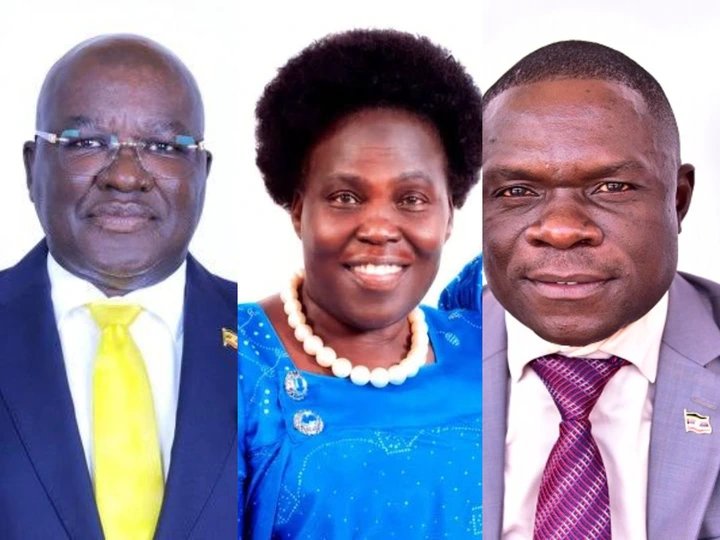

Ugandan members of Parliament are divided over the new 84.3 trillion shilling national budget for the 2026-2027 financial year, with ruling party lawmakers praising its infrastructure funding and the opposition warning of a heavy tax burden.
KAMPALA, Uganda — Lawmakers are divided over the newly presented 84.3 trillion shilling national budget for the 2026-2027 financial year, with some praising its focus on infrastructure and others warning it places too heavy a tax burden on citizens.
The budget, presented by State Minister for Finance Henry Musasizi, focuses heavily on wealth-creation programs and the ATMS framework, which targets agro-industrialization, tourism, mineral development, and science and technology.
Supporters of the budget point to its focus on key development sectors and its reliance on local revenue.
Paul Omara, the National Resistance Movement lawmaker representing Otuke County, called it a strong budget that addresses critical community needs.
It is a good budget because it provides for critical areas like infrastructure, railways, and rural electrification, which resonates with the people, Omara said, noting that health, education, and information and communication technology also received key allocations.
Omara, who serves on the parliamentary finance and budget committees, also praised the fact that 85.2% of the budget will be funded through domestic revenue.
Ottober Odiya Wellborn, the NRM lawmaker for Aruu County in Pader District, agreed, calling the proposal a community-centered budget designed to address daily challenges facing Ugandans.
I am one person happy with the budget and will do all I can to ensure my people work around to support it, Ottober said.
However, opposition lawmakers argue the budget falls short for regular citizens.
Charles Tibandeke, the National Unity Platform lawmaker representing Bbaale County in Kayunga District, said the budget relies too much on taxing local citizens rather than fostering growth.
This budget is not developmental; most of it is going to pay debt, and less will be left for consumption, Tibandeke said.
He urged the government to instead boost exports and create incentives to expand local production.
Betty Aol Ocan, the Forum for Democratic Change lawmaker representing Gulu City, said new taxes will hurt everyday consumers and noted that funding gaps remain for essential workers.
Our people are already burdened with the high taxes, Ocan said. Our intern doctors were left out of the budget, which is absurd. When we levy taxes on fuel, automatically it rises prices of everything.


 Government will not gazette Kijanangoma as King of Tooro for now - Attorney General insists
Ultimate Uganda
Government will not gazette Kijanangoma as King of Tooro for now - Attorney General insists
Ultimate Uganda
 King Oyo’s Body to Arrive Thursday
Ultimate Uganda
King Oyo’s Body to Arrive Thursday
Ultimate Uganda
 Besigye, Lukwago expected to meet Gen. Salim Saleh today at Kapeeke
Ultimate Uganda
Besigye, Lukwago expected to meet Gen. Salim Saleh today at Kapeeke
Ultimate Uganda
 Rwabwogo Advised to ‘Eat His Bishop’ As MK Prepares to Enter State H’se: PREZ MUSEVENI ON HIS WAY OUT
Ultimate Uganda
Rwabwogo Advised to ‘Eat His Bishop’ As MK Prepares to Enter State H’se: PREZ MUSEVENI ON HIS WAY OUT
Ultimate Uganda
0 Comments