
Climate Change Linked to Increasing Domestic Violence In Homes
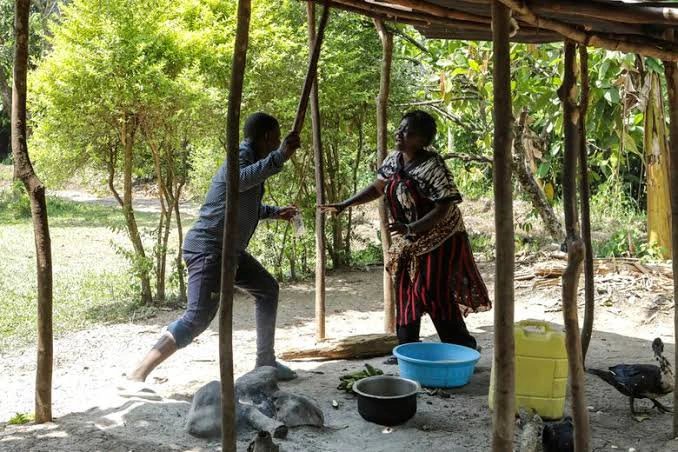

Gender based violence is increasingly being linked to the effects of climate change.
Ann Nassamula, a Senior Programme Officer at the Centre for Domestic Violence Prevention (CEDOVIP), says that climate change is not only an environmental challenge but also a social issue that affects family stability, livelihoods and relationships.
Nassamula said climate-related disasters are indirectly contributing to frustrations in households, with women and girls often bearing the biggest impact.
Floods, prolonged dry spells, mudslides and loss of livelihoods are creating pressure within households and increasing the risk of violence, especially against women and girls.
She was speaking to journalists during a two-day media training organised by CEDOVIP for journalists under the Uganda Parliamentary Press Association (UPPA) on the relationship between gender-based violence and climate change.
Nassamula said journalists, as the fourth estate, have a responsibility to make known the connection between natural disasters and violence in homes, while helping government and other stakeholders understand the wider impact of climate change.
Nassamula recalled the recent flooding of several arcades in Kampala, saying public attention largely focused on damaged merchandise, business losses and compensation, while little focus was placed on the long-term effects of unemployment, poverty and stress within households.
She said such pressures can increase conflicts at home and expose women and children to violence.
Nassamula called on government institutions to recognise the connection between climate change and gender-based violence when designing interventions.
Nassamula pointed to the recent floods that affected several arcades in Kampala, saying much of the public discussion focused on destroyed merchandise and compensation for traders.
However, she warned that the bigger impact comes later when people lose jobs, families lose income and poverty increases.
“When people lose their livelihoods, the effects reach homes. It can create stress, conflict and violence,†she said.
She also explained that domestic violence affects the entire family, including the person committing the violence.
She said when a man is arrested after assaulting his partner, the family may lose its breadwinner, while the accused person may also suffer psychological and social consequences.
UPPA President Samuel Ibanda said journalists have a major role in helping society understand the connection between climate change and gender-based violence.
He said such training helps journalists report beyond the immediate events and expose deeper social problems affecting communities.
Ibanda noted that domestic violence has contributed to broken families, children dropping out of school and young people growing up with violent behaviours.
He also encouraged men who suffer violence from their partners to speak out, saying many male victims remain silent because of stigma.
On climate change, Ibanda warned that unpredictable seasons and long dry spells are putting more pressure on families, especially those depending on agriculture.
“A home without food is a home where people are likely to be angry. When people are hungry and stressed, conflicts increase,†he said.
He called for proper monitoring of government programmes aimed at supporting farmers, including the recently approved irrigation power system, where parliament approved a loan of up to of 168 euros for the solar power irrigation scheme phase 1, to ensure it benefits communities affected by changing weather patterns.
Ibanda also appealed to government institutions to work closely with journalists by providing information instead of withholding it.
He further urged police to continue sensitising communities about domestic violence, using the Family and Child Protection Unit to strengthen counselling and response services.
Uganda recorded a decline in reported domestic violence cases in 2025, but the violence became deadlier, with the Uganda Police Force Annual Crime Report showing an increase in domestic violence-related deaths.
The report indicates that police recorded 12,361 domestic violence cases in 2025, a reduction from 14,073 cases in 2024, representing a 12.2 percent decline.
However, despite the drop in reported cases, 208 people were killed in domestic violence-related incidents, up from 183 deaths recorded in 2024, marking a 13.7 percent increase.
Women and girls remained the most affected group, with police records showing that of the reported domestic violence victims, 7,520 were adult females, while 4,116 were adult males. The victims also included 489 male juveniles and 236 female juveniles.
The report shows that 1,761 domestic violence cases were taken to court by the end of 2025. Of these, 644 resulted in convictions, 18 ended in acquittals, 197 were dismissed, while 902 cases remained pending before court.
The highest number of domestic violence cases was recorded in the North Kyoga region with 1,206 cases, followed by Rwenzori West and Rwizi with 808 cases each, Wamala with 660 cases, and Busoga East with 654 cases.
At district level, Mityana recorded the highest number of cases with 485, followed by Busia with 327, Kyenjojo with 323, Tororo with 287 and Kwania with 283 cases.
Police attributed domestic violence incidents mainly to family property disputes, failure to provide basic family needs, alcohol and drug abuse, as well as infidelity and relationship conflicts.


 The women who have been in King Oyo’s life
Ultimate Uganda
The women who have been in King Oyo’s life
Ultimate Uganda
 Ex Kagame Guard Commander Tom Byabagamba Dies in Rwandan Prison After 12 Years
Ultimate Uganda
Ex Kagame Guard Commander Tom Byabagamba Dies in Rwandan Prison After 12 Years
Ultimate Uganda
 Government begins salary payments for public sector workers – Reform Committee
Ultimate Uganda
Government begins salary payments for public sector workers – Reform Committee
Ultimate Uganda
 Temangalo land: NSSF, Nzenyi reach agreement
Ultimate Uganda
Temangalo land: NSSF, Nzenyi reach agreement
Ultimate Uganda
0 Comments