
Tropical Bank pushes former minister Banyenzaki into tight corner over Shs 600m loan
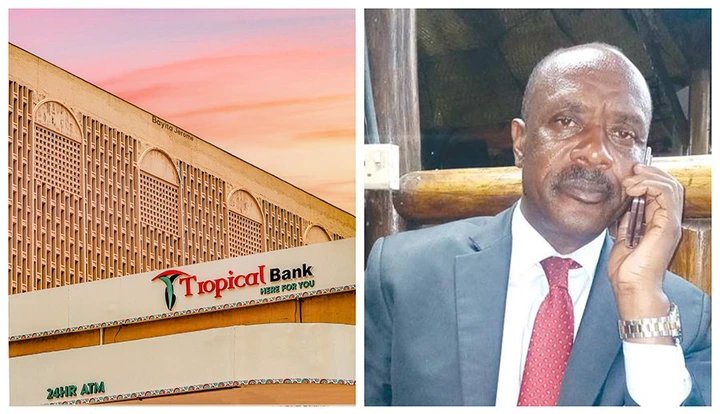

The High Court has dismissed an application filed by Henry Banyenzaki, a former minister and MP, over a disagreement he has with Tropical Bank regarding a loan facility he took in 2013.
Justice Patience Rubagumya said the legal procedure (of originating summons) that Banyenzaki was using to try to evade paying the bank Shs 600 million was wrong.
Here is how it started.
In February 2013, Banyenzaki obtained a loan of Shs 2 billion from Tropical Bank. To secure the loan, he mortgaged several properties, including land at Naluvule in Wakiso and property along Peninsula Crescent at Luzira Port Bell.
Banyenzaki told court that he later paid about Shs 3 billion towards the loan and accumulated interest. However, a disagreement arose over the outstanding balance.
The disagreement first reached court in 2017 when Banyenzaki sued Tropical Bank, challenging the amount he allegedly owed the bank.
That case was eventually settled through a consent judgment on October 19, 2020.
Under the settlement, the parties agreed that Banyenzaki still owed the bank Shs 1 billion, of which Shs400 million had already been paid, leaving an outstanding balance of Shs 600 million.
The parties further agreed that the remaining Shs600 million would be recovered from compensation Banyenzaki expected to receive from Uganda Electricity Transmission Company Limited (UETCL) for land affected by a government project.
The agreement also required Tropical Bank to release the title for the affected property to facilitate processing of the compensation.
Banyenzaki argued that despite the consent judgment, the bank never released the certificate of title to UETCL.
He told court that the bank instead moved to recover the debt through foreclosure proceedings.
According to evidence before court, Tropical Bank issued a notice of sale on October 6, 2025 and later advertised some of Banyenzaki’s properties for auction in the Daily Monitor on October 20, 2025.
Banyenzaki maintained that the debt was not yet due because the compensation process was still ongoing and that the bank had frustrated implementation of the consent judgment by withholding the title.
He therefore sought a permanent injunction to stop the auction, an order compelling the bank to release the title to UETCL, a declaration that the bank was in contempt of court and an award of general, punitive and exemplary damages.
Tropical Bank denied wrongdoing and insisted that Banyenzaki had remained in default for more than five years.
The bank argued that the debt remained outstanding and that it was legally entitled to exercise its rights as a mortgagee.
Through an affidavit sworn by Asuman Bamweyana, the bank’s company secretary, the bank contended that Banyenzaki had misled it before the consent judgment by suggesting that compensation from UETCL was imminent.
The bank said that after the consent was signed, UETCL informed it that investigations were still ongoing to determine whether Banyenzaki qualified as a project-affected person.
Tropical Bank further pointed out that Banyenzaki later sued UETCL over failure to compensate him, which in the bank’s view demonstrated that no compensation had been approved.
The bank argued that the absence of the said compensation does not in any way affect its right to recover the money from Banyenzaki.
In response, Banyenzaki produced additional evidence showing that government agencies had recognised his compensation claim.
Justice Rubagumya said she was aware that the ministry of Energy had requested valuation of Banyenzaki’s claim and that the chief government valuer assessed business loss at Shs2.14 billion and land restoration costs at Shs 922 million.
She also referred to correspondence directing UETCL to settle Banyenzaki’s claim.
However, Justice Rubagumya found that these competing claims created major factual disputes that could not be resolved through the simplified originating summons procedure that Banyenzaki had resorted to.
“I have observed that in his affidavit in rejoinder, [Banyenzaki] contends that the compensation was approved by the chief government valuer. The matter involved complex and substantial disputes of fact which cannot be resolved under this procedure,†she ruled.
She said she was not satisfied that this is a proper procedure for the determination of the issues raised and ultimately dismissed the case.
Justice Rubagumya advised Banyenzaki to file a fresh suit if he wished to pursue the contested issues with the bank.


 Starlink goes live in Uganda; price comparisons against MTN, Airtel
Ultimate Uganda
Starlink goes live in Uganda; price comparisons against MTN, Airtel
Ultimate Uganda
 NSSF sets September 24 for Annual Members Meeting as savers await interest rate declaration
Ultimate Uganda
NSSF sets September 24 for Annual Members Meeting as savers await interest rate declaration
Ultimate Uganda
 Boda boda riders launch e-commerce, digital loans platform
Ultimate Uganda
Boda boda riders launch e-commerce, digital loans platform
Ultimate Uganda
 Rwanda: We Cannot Sit and Watch As Illicit Alcohol Kills People - Kagame
Ultimate Uganda
Rwanda: We Cannot Sit and Watch As Illicit Alcohol Kills People - Kagame
Ultimate Uganda
0 Comments