
Museveni Warns Uganda Unprepared for Major Earthquake, Orders Nationwide Building Audit
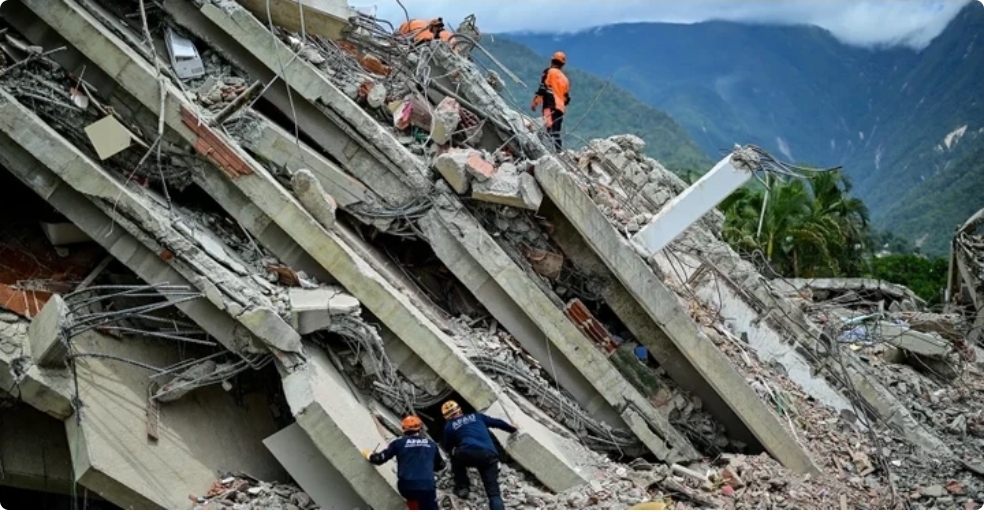

Uganda lies within the seismically active East African Rift System, where the African tectonic plate is slowly splitting apart, making western and central Uganda vulnerable to periodic earthquakes
Impact of an earthquake on Venezuela (net photo)
KAMPALA — President Museveni has issued a fresh warning over Uganda’s vulnerability to earthquakes, saying government agencies have been lax in implementing measures that could save thousands of lives in the event of a major seismic disaster.
In a detailed executive order, the president said Uganda must not wait for a tragedy similar to those witnessed in Turkey and Syria, where powerful earthquakes in 2023 killed more than 50,000 people and left millions homeless.
“That should never be allowed to happen here,†Museveni said.
The president recalled that he first became aware of Uganda’s earthquake risks in 1997 when an American seismologist, Professor Shah, addressed a conference in Kampala and warned that the country sits on three major fault lines.
“He pointed out that Uganda has three fault lines – one running along the River Aswa, the other one around River Katonga and the other along the Rift Valley,†Museveni said.
“Immediately, I informed the relevant Government bodies to incorporate this information in their planning.â€
Uganda lies within the seismically active East African Rift System, where the African tectonic plate is slowly splitting apart, making western and central Uganda vulnerable to periodic earthquakes.
The president cited the magnitude 6.2 Kisomoro earthquake in the Rwenzori region in 1994 and the magnitude 6.6 earthquake that struck Tooro in 1966, causing cracks in the Karuzika Palace of Omukama George Rukidi.
“The earthquake of Kisomoro was a good educator because it confirmed what the Professor had said,†he wrote.
He also recalled the September 2016 earthquake centred near the Uganda-Tanzania border that damaged homes in Kyotera District and parts of Tanzania, prompting him to issue fresh directives to government officials.
“However, for avoidance of doubt, I am now, again, directing as follows,†Museveni said before outlining a series of measures aimed at strengthening the country’s preparedness.
Nationwide Building Audit
The president ordered engineers from the ministries responsible for works, housing and local government, as well as engineers in local authorities including Kampala Capital City Authority, to audit all permanent buildings within two years and determine whether they can withstand a major earthquake.
“They should, in particular, audit the high-rise buildings, starting with those of the ground floor plus one floor. The bungalows can be done last,†he directed.
Museveni further ordered state engineers, working with public universities and international experts, to determine within one year the minimum earthquake-resistant standards that all buildings in Uganda should meet.
“Once the State Civil Engineers have determined for us the minimum standards of building, no permanent building should be built anywhere in Uganda that does not conform to those building standards,†he said.
The president questioned whether Uganda’s future building standards should be designed to withstand earthquakes of nine points on the Richter scale, citing the resilience of the Virika Cathedral.
“The Catholic leaders of Tooro… built a new Cathedral at Virika to withstand the earthquake of 9 points on the Richter Scale,†he noted.
“When the Kisomoro earthquake of 1994 occurred, some buildings in Fort Portal area were damaged but not the Virika Cathedral. Proof that deliberately designed buildings can withstand earthquake by any magnitude.â€
Is Uganda Ready?
Disaster experts say Uganda remains inadequately prepared for a major earthquake despite decades of warnings from scientists.
Rapid urbanisation has fuelled a construction boom in Kampala and other towns, but enforcement of building standards remains weak and many structures are erected without rigorous structural assessments.
The country also lacks a comprehensive earthquake early-warning system and public preparedness programmes such as regular evacuation drills and emergency response exercises that are common in countries like Japan.
Museveni himself pointed to Japan’s experience.
“I used to hear of people dying from earthquakes in Japan. I no longer hear of such deaths in Japan. What happened? I suspect it must have been the change of the building standards,†he said.
The president also raised the question of what should be done with existing buildings that may fail future safety assessments.
“What should we do with those buildings that will not qualify, especially the storied ones? Are there ways their defects can be rectified? The State and other knowledgeable Engineers will advise us.â€
In an unusual reflection on indigenous architecture, Museveni suggested modern engineers could learn from traditional huts, which, despite their shortcomings, were less likely to cause fatalities during earthquakes because of their lightweight construction.
“Those huts… were safer because they had less quarrel with gravity,†he said.
The president’s renewed push comes amid growing concern that Uganda’s rapidly expanding stock of high-rise buildings could prove dangerously vulnerable should a powerful earthquake strike one of the country’s active fault zones


 Government will not gazette Kijanangoma as King of Tooro for now - Attorney General insists
Ultimate Uganda
Government will not gazette Kijanangoma as King of Tooro for now - Attorney General insists
Ultimate Uganda
 King Oyo’s Body to Arrive Thursday
Ultimate Uganda
King Oyo’s Body to Arrive Thursday
Ultimate Uganda
 Besigye, Lukwago expected to meet Gen. Salim Saleh today at Kapeeke
Ultimate Uganda
Besigye, Lukwago expected to meet Gen. Salim Saleh today at Kapeeke
Ultimate Uganda
 Rwabwogo Advised to ‘Eat His Bishop’ As MK Prepares to Enter State H’se: PREZ MUSEVENI ON HIS WAY OUT
Ultimate Uganda
Rwabwogo Advised to ‘Eat His Bishop’ As MK Prepares to Enter State H’se: PREZ MUSEVENI ON HIS WAY OUT
Ultimate Uganda
0 Comments