
Today in History: Lule, Museveni Unite to Form NRA
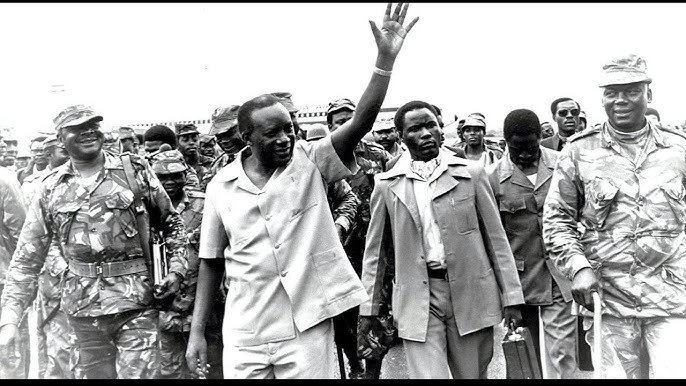

Several key figures, including Amama Mbabazi, Sam Katabarwa, Joshua Mugenyi, and Chris Mboijana, played important roles in persuading Lule to join forces with Museveni. The push for unity was strengthened by Libyan leader Muammar Gaddafi, who reportedly made military support conditional on the anti-Obote factions forming a united front.
On this day in 1981, exiled former President Yusuf Lule and rebel leader Yoweri Museveni signed a landmark agreement in Nairobi, Kenya, merging their separate anti-government movements into the National Resistance Movement (NRM) and its military wing, the National Resistance Army (NRA).
The alliance brought together two leaders with contrasting strengths.
Museveni's Popular Resistance Army (PRA) had launched an armed rebellion against President Milton Obote earlier that year but struggled to win the confidence of communities in the Luwero Triangle, where the insurgency was based.
Lule, on the other hand, commanded enormous political goodwill, particularly in Buganda, through his Uganda Freedom Fighters (UFF), but lacked an effective fighting force.
Negotiations leading to the agreement were held secretly in Nairobi, with much of the drafting taking place at the home of Matthew Rukikaire.
Several key figures, including Amama Mbabazi, Sam Katabarwa, Joshua Mugenyi, and Chris Mboijana, played important roles in persuading Lule to join forces with Museveni. The push for unity was strengthened by Libyan leader Muammar Gaddafi, who reportedly made military support conditional on the anti-Obote factions forming a united front.
Under the agreement, Lule became Chairman of the NRM, providing political leadership and international legitimacy, while Museveni was appointed Vice Chairman of the movement and Chairman of the High Command, placing him in charge of military operations.
The document deliberately avoided committing to contentious issues such as the restoration of the Buganda monarchy or a federal system, instead focusing on overthrowing the Obote government and restoring democratic governance.
The merger proved decisive. Lule's endorsement helped the rebels gain the trust of communities in the Luwero Triangle, leading to increased civilian support and recruitment into the NRA. It also opened the door to greater external assistance, strengthening the insurgency.
Although Lule died in January 1985, the NRM/NRA alliance endured and ultimately captured Kampala on January 26, 1986, ending the five-year guerrilla war and ushering the NRM into power, where it has remained ever since.


 Government will not gazette Kijanangoma as King of Tooro for now - Attorney General insists
Ultimate Uganda
Government will not gazette Kijanangoma as King of Tooro for now - Attorney General insists
Ultimate Uganda
 King Oyo’s Body to Arrive Thursday
Ultimate Uganda
King Oyo’s Body to Arrive Thursday
Ultimate Uganda
 Besigye, Lukwago expected to meet Gen. Salim Saleh today at Kapeeke
Ultimate Uganda
Besigye, Lukwago expected to meet Gen. Salim Saleh today at Kapeeke
Ultimate Uganda
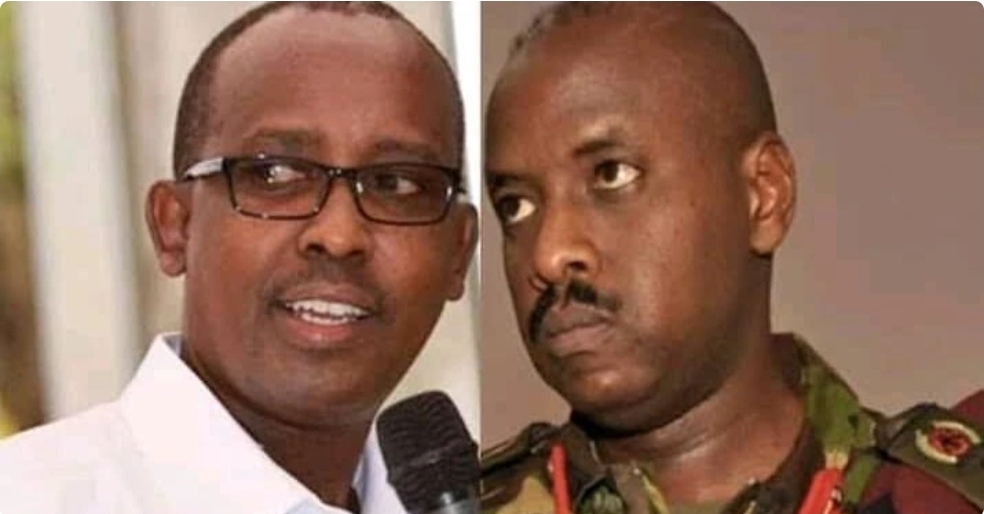 Rwabwogo Advised to ‘Eat His Bishop’ As MK Prepares to Enter State H’se: PREZ MUSEVENI ON HIS WAY OUT
Ultimate Uganda
Rwabwogo Advised to ‘Eat His Bishop’ As MK Prepares to Enter State H’se: PREZ MUSEVENI ON HIS WAY OUT
Ultimate Uganda
0 Comments