
Kampala Cement: How a $100m Ugandan cement dream fell apart
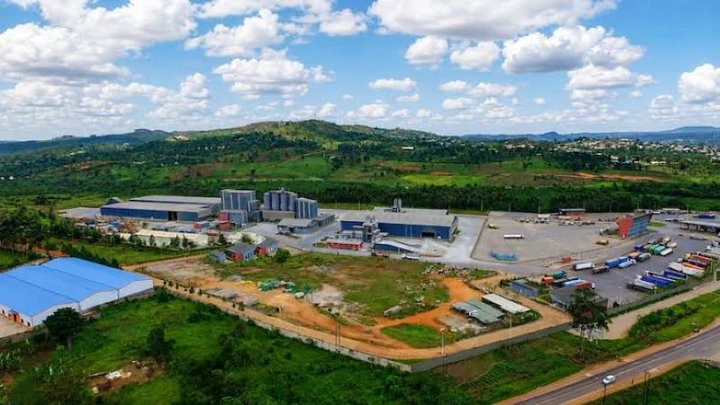

detailed breakdown of the Kampala Cement collapse, tracking how 82 million dollars in debt, high transport costs from raw material locations and an internal boardroom rupture forced the company into KPMG receivership.
A decade after it began producing cement with ambitions to take on Uganda’s established manufacturers, Kampala Cement has been placed in the hands of receivers.
KPMG Advisory Limited partners Edgar Isingoma and Nina Turyamuhabwa were appointed joint receivers and managers over the company’s assets on 29 June 2026, after the Trade and Development Bank (TDB) enforced a USD 49.3 million debenture, according to a notice filed with Uganda’s Registrar of Companies under the Insolvency Act.
The appointment brings to a head years of financial strain at one of Uganda’s most prominent local manufacturing ventures — and raises questions about how a company operating in a growing construction market ended up unable to pay its debts.
Borrowed from the start
The security TDB enforced was signed in September 2015 — the same year the company began production at its US$100m plant at Namataba, on the Kampala–Jinja highway in Mukono District.
That timing tells its own story. Kampala Cement was built on borrowed money, and the loan that eventually sank it was there from the beginning.
The scale of the borrowing has since grown. The company’s latest annual return, filed with the Uganda Registration Services Bureau on 7 July 2026, discloses total registered indebtedness of almost USD 83 million, plus UGX 3.7 billion — including the TDB facility and further registered obligations of USD 15 million, USD 8 million, USD 9.5 million and USD 1.1 million. The company notes these are registered debts, and not every facility may remain fully outstanding.
Most of that debt was in dollars. Most of the company’s income — cement sold to Ugandan builders — was in shillings. Each time the shilling weakened, the debt effectively grew heavier.
A bruising price war
Kampala Cement arrived as Uganda’s third cement maker and made an immediate impact. It secured contracts to supply the Karuma dam project, and its entry helped drive cement prices down from about US$11 a bag in 2015 to US$9.12 the following year as it battled Hima Cement and Tororo Cement for customers.
Falling prices are good news for builders. For a heavily indebted newcomer, they are dangerous. The company needed strong margins to service its dollar loans — and the price war it helped start took those margins away.
The competition then intensified further. Kenya’s National Cement, maker of the Simba brand and described in industry reporting as the region’s most aggressive expander, established Ugandan operations, in a regional market already grappling with overcapacity and weak pricing.
The location problem
There may also have been a flaw in the company’s basic design.
Concrete specialist Apollo Buregyeya, in a widely shared analysis, noted that Kampala Cement’s products had quietly disappeared from the market for over three years, and argued that although the Namataba plant looked well placed near central Uganda’s construction boom, it was far from the country’s main limestone, pozzolan and clinker deposits in the east and west.
Cement is heavy and cheap. Moving raw materials long distances to the factory is a cost that rivals located at the quarry — Tororo in the east, Hima in the west — do not bear. His conclusions are expert opinion rather than audited fact, but they fit the visible outcome: a plant with capacity of about one million tonnes a year that lost its place on the shelves.
Scrutiny over Karuma
The company’s reputation also took an early knock. In 2016, Parliament’s Natural Resources Committee questioned Kampala Cement over the quality of cement it supplied for the 600MW Karuma hydropower dam, after President Museveni ordered an investigation into reported cracks in the dam’s concrete. Contractors later said the reported cracks had been exaggerated, and no wrongdoing by the company was established — but for a young brand, a parliamentary probe into its flagship contract was unwelcome publicity at a delicate moment.
Trouble in the boardroom
The financial difficulties were accompanied by a falling-out at the top.
The company was jointly owned by two well-known Ugandan investors, Charles Mbire and Rajinder Singh Baryan. Mbire, a 20% shareholder, told CEO East Africa Magazine this month that he resigned from the board over governance concerns, alleging unauthorised related-party transactions and claiming company resources were used to support shareholder-linked businesses in Kenya. He shared a resignation letter dated 30 December 2022.
His allegations have not been independently verified, and the company’s latest filing still lists him as a director — a discrepancy that itself raises questions about the company’s record-keeping. Former managing director Bob Baryaw did not respond to the magazine’s requests for comment.
What happens now?
The receivers must decide whether the business can be rescued, sold or broken up. Their duty runs first to the secured creditor, TDB — a COMESA-backed multilateral lender with assets above US$5.5 billion, which guards its low bad-loan ratio carefully. That such an institution moved to enforcement after more than a decade suggests rescue talks had run their course.
A sale may be the likeliest path. There is regional precedent: National Cement bought the assets of Kenya’s collapsed ARM Cement in 2019 for US$50m — a fraction of what the business had cost to build. A central-region plant near Kampala could attract similar interest, though probably at a price that leaves little for unsecured creditors or shareholders.
For Uganda, the collapse is a cautionary tale rather than a verdict on local manufacturing. Tororo Cement’s long survival shows Ugandan-owned heavy industry can work. Kampala Cement’s decade suggests what it cannot survive: dollar debts paid from shilling sales, a factory far from its raw materials, and a boardroom at war with itself.


 Starlink goes live in Uganda; price comparisons against MTN, Airtel
Ultimate Uganda
Starlink goes live in Uganda; price comparisons against MTN, Airtel
Ultimate Uganda
 NSSF sets September 24 for Annual Members Meeting as savers await interest rate declaration
Ultimate Uganda
NSSF sets September 24 for Annual Members Meeting as savers await interest rate declaration
Ultimate Uganda
 Boda boda riders launch e-commerce, digital loans platform
Ultimate Uganda
Boda boda riders launch e-commerce, digital loans platform
Ultimate Uganda
 Rwanda: We Cannot Sit and Watch As Illicit Alcohol Kills People - Kagame
Ultimate Uganda
Rwanda: We Cannot Sit and Watch As Illicit Alcohol Kills People - Kagame
Ultimate Uganda
0 Comments