
Uganda Registers $582.9m Middle East Trade Surplus


Coffee is one of Uganda’s main exports to the gulf region
KAMPALA: Uganda posted a $582.9 million trade surplus with the Middle East in May, driven by strong gold exports to the United Arab Emirates, even as it continued to run trade deficits with the East African Community (EAC), Asia and the European Union, the finance ministry said.
The Ministry of Finance’s latest Performance of the Economy Report, citing Bank of Uganda data, showed Uganda recorded trade surpluses only with the Middle East and the Rest of Africa during the month.
“Uganda traded at a surplus with the Middle East and the Rest of Africa while recording deficits with other trading blocs. The trade surplus with the Middle East amounted to USD 582.90 million, while that with the Rest of Africa amounted to USD 24.37 million during the month,†the report said.
The Middle East remained Uganda’s largest export destination in May, accounting for 49.4% of export earnings, with the United Arab Emirates retaining its position as the biggest market, largely because of gold shipments.
The surplus with the Middle East narrowed from $718.95 million in April as exports to the region eased during the month, while the surplus with the Rest of Africa edged up from $21.20 million in April to $24.37 million.
Uganda’s largest regional trade deficit was with the EAC, where imports exceeded exports by $376.87 million in May, although the gap narrowed from $438.79 million a month earlier.
The country also recorded a $307.19 million trade deficit with Asia, reflecting continued imports of machinery, petroleum products and manufactured goods.
The trade deficit with the European Union narrowed sharply to $25 million from $390.91 million in April. Uganda also posted smaller deficits with the Rest of Europe ($6.56 million) and other countries ($7.33 million).
Uganda’s trade patterns have shifted in recent years as gold overtook coffee as the country’s leading export, making the Middle East its biggest export market.
At the same time, the country continues to rely heavily on imports from regional neighbours and Asia for fuel, industrial inputs, machinery and consumer goods.
The government has identified export diversification and value addition as priorities to narrow trade imbalances and reduce reliance on imports over the longer term.


 Starlink goes live in Uganda; price comparisons against MTN, Airtel
Ultimate Uganda
Starlink goes live in Uganda; price comparisons against MTN, Airtel
Ultimate Uganda
 NSSF sets September 24 for Annual Members Meeting as savers await interest rate declaration
Ultimate Uganda
NSSF sets September 24 for Annual Members Meeting as savers await interest rate declaration
Ultimate Uganda
 Boda boda riders launch e-commerce, digital loans platform
Ultimate Uganda
Boda boda riders launch e-commerce, digital loans platform
Ultimate Uganda
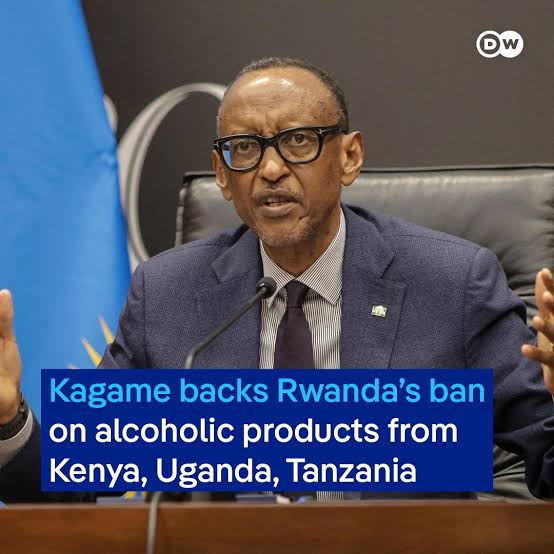 Rwanda: We Cannot Sit and Watch As Illicit Alcohol Kills People - Kagame
Ultimate Uganda
Rwanda: We Cannot Sit and Watch As Illicit Alcohol Kills People - Kagame
Ultimate Uganda
0 Comments