
Uganda secures four-year term on continental digital policy body
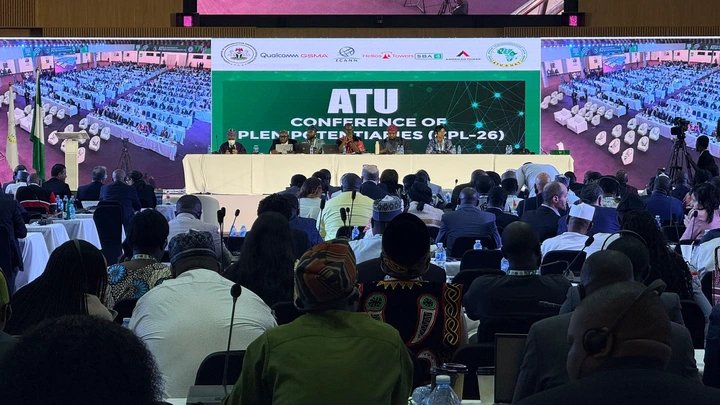

Uganda has been elected to a four-year term on the African Telecommunications Union Administrative Council during the CPL-26 summit in Abuja.
ABUJA, Nigeria — Uganda has secured a four-year term on the African Telecommunications Union (ATU) Administrative Council, placing the East African nation at the center of key decision-making processes aimed at bridging the continent’s vast digital divide and shaping its technological future.
The election took place in Abuja during the union’s Conference of Plenipotentiaries (CPL-26), where delegates from across the region gathered to establish a unified strategy for Africa’s expanding digital landscape. The conference also appointed Zambia’s Kezias Kazuba Mwale as the union’s new secretary-general, succeeding Kenya’s John Omo, who held the position for eight years.
The ATU Administrative Council serves as the governing body between plenipotentiary conferences, overseeing policy direction, strategic frameworks, financial sustainability, and the coordination of common African positions ahead of major global telecommunications summits.
Despite housing the world’s youngest and fastest-growing population, Africa remains the least connected continent. Millions of citizens continue to be excluded from basic digital services due to high costs, inadequate infrastructure, limited digital literacy, and persistent underinvestment. Delegates in Abuja stressed that individual national policies are insufficient to solve these systemic barriers, calling instead for unified regional action.
As the African Union’s specialized agency for ICT and telecommunications, the ATU seeks to harmonize policies across member states regarding spectrum management, cybersecurity, digital infrastructure, artificial intelligence, and data governance before negotiating on the international stage.
During deliberations on the union’s Strategic and Financial Plan for 2027–2031, the Ugandan delegation pressed for greater institutional transparency, championing the adoption of a comprehensive Risk Management Framework and demanding clear reporting mechanisms for future policy implementation.
Delegates agreed that achieving meaningful connectivity requires looking beyond basic mobile coverage. The conference called for technology-neutral policies that allow fiber networks, satellite systems, mobile broadband, and community-led initiatives to operate together to lower costs and widen access.
While the vote occurred in Nigeria, the outcome holds significant implications across the continent. Uganda’s four-year tenure gives the country a direct voice in directing investment, cross-border cooperation, and regulatory frameworks for emerging technologies such as artificial intelligence, ensuring that smaller and developing markets are represented in Africa’s broader digital agenda.


 Starlink goes live in Uganda; price comparisons against MTN, Airtel
Ultimate Uganda
Starlink goes live in Uganda; price comparisons against MTN, Airtel
Ultimate Uganda
 NSSF sets September 24 for Annual Members Meeting as savers await interest rate declaration
Ultimate Uganda
NSSF sets September 24 for Annual Members Meeting as savers await interest rate declaration
Ultimate Uganda
 Boda boda riders launch e-commerce, digital loans platform
Ultimate Uganda
Boda boda riders launch e-commerce, digital loans platform
Ultimate Uganda
 Rwanda: We Cannot Sit and Watch As Illicit Alcohol Kills People - Kagame
Ultimate Uganda
Rwanda: We Cannot Sit and Watch As Illicit Alcohol Kills People - Kagame
Ultimate Uganda
0 Comments