
Majority of the population in Karamoja faces Acute hunger
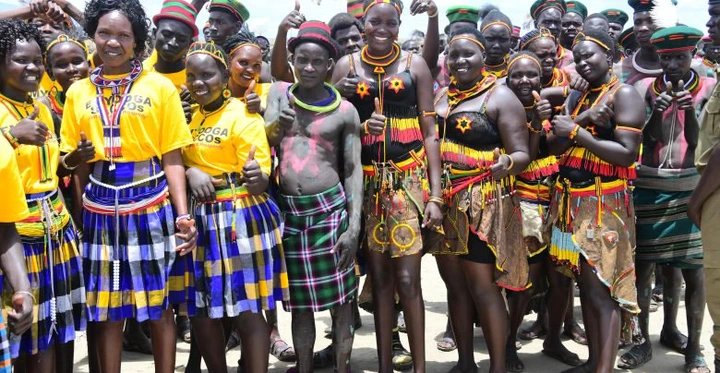

Oxfam said only 54.1% of households still had food stocks, with supplies in most districts expected to last less than a month
The Karamojong at a recent event in Moroto
Nearly half a million people in Uganda’s northeastern Karamoja region are facing acute hunger after successive climate shocks, poor harvests and rising food prices eroded livelihoods, aid agency Oxfam said on Thursday, warning that urgent food and water assistance was needed.
About 473,000 people, nearly one in three of those assessed in the region, faced Crisis levels of acute food insecurity or worse between April and July this year, according to the latest Integrated Food Security Phase Classification (IPC) analysis cited by Oxfam. Of those, about 41,000 were in Emergency conditions.
“People in Karamoja are not just running out of food, they are also running out of options,†Francis Shanty Odokorach, Oxfam’s country director in Uganda, said in a statement.
“Climate shocks and long-standing inequalities, including low investment in education and water infrastructure, have steadily stripped away their ability to cope.â€
Karamoja, one of Uganda’s poorest regions, has endured repeated dry spells, flash floods, environmental degradation, livestock disease, insecurity and weak infrastructure, leaving many households vulnerable even before this year’s food shortages.
The government recently announced a Shs45 billion emergency food relief programme for Karamoja, saying the intervention is aimed at preventing a worsening humanitarian crisis as drought and poor harvests leave thousands of households without adequate food.
The Office of the Prime Minister has since begun distributing 9.42 million kilograms of maize flour and beans to 313,987 vulnerable households, with Prime Minister Robinah Nabbanja directing officials to ensure the food reaches beneficiaries promptly while preventing delays, diversion and corruption.
Oxfam said only 54.1% of households still had food stocks, with supplies in most districts expected to last less than a month.
Crop and livestock pests, limited access to seeds and damage caused by wildlife have added to the strain.
The crisis is also worsening malnutrition, particularly among children.
The IPC estimates that about 122,100 children under the age of five will require treatment for acute malnutrition between March 2026 and February 2027, including 30,600 cases of severe acute malnutrition. Around 8,000 pregnant and breastfeeding women are also expected to require treatment.
“In Kotido District, the prolonged dry spell has wiped out gardens of crops, especially in Napumpum Sub-county,†said Oxfam project officer Lokiru Musa Hassan.
“Families have run out of food early and are now forced to skip meals. Livestock are also suffering from a lack of water and pasture.â€
Ray of hope
The IPC projects that food security could improve during the August 2026-February 2027 harvest season, but Oxfam said about 352,000 people were still expected to remain in Crisis, with districts including Kaabong, Karenga, Kotido, Moroto and Napak likely to remain among the hardest hit.
Odokorach urged the Ugandan government and donors to scale up assistance, saying families needed immediate support to buy food, access safe water and protect their livestock.
“Although the government has provided support, it remains insufficient to meet the scale of need amid constrained humanitarian funding,†he said.
Oxfam said it planned to roll out emergency food and cash assistance, water supplies, drought-tolerant seeds and livestock support in five districts, alongside longer-term investments in climate-smart agriculture, water harvesting and early-warning systems.


 Government will not gazette Kijanangoma as King of Tooro for now - Attorney General insists
Ultimate Uganda
Government will not gazette Kijanangoma as King of Tooro for now - Attorney General insists
Ultimate Uganda
 King Oyo’s Body to Arrive Thursday
Ultimate Uganda
King Oyo’s Body to Arrive Thursday
Ultimate Uganda
 Besigye, Lukwago expected to meet Gen. Salim Saleh today at Kapeeke
Ultimate Uganda
Besigye, Lukwago expected to meet Gen. Salim Saleh today at Kapeeke
Ultimate Uganda
 Rwabwogo Advised to ‘Eat His Bishop’ As MK Prepares to Enter State H’se: PREZ MUSEVENI ON HIS WAY OUT
Ultimate Uganda
Rwabwogo Advised to ‘Eat His Bishop’ As MK Prepares to Enter State H’se: PREZ MUSEVENI ON HIS WAY OUT
Ultimate Uganda
0 Comments