
Parliament Probes Shs1.2tn Entebbe Expressway Contract
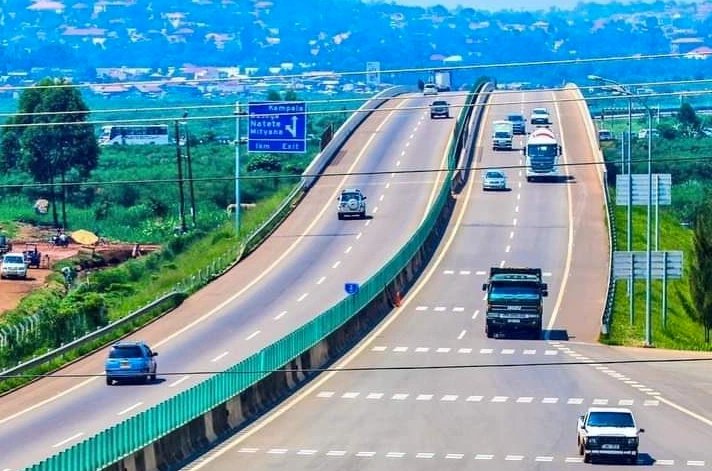

A parliamentary inquiry into the Kampala-Entebbe Expressway has exposed alleged contractual and financial irregularities, including missing equipment, disputed tolling arrangements and unexplained withdrawals.
A parliamentary probe into the operations of the Kampala-Entebbe Expressway turned stormy on Thursday as lawmakers grilled senior transport officials over alleged contractual failures, missing equipment, tolling arrangements and questionable financial transactions on one of Uganda's most expensive road projects.
The Committee on Physical Infrastructure, chaired by Mwine Mpaka, questioned former Works and Transport Minister Gen Edward Katumba Wamala and former Uganda National Roads Authority (UNRA) executive director Allen Kagina over the government's troubled relationship with French tolling operator Egis Road Operation and the decisions that allowed the arrangement to continue despite persistent disputes.
Kagina told the committee that she had personally raised 29 red flags concerning Egis during her tenure, describing the relationship as consistently problematic and the undertaking as troublesome.
Her testimony left MPs questioning why government did not take more decisive action, including terminating the contract, despite repeated concerns over the operator's performance.
The inquiry then widened beyond the Egis contract when the committee directed the Criminal Investigations Directorate (CID) to take custody of Johnbosco Ssejemba, the Ministry of Works and Transport's Director of Road Infrastructure, for questioning over procurement and contract decisions involving weigh-in-motion equipment.
Ssejemba was asked to record a statement explaining the circumstances under which contracts worth about Shs16 billion were renewed for weigh-in-motion scales that MPs said had not been installed and could not be used on Ugandan roads.
The committee also raised concerns about the technology supporting the expressway's tolling and traffic-management system, questioning whether government has adequate control over the infrastructure and data needed to account for traffic and revenue on the road.
Among the concerns was the failure to deploy functional Adaptive Traffic Control Systems capable of providing real-time information on vehicle weight, classification and traffic volumes.
MPs also questioned the Shs5 billion tolling system, with some members likening its functionality to a basic point-of-sale system and questioning whether it contains adequate safeguards for data integrity and revenue accountability.
The concerns are significant because the expressway is a toll road whose financial model depends partly on accurate recording of vehicles using the facility and the money collected from them.
Lawmakers were told that while the old Kampala-Entebbe Road can provide real-time traffic information, the expressway's system cannot provide equivalent real-time vehicle counts, raising questions about how independently government can verify the number of motorists using the road and the corresponding toll revenue.
The committee also questioned the arrangement under which local security company, Pinnacle Security, was subcontracted by Egis to participate in toll collection.
Pinnacle eventually took over operations from Egis, but MPs questioned why the subcontractor established its own tolling gate rather than operating through a centralised system developed for the expressway.
They were further concerned that operators handling the toll collection do not have complete access to the underlying software introduced by Egis, leaving Government itself without full access to a system on which the collection and management of public revenue depends.
The committee also questioned why the Uganda Revenue Authority (URA) was not involved in the collection of the road toll revenue, particularly given its mandate and experience in administering government revenue systems.
The financial questions became sharper when MPs examined transactions around the handover of the tolling contract approved by the Attorney General on May 8, 2026.
Two withdrawals from the project account came under scrutiny: Shs975 million withdrawn on May 8 and another Shs970 million withdrawn on May 28. The committee is seeking explanations and reconciliation of the transactions as it examines the financial management of the expressway.
The investigation places renewed attention on the financial model behind the Kampala-Entebbe Expressway.
The 51-kilometre road was constructed at an estimated overall project cost of about $476 million (Shs1.7 trillion in current rate), with $350 million financed through a China Exim Bank loan and about US$126 million contributed by the Ugandan government.
The China Exim Bank loan carried an interest rate of 2% and was secured partly against project revenues.
The road opened in 2018 after construction began in 2012. It was intended to reduce travel time between Kampala and Entebbe, ease congestion on the old Entebbe Road and provide a modern link to Uganda's international airport.
But the road's financial performance has long been a concern.
The original financing model envisaged toll revenue helping Government meet the debt obligations associated with the project. Yet tolling did not begin immediately after the road opened, and Government began repaying the China Exim Bank loan before the tolling system became operational.
At the time, government projected annual debt repayments of about US$26.8 million during the repayment period.
The parliamentary inquiry is now examining whether the current tolling and operating arrangements are generating enough revenue to justify the cost of maintaining the facility while meeting its financial obligations.
According to figures presented to the committee, Government has so far collected Shs129.786 billion in toll revenue. MPs, however, questioned how much of that money has effectively remained available to support the road's financial obligations after maintenance and operating costs.
The committee was told that about Shs928.4 million is spent every month on various operational activities associated with the expressway.
The expenditure includes approximately Shs329 million for road maintenance, Shs313 million for tolling operations, Shs91 million for routine patrols, Shs53 million for weighbridge operations, Shs21 million for marketing, Shs17 million for branding and Shs4.4 million for skills development.
The figures have raised questions about the economics of a road whose traffic and revenue performance must be sufficient to cover both its operating requirements and the broader financial obligations attached to its construction.
The controversy also revives an older debate about the cost of the expressway itself.
At the time the project was being developed, the road attracted criticism over its price. However, research on the project has cautioned against simply describing it as one of the world's most expensive roads without accounting for the engineering and construction circumstances.
A study of Uganda's Chinese-financed infrastructure projects estimated the expressway's cost at about $2.5 million per lane-kilometre and argued that this was not necessarily inconsistent with international highway construction costs, particularly given the engineering challenges involved.
The more immediate concern before Parliament is therefore not simply how much the road cost to build, but whether the systems established to operate, monitor and collect revenue from it are sufficiently transparent and robust.
That question has become more important as the road enters the mature stage of its life. A toll road is not simply a strip of asphalt.
Its financial viability depends on an interconnected system of traffic monitoring, vehicle classification, toll collection, maintenance, enforcement, data management and financial controls.
If any of those systems cannot be independently verified by the Government, Parliament's concerns about revenue leakage and accountability become difficult to dismiss.
The committee's decision to involve the CID over the disputed weigh-in-motion contracts signals that the inquiry could move beyond administrative explanations if investigators establish evidence of wrongdoing.
MPs have indicated that they intend to pursue the matter until the various contractual, technical and financial questions are answered.
For taxpayers, the central issue is ultimately straightforward. The expressway was built with public financing and a large sovereign-backed loan, and its tolling system was expected to generate revenue while the road delivered the wider economic benefits for which it was conceived.
Government therefore needs to demonstrate that every vehicle using the road is properly accounted for, every shilling collected is traceable, every major operating cost is justified and every contractual decision can withstand scrutiny.
The parliamentary investigation is now testing whether the systems put in place to achieve that have lived up to those expectations.


 Government will not gazette Kijanangoma as King of Tooro for now - Attorney General insists
Ultimate Uganda
Government will not gazette Kijanangoma as King of Tooro for now - Attorney General insists
Ultimate Uganda
 King Oyo’s Body to Arrive Thursday
Ultimate Uganda
King Oyo’s Body to Arrive Thursday
Ultimate Uganda
 Besigye, Lukwago expected to meet Gen. Salim Saleh today at Kapeeke
Ultimate Uganda
Besigye, Lukwago expected to meet Gen. Salim Saleh today at Kapeeke
Ultimate Uganda
 Rwabwogo Advised to ‘Eat His Bishop’ As MK Prepares to Enter State H’se: PREZ MUSEVENI ON HIS WAY OUT
Ultimate Uganda
Rwabwogo Advised to ‘Eat His Bishop’ As MK Prepares to Enter State H’se: PREZ MUSEVENI ON HIS WAY OUT
Ultimate Uganda
0 Comments